REVIEW · MAGIC SHOWS
Paradox Museum in Las Vegas: Exit Reality, Enter Fun Illusions
Book on Viator →Operated by Paradox Museum Las Vegas · Bookable on Viator
Reality looks different at Paradox Museum. This Las Vegas indoor attraction turns perception into play with 90+ interactive exhibits built for photos, laughs, and surprise moments.
I especially love the way the rooms are designed for quick wins: you step in, your brain recalculates, and suddenly you’re taking pictures you can actually use. I also like that it works across ages, so a family can enjoy it together without needing to translate rules. One thing to keep in mind: a few displays can feel a bit confusing, and you may want extra help to nail the best photos.
In This Review
- Paradox Museum Las Vegas at a Glance
- A Vegas Indoor Trick-Show for Every Age
- Inside Paradox Museum Las Vegas: Your One-Stop Reality Check
- The Main Event: 90+ Interactive Optical Illusions
- How the Photo Spots Work (Upside-Down, Cutting Sofa, Mirrors)
- Timing Your Visit: 30 Minutes to 1.5 Hours
- Is the $33 Ticket Good Value?
- Who This Works Best For on the Las Vegas Strip
- Handy Tips for Getting the Best Results
- Should You Book Paradox Museum Las Vegas?
Paradox Museum Las Vegas at a Glance
- 90+ interactive exhibits built around optical illusions and mind-bending setups
- Photo-first spaces like upside-down rooms, mirror areas, and “impossible” scenes
- Family-friendly indoor fun that doesn’t require special knowledge
- Flexible visit window once you prebook your preferred day
- Mobile ticket entry so you can stay focused on the experience
A Vegas Indoor Trick-Show for Every Age
Las Vegas already has enough lights to scramble your sense of time, but Paradox Museum takes it one step further. This is an optical illusion museum where your eyes and brain argue a little, then you move on laughing. The setting is all indoors on the Strip, so it’s a great pick when you want something fun that isn’t dependent on heat, sun, or timing your day around outdoor sights.
What makes it work is that the exhibits are interactive, not just “look at this.” You’re meant to step into the illusion, reposition yourself, and test what you think you’re seeing. Even if you’re not the type to chase museums, this one feels like an activity you can do between bigger Vegas plans.
And it’s built for real-life variety. I can see a mix of ages enjoying the experience because the surprises are obvious fast: a strange room angle, a mirror layout, or a “this can’t be right” setup. When an attraction can entertain both a kid and an adult, that’s usually a sign the design is doing its job.
You can also read our reviews of more museum experiences in Las Vegas


Inside Paradox Museum Las Vegas: Your One-Stop Reality Check
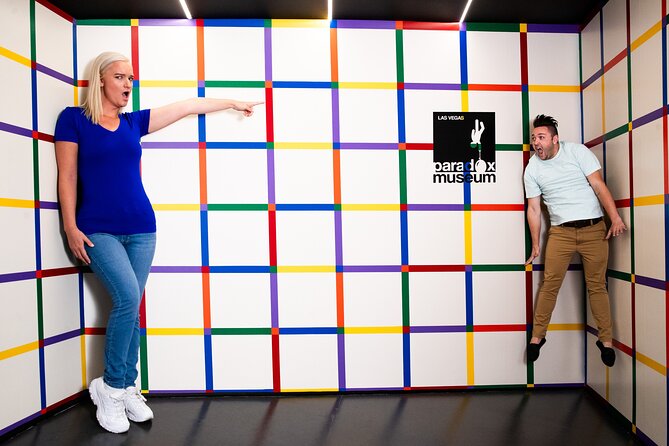
At Paradox Museum, you’ll move through a sequence of illusion stations that gradually train your brain to expect the unexpected. The museum leans into visual trickery: spaces that look wrong from your viewpoint, objects that appear to change size or shape, and mirror effects that can make your movement feel off.
A standout is the mix of simple visual jokes and more complex mind puzzles. Some exhibits are the kind you instantly “get,” like stepping into an upside-down environment or watching a room play with scale. Other areas take a few seconds to figure out, which is part of the fun. You’re not just observing—you’re problem-solving with your body.
The museum is designed to keep you moving at your own pace. That matters because the experience is naturally photo-driven: the best image usually comes after a couple tries. If you rush, you’ll miss that moment when the illusion clicks. If you take your time, you’ll end up with more satisfying shots and more laughs.
The Main Event: 90+ Interactive Optical Illusions
The attraction’s headline is straightforward: 90+ interactive exhibits. In practice, that means you’re never stuck staring at the same trick from a single angle. The museum uses multiple styles of illusion, so the “wow” factor doesn’t wear off after the first room.
Examples you can expect include classic interactive formats that visitors love because they’re instantly readable on camera:
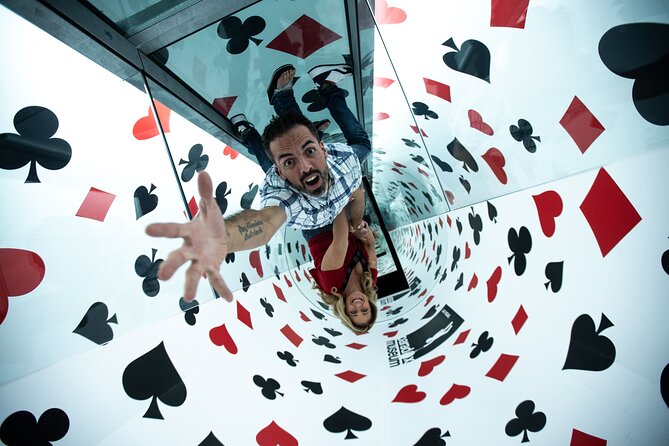
- An upside-down room where your perspective seems physically impossible
- A shrinking-box style setup that makes your body look like it’s changing scale
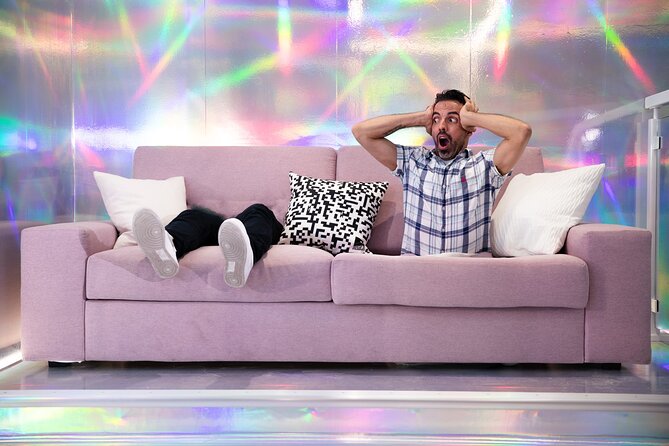
- A sofa-style scene that visually divides you into parts, creating the “cut” illusion
- Mirror areas that turn movement into confusion
Some rooms also go beyond the basic concept and add extra layers. One review highlighted a carousel and a rotating-wall room as favorites, which tells me the museum isn’t only relying on static props. It’s using motion and structure to make the trick feel more real.
A quick practical note: some exhibits can be unclear at first glance. That doesn’t mean they’re “broken,” it means your brain needs a second. If you like trying things twice, you’ll probably enjoy this place a lot.
How the Photo Spots Work (Upside-Down, Cutting Sofa, Mirrors)
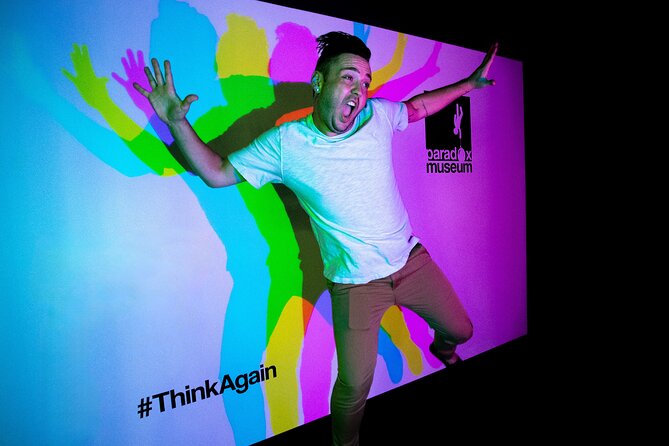
This is a photo museum in the best way: it gives you real setups, clear spots to stand, and illusions that look great even if you don’t use fancy editing. The floor markings matter. One review mentioned that camera signs on the floor help you know where to stand, and that’s a huge deal here. Without that guidance, you’d spend a lot of time guessing angles.
In the upside-down room, the trick depends on your body position and your viewpoint relative to the room. The best photos usually happen when you stop thinking you’re “standing weird” and start letting the room dictate your pose. In the mirror areas, movement is the key. You’ll want to test different angles: turning slightly, stepping forward, then stepping back. Mirrors reward patience.
The cutting-sofa illusion is another example of why placement matters. From the right perspective, the scene makes you look like you’ve been separated. If you’re a little off, it stops working. That’s where the floor guidance becomes your friend.
If you want the simplest strategy, it’s this: do each photo spot once, then do it again only if the first one doesn’t land. That keeps the experience fun instead of frustrating.
Timing Your Visit: 30 Minutes to 1.5 Hours

How long should you plan for? Expect about 30 minutes to 1.5 hours, depending on how many exhibits you want to hit and how photo-focused you are. If you just want the highlights and a few good shots, you can move efficiently. If you’re taking multiple photos in mirror rooms and trying poses in the upside-down spaces, plan closer to the longer end.
The best part for scheduling is that once you prebook your preferred day, you can visit any time during opening hours. That gives you flexibility on a day you might be juggling dinner reservations, show tickets, or a late morning recovery from the Vegas pace.
If you can choose your timing, a weekday visit often feels calmer. One review said they went on a weekday and the museum was pretty much empty, which made the experience smoother. Even if you don’t have total control, aiming for earlier in the day can help you avoid long photo lines in popular illusion rooms.






Is the $33 Ticket Good Value?
The ticket price is listed at $33.00 per person, and what you get is far more than a quick photo stop. You’re paying for time inside a designed sequence of interactive exhibits with heavy emphasis on optical illusion and repeatable photo moments. For an indoor Strip activity, that’s the real value: you get a weather-proof, timing-flexible experience that can easily fill a slow window in your day.
Also, this isn’t a “pay, then hurry out” type of place. The exhibits are interactive and built to keep you experimenting. If you enjoy taking photos (or just enjoy being entertained by your own confusion), the time stretches in the best way.
Yes, one review suggested the museum could add more exhibits or lower the price. That’s a fair consideration if you’re expecting a huge, sprawling museum experience. But with 90+ illusion stations, most people should feel they got their money’s worth—especially if you’re coming in with the right mindset: this is playful, not traditional.
If you’re on a tight budget, it helps to compare it with other indoor activities on the Strip. An illusion museum like this often wins because it’s designed for fun from minute one, without requiring a guide or special prep.
Who This Works Best For on the Las Vegas Strip
Paradox Museum is a strong pick if you want an activity that’s:
- Indoor and easy to fit into any Vegas itinerary
- Family-friendly without feeling childish
- Great for couples and groups who enjoy photos
- A change of pace from casinos, shows, and big-name sights
A couple details make it especially practical. First, you’re not tied to a hotel pickup. That keeps the day flexible and avoids wasting time on shuttle logistics. Second, it’s near public transportation, which matters if you’re avoiding rideshare costs.
It’s also a good option for travelers who like hands-on attractions. This place is active. You’ll walk, pose, test angles, and move between rooms. If you’re the type who gets bored in “read signs and look around” museums, you’ll probably do better here because the exhibits want your participation.
One more thing: if you’re traveling with different generations, the museum has enough variety that everyone can find a favorite. Reviews specifically called out that multiple ages had a blast, including a young child and adults. That’s exactly the kind of attraction that prevents “I’m bored” moments.
Handy Tips for Getting the Best Results
To make your visit smoother and more fun, I’d plan around the photo and interaction rhythm:
- Give yourself time to repeat the best rooms. Mirror and upside-down illusions often improve with a second try.
- Use the floor camera spots as a starting point, not a rule. Adjust slightly if your first photo doesn’t look right.
- Wear something comfortable. You’ll move around more than you expect, especially in mirror areas.
- If an exhibit seems confusing, don’t force it. Try a new angle or pose, then move on. These displays usually reward simple experimentation.
- If you can, choose a time when it won’t feel crowded. A calmer visit makes photo attempts less stressful.
None of this requires special skills. You just need a willingness to treat it like a game. The whole museum is built for that.
Should You Book Paradox Museum Las Vegas?
I’d book Paradox Museum Las Vegas if you want a fun indoor, photo-friendly activity that’s easy to schedule and works across ages. If your Vegas days are already full of shows and big views, this is a refreshing change that still feels “Vegas” because it plays with perception and illusion—something the city does better than almost anywhere.
Skip it only if you’re looking for a quiet museum experience where you read slowly and take in history. This is more playroom than gallery. Also consider it carefully if you feel strongly that every attraction must have extensive content beyond a couple highlights. The museum has a lot, but it’s also intentionally focused on repeatable, instant optical tricks.
If you’re flexible, curious, and happy to spend up to an hour working the photo spots, this one is an easy yes.