REVIEW · MUSEUMS
Titanic: The Artifact Exhibition at the Luxor Hotel and Casino
Book on Viator →Operated by MGM Resorts International · Bookable on Viator
Titanic: The Artifact Exhibition turns Vegas into a time machine. You step into a carefully built museum space filled with 250 authentic artifacts recovered from the wreckage, plus room-sized replicas that help the story click in your head.
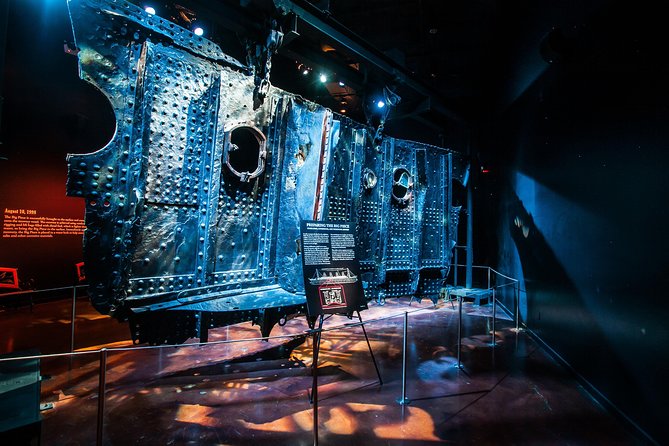
What I like most is the combination of real objects and human stories. You’ll also get a passenger card experience that personalizes the tragedy, then lets you scan your fate at the end. For me, the standout is seeing the scale of the ship through the “big piece” hull display alongside the Grand Staircase and cabin recreations.
One thing to plan for: the exhibit lighting can be dim in sections, and some placards are harder to read. If you rely on small text, consider bringing your glasses and taking your time letting your eyes adjust.
In This Review
- Key things to know before you go
- Why This Titanic Exhibit Feels Bigger Than It Sounds
- Finding Titanic at the Luxor: Atrium Level, Easy Wayfinding
- The 250 Artifacts: What Really Stays With You
- Grand Staircase and Cabin Replicas: Opulence in 3D
- Passenger Cards and the Survivor Scan: A Museum With a Pulse
- How to Plan Your 2 Hours So You Don’t Feel Rushed
- Price and Value: Is $36.20 Worth It?
- Who Should Book This Exhibit (and Who Might Skip It)
- Practical Tips That Make the Visit Smoother
- Should You Book Titanic: The Artifact Exhibition at the Luxor?
- FAQ
- Where in the Luxor is Titanic: The Artifact Exhibition located?
- How much time should I plan for the visit?
- What items will I see inside the exhibit?
- What are the hours, and when is the last entry?
- Can I use my ticket anytime during the day?
- Are there discounts for children?
- Is the exhibit wheelchair accessible?
- What if I need to cancel?
- Are service animals or pets allowed?
Key things to know before you go
- 250 authentic Titanic artifacts recovered from the wreckage, including luggage, jewelry, china, ship’s whistles, and more
- Passenger story card plus survivor scan, so the museum feels personal instead of just factual
- Grand Staircase and cabin replicas with period-style furnishings in a layout that’s easy to follow
- A large hull section on display that makes the Titanic feel real, not like a movie prop
- Family-friendly pacing with an average visit time around two hours and kid perks (children’s discounts, and under 4 free)
Why This Titanic Exhibit Feels Bigger Than It Sounds
You’ll find Titanic history in plenty of places, but this one has a “museum-to-memory” rhythm. The artifacts are the anchor, and the replicas and passenger stories do the emotional work, tying objects to people instead of leaving them behind glass as disconnected items.
It helps that the exhibit is designed for wandering. You’re not stuck in a rigid tour cadence, and that matters when families are involved or when you want extra time with one display.
Also, the Luxor location helps a lot. If you’re already spending time inside the resort, this becomes a low-friction, high-impact stop rather than a full separate excursion.
You can also read our reviews of more museum experiences in Las Vegas



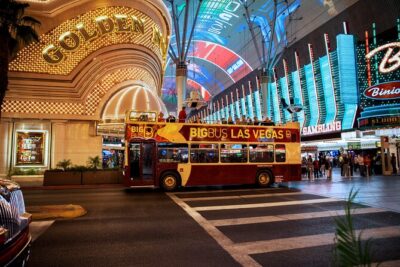
Finding Titanic at the Luxor: Atrium Level, Easy Wayfinding
The exhibition sits on the Atrium Level of the Luxor Hotel and Casino. From the parking garage, you enter the hotel and take the escalators up; the exhibit is just past the food court. If you’re starting at the main entrance, go up the escalators and look for it on your right.
Even if you’re not a navigation expert, the Luxor is set up for moving through. Plan a little time before your ideal entry, just to get oriented, then let your ticket work as your flexibility buffer.
If you care about timing, note that normal hours run daily from 11 AM to 8 PM, and the last entry is 1 hour before closing.
The 250 Artifacts: What Really Stays With You
This is a big part of the draw: you’re not looking at generic “Titanic-style” objects. The display features 250 authentic items recovered from the wreckage long after the 1912 disaster.
Expect to see familiar categories, but presented in a way that feels tangible:
- personal effects like luggage and jewelry
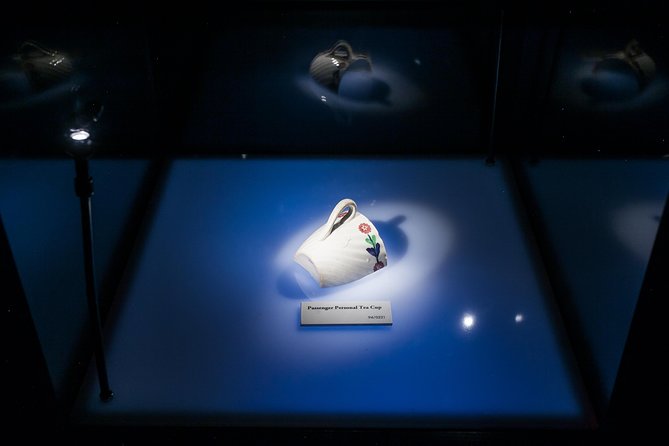
- everyday objects like china
- ship-specific items such as ship’s whistles and floor tiles from a first-class smoking room
- signatures of luxury, including an unopened bottle of Champagne
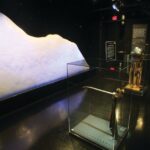
- and a standout scale element: a huge section of the hull
That last one is where the exhibit stops feeling like a story and starts feeling like an encounter with material history. The “big piece” hull display gives you perspective on size, engineering, and what it means that objects survived the journey back through time.
You’ll also notice how much the museum emphasizes context. Items aren’t just listed; you get a sense of where they belonged and what daily life looked like aboard ship.
Grand Staircase and Cabin Replicas: Opulence in 3D

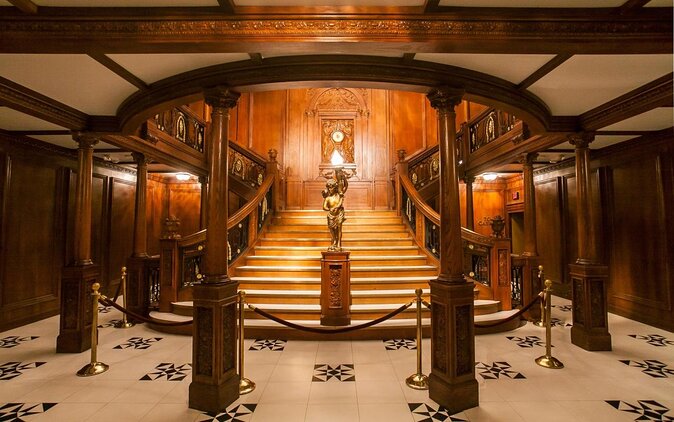
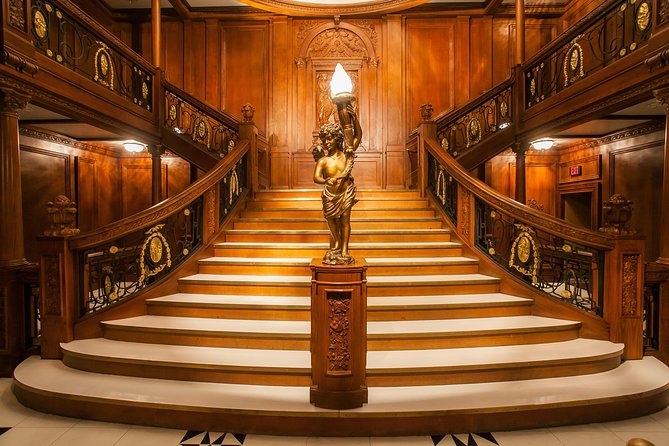
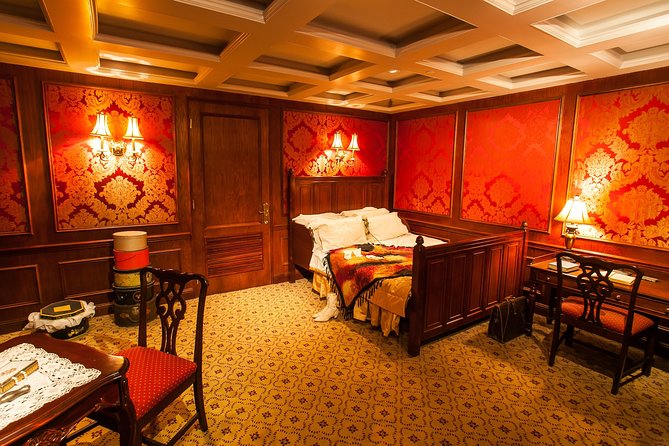
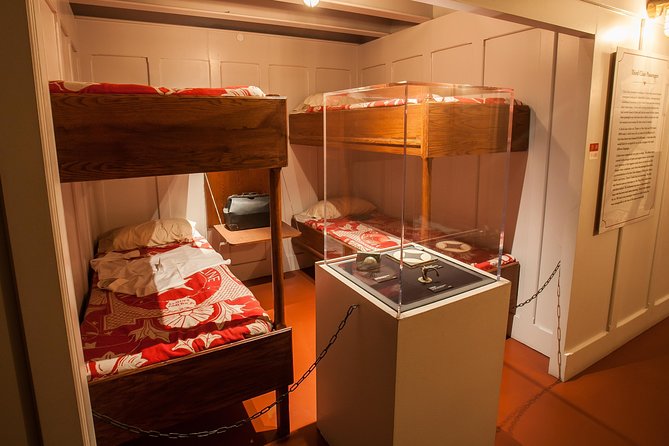
The exhibition builds a visual bridge between history and what you can picture. You’ll see meticulous replicas of the Grand Staircase, plus recreated spaces from first-class and third-class cabins, including furnishings associated with the original manufacturers.
Why this matters: Titanic is often remembered as a tragedy plus a love story. These reconstructions pull your attention to structure and contrast. First-class and third-class aren’t just labels; the layout and feel of the spaces help you understand how differently people lived on the same ship.
One clever detail is how the exhibit uses staged scenes to help you visualize the ship’s world. You’ll see a promenade-and-iceberg style moment designed to give you a quick mental picture of the danger sequence, without turning the exhibit into a gimmick.
If you’re a fan of set design or “walk-through history,” you’ll likely spend extra time here. If you’re not, the replicas still serve a purpose: they make the artifacts more meaningful.
Passenger Cards and the Survivor Scan: A Museum With a Pulse
This is one of the most praised parts of the experience, and it’s easy to see why. Before you go deeper, you’re given a card tied to a passenger—complete with details such as name, age, reason for travel, who they traveled with, and their class.
As you move through the exhibit, those facts quietly guide your attention. When you reach the end, you scan the card to learn whether that person survived. It’s a simple mechanic, but it changes how you read the displays. The story lands as a chain of choices and consequences instead of distant statistics.
If you’re traveling with kids, this is also where the museum becomes more than a history stop. It gives younger visitors a role in the story, and it can lead to real questions like why decisions mattered and how class affected what options people had.






How to Plan Your 2 Hours So You Don’t Feel Rushed
The average visit runs about two hours, but you don’t have to obey the average. The exhibit is designed for self-paced exploring, so you can slow down where you care and skim what you already know.
Here’s a practical pacing approach:
- Spend the first part on the artifacts that hit hardest: luggage/jewelry/china and the larger ship items.
- Then move into the replicas, especially the staircase and cabin spaces, so you can attach faces and daily life to objects you already saw.
- Finish with the passenger experience moments so the ending feels earned rather than abrupt.
One planning detail: since last entry is 1 hour before closing, don’t wait until the final stretch to start. If you enter late, you’ll feel the squeeze, especially in darker sections where it takes longer to read.
Price and Value: Is $36.20 Worth It?
At $36.20 per person, this isn’t a bargain museum stop. But for what you get, it can still feel like solid value—especially in Las Vegas, where many attractions charge similar money for less educational content.
Here’s what you’re paying for, in real terms:
- Authentic artifacts (not replicas) recovered from the wreck
- A museum footprint sized at 25,000 square feet
- A mix of objects, staged reconstructions, and personal story components
- A visit length around two hours, meaning you’re not buying a 30-minute diversion
It also prices itself well for families compared to many Vegas add-ons. The exhibit offers discounted admission for children, and children under 4 are free (no ticket required).
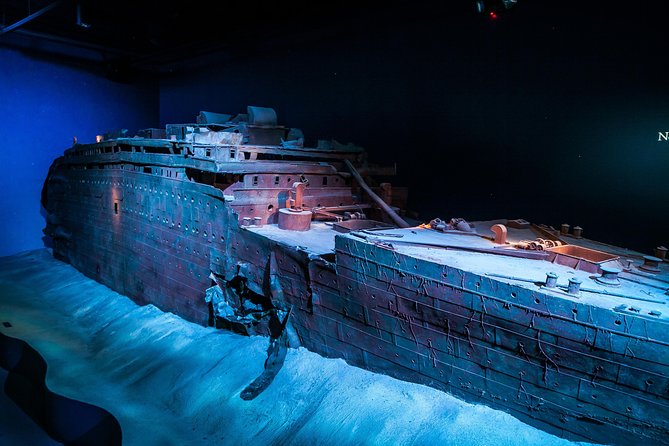
If you’re already a Titanic fan, you’ll likely feel satisfied because the display is broad: personal items, ship-specific items, and major hull imagery. If you’re a casual movie fan, the experience can still work, but you’ll enjoy it most if you’re curious about how the ship functioned and how people lived on it.
Who Should Book This Exhibit (and Who Might Skip It)
You should book if you fall into any of these groups:
- You like hands-on history where objects are the main event
- You want a family-friendly museum time slot in Las Vegas that isn’t just sitting in a theater
- You enjoy emotional storytelling backed by artifacts, not just dramatic narration
You might skip (or at least adjust your expectations) if you hate reading small text in dim lighting or if you only want the most famous scenes. This is not a short highlight reel. It’s a museum, and it asks you to slow down a bit to get the most out of the placards.
If you’re the kind of traveler who checks “one cultural thing” and moves on, this can still work because the artifact focus keeps it engaging. But go in knowing it’s built to reward time, not speed.
Practical Tips That Make the Visit Smoother
A few small details can save you frustration:
- Bring your glasses if you need them. Some sections are darker, and placards can be tough to read until your eyes adjust.
- Expect some areas to have photo restrictions, especially around certain replica displays. If you’re a serious photographer, plan to rely more on your memories than on lots of personal shots.
- Build in a little buffer time before you start your two hours. Luxor is busy, and getting oriented is part of the day.
If you’re traveling with mobility needs, the exhibit is wheelchair accessible. Service animals are welcome, and pets aren’t allowed.
Should You Book Titanic: The Artifact Exhibition at the Luxor?
Yes, if you want a Vegas stop that mixes authentic artifacts with human stories and gives you real time to look. For many people, the strongest payoff is the passenger card setup plus the anchor artifacts—especially the hull section and the staircase/cabin recreations. At around two hours, it’s also a manageable block of time without turning your day into a marathon.
I’d book it sooner rather than later if you’re set on going, since tickets can sell out around popular times. And if you can, give yourself a calm pace and plan to read, not just scan. That’s when it feels most meaningful.
FAQ
Where in the Luxor is Titanic: The Artifact Exhibition located?
It’s located on the Atrium Level. From the parking garage, enter the hotel and go up the escalators; it’s just past the food court. From the main entrance, go up the escalators and the exhibit is on your right.
How much time should I plan for the visit?
Most people spend about two hours.
What items will I see inside the exhibit?
The exhibition includes 250 authentic artifacts recovered from the wreckage, such as luggage, jewelry, china, ship’s whistles, floor tiles, an unopened bottle of Champagne, and a large section of the ship’s hull.
What are the hours, and when is the last entry?
Normal hours are daily 11 AM to 8 PM, and the last entry is 1 hour before closing. Hours can change.
Can I use my ticket anytime during the day?
Yes. You can use your admission ticket anytime during the long open hours of the exhibition.
Are there discounts for children?
Yes. There are discounted admission options for children, and children under age four are free and do not require a ticket.
Is the exhibit wheelchair accessible?
Yes, the exhibit is wheelchair accessible.
What if I need to cancel?
You can cancel for a full refund up to 24 hours before the experience start time. If you cancel less than 24 hours before, the amount paid won’t be refunded.
Are service animals or pets allowed?
Service animals are welcome, but pets are not allowed.