REVIEW · MUSEUMS
Las Vegas: BODIES | The Exhibition at the Luxor
Book on GetYourGuide →Operated by GetYourGuide Tours & Tickets GmbH · Bookable on GetYourGuide
One quick question: are you ready to look under the skin? Bodies…The Exhibition at the Luxor turns anatomy into a hands-on-feeling walk through real human specimens and how your body works. I like the way it’s both educational and easy to follow, with room-by-room focus on major systems and conditions. One possible drawback: it’s not a light, casual exhibit—some displays can feel intense, and you have rules like no cameras.
If you want a reliable way to spend a chunk of your Vegas day beyond the usual shows, this is a solid pick. You’ll see 13 whole-body specimens plus 260+ organs and partial specimens, with specific comparisons like a healthy lung next to a black lung. My main caution is planning: you’ll want enough time to move slowly, because last entry is at 5:00 PM.
In This Review
- Key Highlights Worth Your Time
- First Steps Inside Bodies…The Exhibition at the Luxor
- What You See: 13 Real Whole-Body Specimens and 260+ Organs
- The Room-by-Room Way It Explains Your Body Systems
- The Skeletal and Muscular Details That Make You Look Longer
- Respiratory Lessons: Healthy Lung vs Black Lung
- Circulation and the Blood Display That Sticks With You
- Disease, Overeating, and Inactivity: How Lifestyle Shows Up
- Timing Your Visit: Valid 1 Day and Last Entry at 5:00 PM
- Price and Value: Is $45 Worth It?
- Who Should Book This (and Who Might Skip It)
- Practical Tips: How to Make the Visit Easier
- So, Should You Book Bodies…The Exhibition at the Luxor?
- FAQ
- Where is Bodies…The Exhibition located?
- How much does it cost?
- How long is the ticket valid?
- What time is the last entry?
- Are cameras allowed inside the exhibition?
- Is smoking allowed?
- Are unaccompanied minors allowed?
- Is the exhibition wheelchair accessible?
Key Highlights Worth Your Time
- 13 whole-body specimens that let you understand anatomy as a complete system, not isolated images
- 260+ organs and partial specimens displayed with clear, structured room layouts
- Skeletal, muscular, respiratory, and circulatory focus so you can connect structure to function
- Lifestyle and disease comparisons, including the impact of smoking on lungs
- A famous blood display that recreates veins and arteries in striking detail
- Real preservation craftsmanship, with bodies prepared for careful long-term viewing
First Steps Inside Bodies…The Exhibition at the Luxor
You start at the Luxor Hotel & Casino, with the exhibit ending back at the same meeting point. The format is simple: you get admission, go in, and follow the exhibit flow at your own pace. It’s one of those activities where the “tour” part is mostly what you notice as you walk room to room.
I like that the ticket is straightforward and you can avoid the fuss with a skip-the-ticket-line option. This matters in Las Vegas, where saving even 15–30 minutes helps you protect the rest of your day. And since the last entry is at 5:00 PM, skipping delays can actually help you get in on time.
Also, the exhibit is wheelchair accessible, so it’s easier for people with mobility needs to plan a visit without special workarounds. Just be aware that some viewing areas may feel tight depending on crowd flow, since it’s a dense indoor exhibit space.
You can also read our reviews of more museum experiences in Las Vegas



What You See: 13 Real Whole-Body Specimens and 260+ Organs
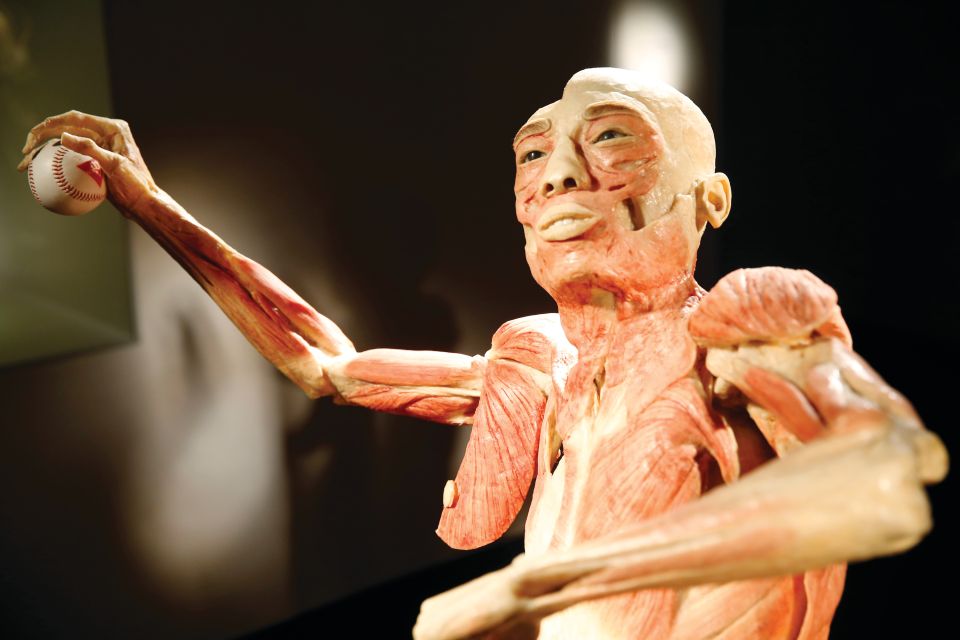
Bodies…The Exhibition is built around scale. You’re not looking at a few sample pieces—you’re seeing 13 whole-body specimens plus more than 260 organs and partial body specimens arranged to teach how the body is put together.
That range is why it works so well for different interests. If you care about how the body is engineered, the whole-body views give you context. If you’re more curious about specific organs or systems, the partial specimens help you focus on the details.
And the exhibit’s presentation is designed to feel realistic. The bodies are carefully dissected and then preserved through cutting-edge processes so you can study anatomical structures at close range. You’re seeing something prepared specifically for education, not a quick peek through diagrams.
The Room-by-Room Way It Explains Your Body Systems
The exhibition is organized so you can learn by moving through themed areas rather than trying to memorize an anatomy textbook. You’ll get close-ups and views tied to major systems, including the skeletal, muscular, respiratory, and circulatory systems.
From what’s highlighted in the exhibit, the teaching style is practical: it connects visible structure to how your body works. That’s a big difference from exhibits that show anatomy but don’t explain what it means. Here, you’re guided to notice relationships—how one system supports another.
You’ll also see themed displays focused on processes like digestion and breathing. That kind of pairing helps you understand cause-and-effect rather than treating each organ like a standalone. If you’ve ever wondered how your body stays balanced during daily life, this exhibit gives you something you can actually picture.
The Skeletal and Muscular Details That Make You Look Longer
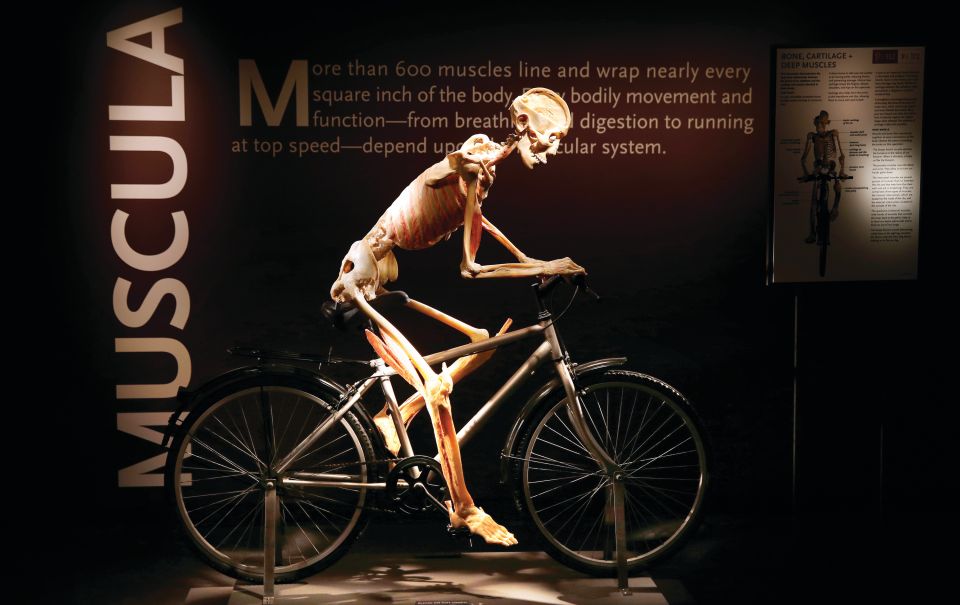
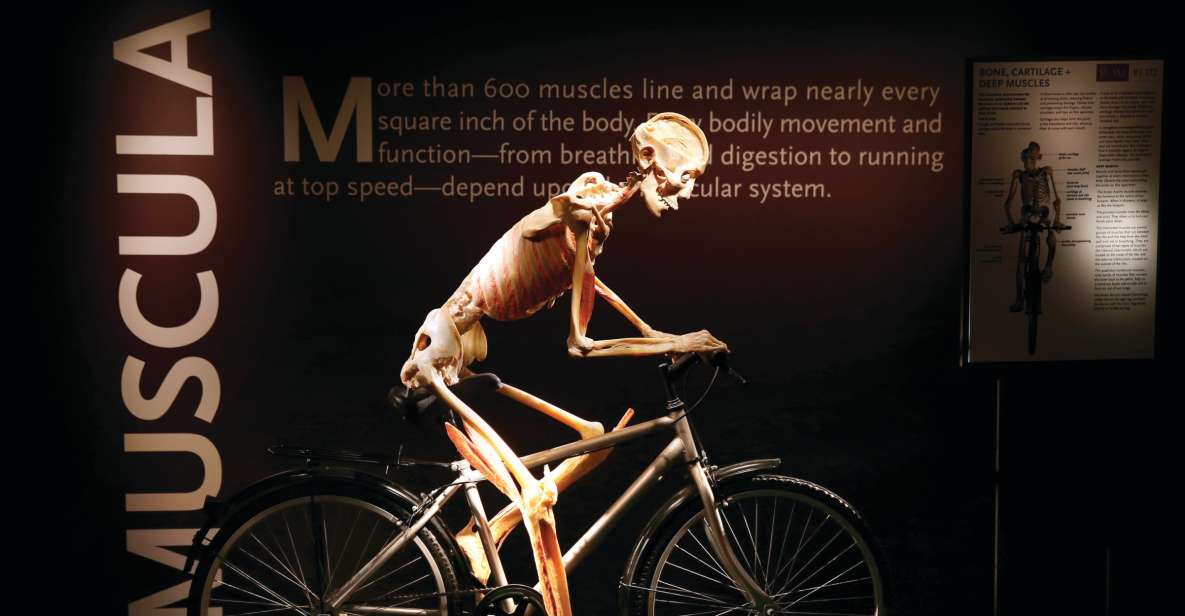
If you’re curious about the body’s engineering, the skeletal and muscular focus is one of the strongest parts of the experience. Seeing bones and muscle structures laid out clearly helps you understand why movement works the way it does.
These sections also tend to slow people down, in a good way. Even if you already know the basics, close displays make the scale and placement feel real. That physical reality is what turns anatomy from abstract facts into something you can mentally map later.
And for non-science folks, it’s approachable. You don’t need a background to follow along because the exhibit targets what you can see and where it belongs.
Respiratory Lessons: Healthy Lung vs Black Lung
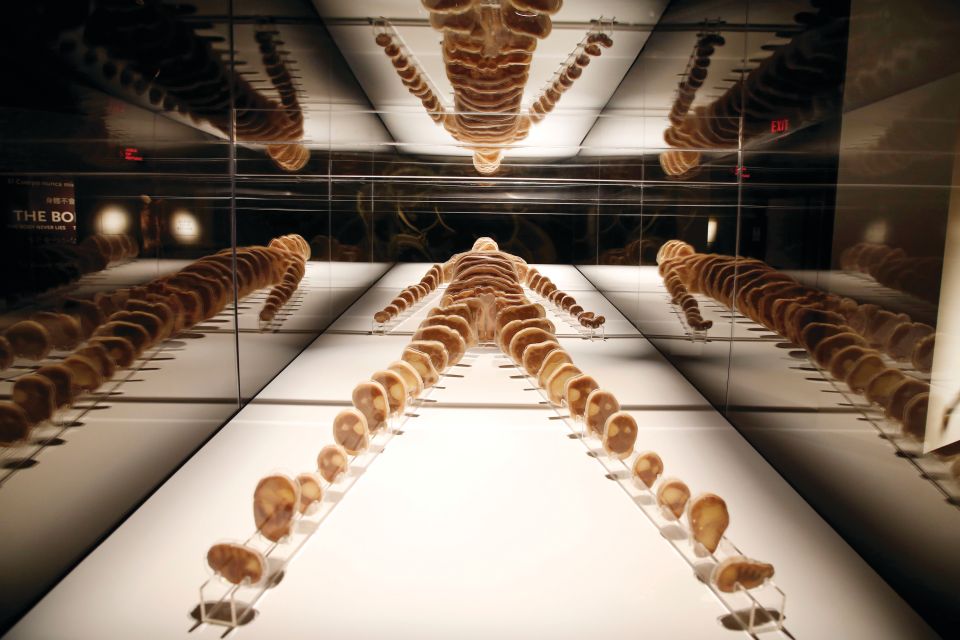
One of the most memorable comparisons is the exhibit’s lung display. You can see a healthy lung side by side with a black lung affected by smoking. That setup makes the lesson easy to grasp: it’s not just text about damage, it’s a direct visual comparison.
This part of the exhibit also lands because it ties to something personal. Most people have watched someone deal with breathing issues, or they’ve faced the reality of their own habits. A visual comparison like this makes it feel immediate rather than theoretical.
If you’d rather avoid emotionally heavy topics, this is the place to set expectations. It’s educational, but it’s also graphic in a way that some people won’t love. If you want to focus on anatomy mechanics over lifestyle impact, you might choose to spend a little less time here.






Circulation and the Blood Display That Sticks With You

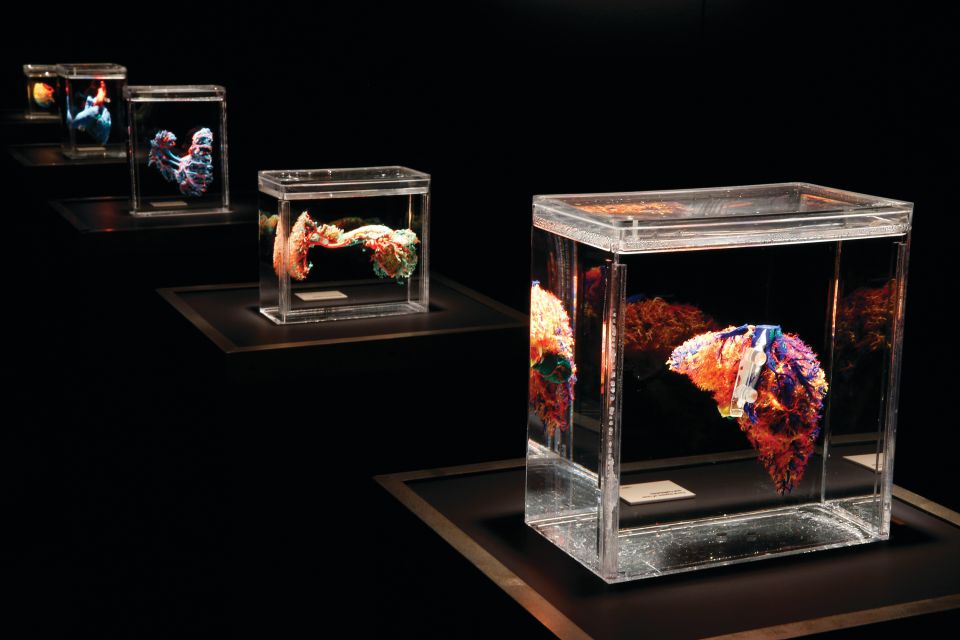
The blood and circulatory system displays are a standout. One example described in vivid detail is a display where a person’s circulatory system is recreated with red plastic resin, and the body is then dissolved away to leave a precise representation of veins and arteries—even down to tiny structures.
That effect does more than look striking. It helps you understand the scale of circulation as a network, not a couple of big pipes. When you see the branching pattern, it’s easier to accept why blockages and damage matter so much.
If you’re the kind of person who likes how systems connect, you’ll probably keep circling back to the blood/circulation areas. This is the kind of exhibit where one room gives you a new mental model for the next.
Disease, Overeating, and Inactivity: How Lifestyle Shows Up
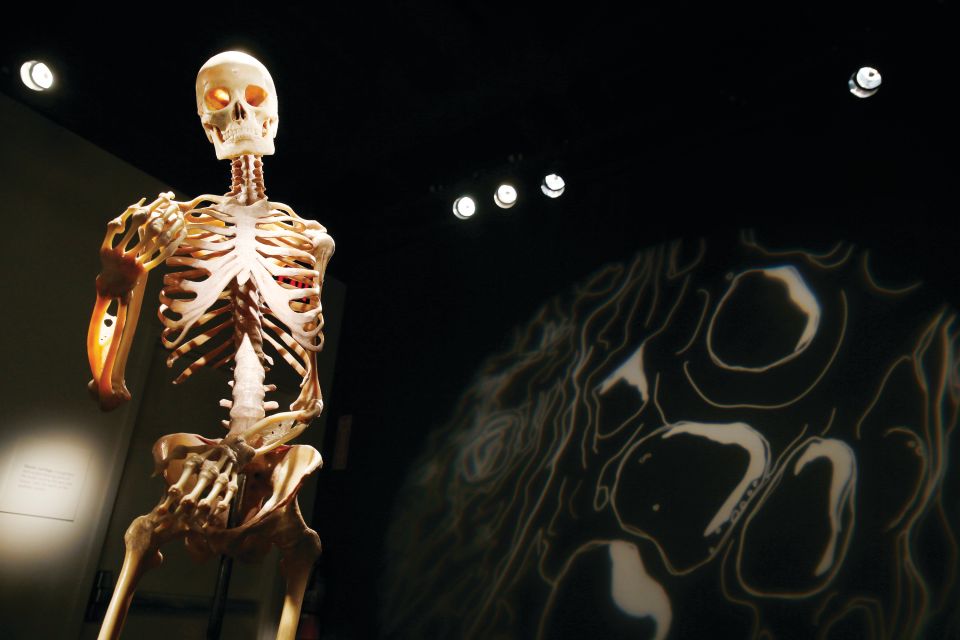
The exhibit doesn’t stop at “what organs do.” It also shows how humans can impact their bodies through different behaviors. In particular, you’ll see authentic specimens demonstrating effects related to over-eating and inactivity.
This section is valuable because it takes a common health conversation and turns it into something you can see. It gives you a visual way to understand that lifestyle choices can affect organs over time, not just body weight or energy levels.
It also helps to ground health advice. Instead of hearing generic warnings, you’re presented with tangible results—enough that you can form your own understanding. That’s often what makes exhibitions like this useful, even when they’re uncomfortable.
Timing Your Visit: Valid 1 Day and Last Entry at 5:00 PM
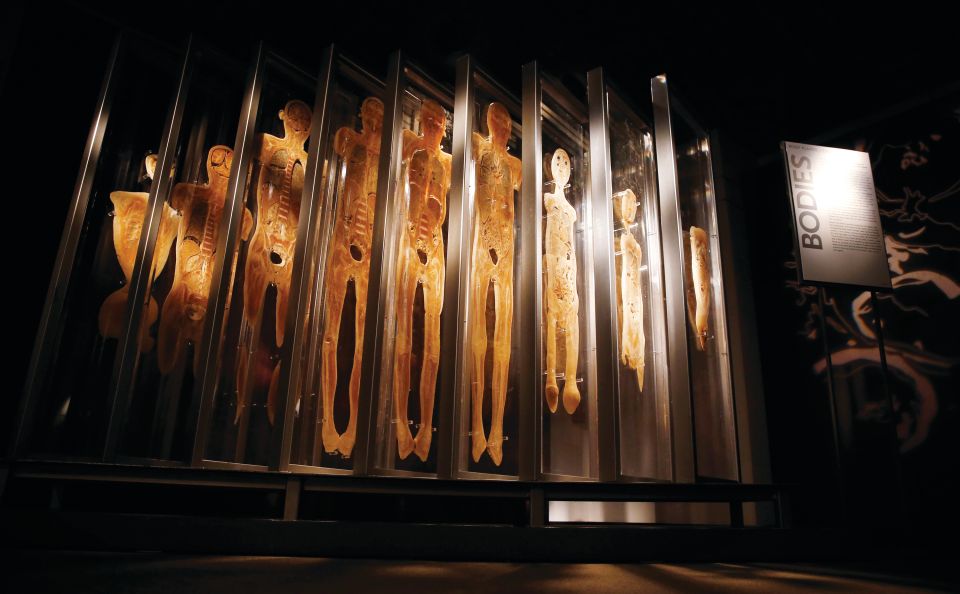
Your ticket is valid for 1 day, and you’ll choose a starting time based on availability. Duration is flexible, but in practice you should plan for a steady pace. This isn’t a quick “see it and leave” exhibit if you want to actually learn what you’re looking at.
The key timing point is last entry at 5:00 PM. If you’re visiting later in the day, build in extra buffer for getting from your other plans at the Strip to the Luxor and finding the exhibit entrance. Vegas days move fast, and you don’t want to miss the final entry because you got caught up elsewhere.
I recommend aiming to arrive earlier than you think you need. You’ll give yourself room to slow down, revisit sections, and read without rushing your reactions.
Price and Value: Is $45 Worth It?
At $45 per person, the ticket isn’t a bargain. But for what you’re getting, it can still feel like good value.
Here’s why: you’re paying for a large, structured educational experience built around 13 whole-body specimens and 260+ organs, with multiple themed systems and comparisons like the healthy lung vs black lung and the circulatory blood display. It’s not a short viewing of a few isolated items—it’s an extended indoor experience that can genuinely change how you picture anatomy.
Also, the skip-the-ticket-line perk is meaningful value in practice. Less time waiting means more time inside, and for an exhibit that can be intense, that matters. You’ll also be able to go at a pace that suits you, which you can’t always do with fast guided attractions.
If you’re into science, health, or educational experiences, you’ll likely feel the price matches the content. If you hate graphic displays, then $45 won’t feel worth it, even if it’s “well done.” That’s the main value question.
Who Should Book This (and Who Might Skip It)
This experience fits best if you like learning that’s visual and concrete. You don’t need a medical background. The exhibit is structured around major systems—skeletal, muscular, respiratory, and circulatory—and it’s designed to make the inner workings easier to understand.
It’s also a good match if you like exhibits with comparisons and consequences. The lung comparison tied to smoking and the lifestyle-related sections about overeating and inactivity give you a cause-and-effect framing you can remember.
That said, don’t book this expecting a family-friendly “walk around.” There are strict rules: no unaccompanied minors, and children under 18 must be accompanied by an adult. Plus, the content is inherently graphic in a way that some people won’t handle well.
If you’re sensitive to anatomical displays or medical imagery, you might want to reconsider. Even if it’s educational, your comfort matters more than the subject.
Practical Tips: How to Make the Visit Easier
The exhibit has clear rules that affect how you prepare. Cameras are not allowed, and you also can’t smoke. You’ll want to travel light because luggage or large bags are not allowed either.
That combination matters. If you normally carry a backpack or big day bag, plan to leave it at your hotel or use a smaller personal item you can manage comfortably. Otherwise, you may waste time figuring out storage, or you may feel stressed while trying to focus on the exhibit.
A last practical tip: wear comfortable shoes. You’ll likely do a lot of walking through rooms, and the best viewing comes from taking your time, not from power-walking like you’re touring a casino.
So, Should You Book Bodies…The Exhibition at the Luxor?
If you want a Vegas activity that feels different from the usual nightlife loop, this is one of the more grounded, educational options. The strongest reasons to book are the sheer scale of what you see—13 whole-body specimens and 260+ organs—plus the memorable comparison displays like the healthy vs black lung and the highly detailed circulatory blood display.
I’d say book it if you’re curious about how your body works and you can handle realistic anatomy. I’d skip it if graphic medical displays make you uncomfortable, or if you’re looking for a purely light, casual outing.
If you do book, give yourself time. Arrive with enough buffer for the 5:00 PM last entry, travel light due to the no large bags rule, and plan to read at your pace. That’s how this exhibit becomes more than a shock—it becomes a clear way to understand yourself.
FAQ
Where is Bodies…The Exhibition located?
It’s at Bodies…The Exhibition at the Luxor Hotel & Casino in Las Vegas, Nevada.
How much does it cost?
The price is $45 per person.
How long is the ticket valid?
The ticket is valid for 1 day. Starting times depend on availability.
What time is the last entry?
The last entry into the exhibit is at 5:00 PM.
Are cameras allowed inside the exhibition?
No, cameras are not allowed.
Is smoking allowed?
No, smoking is not allowed.
Are unaccompanied minors allowed?
No. Unaccompanied minors are not allowed, and guests under eighteen must be accompanied by an adult.
Is the exhibition wheelchair accessible?
Yes, the exhibit is wheelchair accessible.
If you want, tell me your travel dates and whether you’re more into anatomy, health topics, or just a cool Vegas change of pace—I’ll suggest the best time-of-day to go based on the 5:00 PM last entry.