REVIEW · MUSEUMS
Atomic Museum Admission Ticket
Book on Viator →Operated by Atomic Museum · Bookable on Viator
The atomic age, shown up close. The Atomic Museum in Las Vegas is a practical detour from neon and slots, turning the story of the Nevada Test Site into walk-through exhibits with real artifacts and clear context. You’ll move from the United States’ atomic development—especially the WWII era—into the science, secrecy, and lasting impact that shaped policy and public life.
I especially love the mobile ticket setup and the way the museum gives you hands-on detail you can actually linger over. I also like that the experience covers more than the headline bombs, including threads like the Manhattan Project, test sites, rocket engines, and even a cryptographic section. For many people, that variety makes the visit feel like a story with chapters, not a single exhibit.
One possible drawback: the pace and the mix of topics won’t land for everyone. A few visitors felt the museum could seem outdated or on the short side, and one person wanted more sections for a longer visit.
In This Review
- Key things to know before you go
- Atomic Museum in Las Vegas: what you’re walking into
- The mission behind the exhibits: Nevada Test Site Historical Foundation
- Your admission ticket: mobile entry, hours, and pacing
- Stop at the Atomic Museum: what you’ll actually see
- How to choose your visit style: self-guided or with headphones
- Value check: is $29 a smart deal?
- Who should go—and who might want to skip
- Should you book the Atomic Museum admission ticket?
- FAQ
- How much is the Atomic Museum admission ticket?
- How long does the visit take?
- Is the ticket mobile or paper?
- What are the opening hours in Las Vegas?
- Is there a guided option, or is it self-guided?
- Where is the museum located relative to transit?
- Are service animals allowed?
- Is the experience refundable or changeable?
- Is the experience suitable for most people?
Key things to know before you go
- Mobile ticket entry makes arrival easier and cuts down on paper hassle.
- Nevada Test Site context connects the local story to the national nuclear weapons program.
- Manhattan Project and WWII focus helps you place atomic development in time, not in a blur.
- Cryptography and science add-ons give the exhibits extra layers beyond weapons history.
- Self-guided pacing lets you read placards slowly, or move fast if you want.
- Strong value at $29 compared with higher door pricing and paid guided options reported by visitors.
Atomic Museum in Las Vegas: what you’re walking into
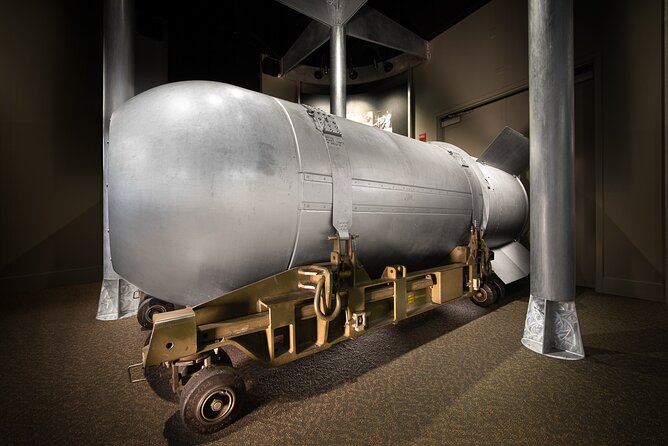
This museum is built for people who want facts, not just a scary headline. The theme is the Nevada Test Site and the nation’s nuclear weapons program, but it’s presented through artifacts, photographs, and explanatory text. In other words: you get the “why” and the “how,” not only the “what.”
Las Vegas is known for showy distractions, and this is the opposite kind of attraction. Expect a more serious tone, but not a stiff one. You’re free to take your time, and the exhibits are designed so you can piece together the story step by step. If you’ve seen Oppenheimer, this is the kind of place that can make the film’s ideas feel more concrete because you’ll be looking at the era’s objects and the systems around them.
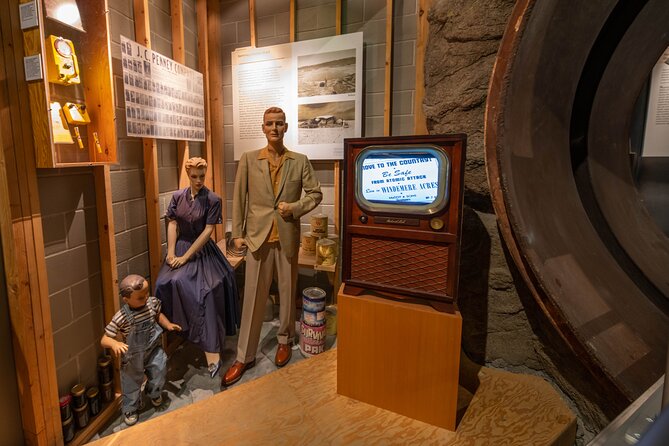
What makes it interesting is the blend. It’s not only about bombs; it also covers the science, the political secrecy, and the fallout that followed. Visitors also note it includes pop culture paraphernalia, which is a smart reminder that the atomic age seeped into everyday life, not just government reports.
You can also read our reviews of more tours and experiences in Las Vegas



The mission behind the exhibits: Nevada Test Site Historical Foundation
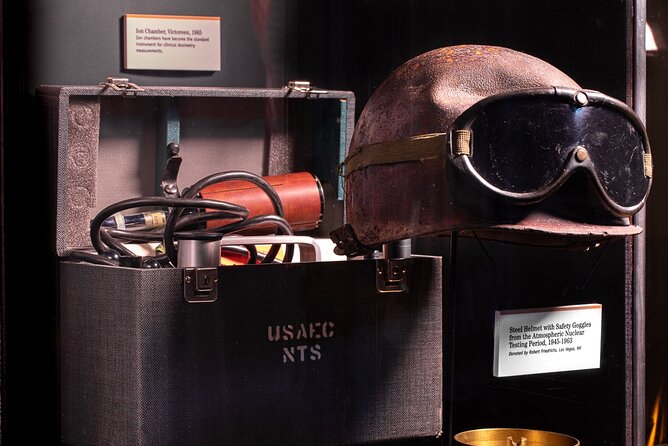
The museum is tied to the Nevada Test Site Historical Foundation, which exists to preserve and keep public access to the history of the Nevada Test Site and the nuclear weapons program. Congress has charged the museum—designated as a private national museum in December 2012—with preserving history and educating the public.
That mission matters because it shapes the tone of what you see. You’re not just being entertained. You’re being taught how to interpret the era. You’ll see how secrecy worked, what the testing program changed over time, and how the United States’ role in atomic development connected to broader global events.
It also means the museum’s goal is interpretation, not simplification. The exhibits don’t pretend the topic is easy. If you want a museum visit that respects the complexity and doesn’t rush to a single message, this is a strong pick.
Your admission ticket: mobile entry, hours, and pacing
The ticket is priced at $29.00 per person and works as a mobile ticket. That’s a real convenience if you’re moving around town and don’t want to worry about printing anything. You’ll still want to keep your confirmation handy so staff can scan or verify you smoothly.
The visit runs about 1 to 2 hours for most people. That duration feels about right if you plan to read most placards and spend time with the major gallery clusters. If you’re the type who only skims, you can probably move quicker. If you like to read carefully, plan on the upper end and give yourself room for a second pass on what catches your attention.
Opening hours are 9:00 AM to 5:00 PM daily. The listed schedule runs across Monday through Sunday for the period shown (from 06/27/2023 through 01/20/2027). If you’re visiting in the heat of the day, this is a good option because it’s indoors and structured.
Location-wise, it’s described as near public transportation and close to the Strip action. That’s useful for planning: you can fit it in between meals and shows without dedicating a full travel day.
Accessibility notes are straightforward. Service animals are allowed, and the experience is described as something most people can participate in. If you need special accommodation, you’ll likely want to contact the provider ahead of time, but from what’s provided here, the basics are good.
Stop at the Atomic Museum: what you’ll actually see
This is a single-stop experience, but the exhibits move in a clear direction. You’ll start in a museum environment that sets context, then you’ll work through galleries covering key themes in atomic development and testing. Expect plenty of close-looking: artifacts, photos, and diagrams meant to be read at close range.
A common highlight is how the museum handles the WWII era and the Manhattan Project story. You’ll see material that connects atomic bomb development during World War II to the larger testing and research program. That helps you understand the time period as something more than dates on a timeline.
Then you’ll likely notice how the museum expands past the headline events. One well-regarded section focuses on the science behind atomic testing and includes topics like rocket engines and test sites. Another area mentioned in accounts is a cryptographic section, which is a reminder that the atomic age was also a story about information control—how knowledge was guarded, shared, and used.
There’s also a media component. Visitors describe an excellent video presentation that sets the stage and makes the exhibits easier to interpret. If you tend to learn faster with visuals first, try to catch it early in your visit. Even if you’re eager to start reading, the video can help you connect the dots before you get into the details.
One more thing: the atmosphere can feel a bit eerie, not because the museum is trying to scare you, but because the subject matter is inherently heavy and the artifacts are real. If you’re expecting a light museum, you may want to adjust your mindset. If you want to feel the weight of the era while still getting clear explanations, that tone can be a plus.
How to choose your visit style: self-guided or with headphones
This experience is set up so you can move at your own pace. People describe it as self-guided, which is ideal if you’re balancing museum time with a busy Vegas itinerary. You can stop where something grabs you, then keep rolling when you’re ready.
There’s also an option for guided support. One consistent theme is that visitors mention a guided tour approach that includes headphones, alongside the option to browse on your own. If you love having narration to steer you through complex topics, that added layer can help you connect sections without losing time searching for meaning.
Here’s a practical way to decide:
- If you want to read everything, self-guided works well. You control the pace and can linger.
- If you tend to skim placards, guided/headphones can help you avoid missing key context.
- If you’re visiting around a film like Oppenheimer, guided support can help you translate what you saw on screen into real-world artifacts and program details.
A fun strategy described by visitors is doing things twice in small ways: first pass for photos and overall layout, second pass focusing on placards for context. You won’t need to do a full repeat, but the idea is solid—speed once, then slow down for the parts you care about.
You can also read our reviews of more museum experiences in Las Vegas






Value check: is $29 a smart deal?
For a Las Vegas museum ticket, $29 can be an easy yes—especially if you compare it to what’s reported for door pricing and paid guided options. One visitor noted tickets at the door were higher, and that guided touring carried an additional cost. Based on that, pre-paying through this setup can feel like you’re buying the museum for a more reasonable rate instead of paying “Vegas tax.”
Why that matters: an atomic history museum isn’t a blockbuster with constant ticket demand the way some headline attractions are. When the price is closer to typical museum spending, it becomes a low-risk add-on. You’re more likely to treat it as a meaningful stop instead of squeezing it in only if you’re 100% sure you’ll love it.
Also, the ticket is commonly booked in advance (about 10 days on average). That suggests timing can be part of the value. If you wait until the last minute, you may lose out on the best pricing option available.
If you’re the type who plans tightly, you’ll appreciate the mobile ticket and straightforward hours. It’s also non-refundable, so it’s better to book when you’re confident your schedule holds.
Who should go—and who might want to skip
This works best for people who enjoy historical exhibits with scientific and political context. Couples and solo visitors both fit well here because the content doesn’t require you to “perform” socially. If you like understanding systems—how secrecy, testing, and technology shaped decisions—this is the kind of museum that gives you that.
It’s also a good pick if you want Las Vegas to be more than casinos and shows. The setting is convenient, but the experience is different enough that it gives your trip a second flavor.
A balanced warning: if you only want a narrow focus on atomic bombs and nothing beyond that, you might feel pulled into extra topics. One account described the museum as covering more than bombs and feeling dull or outdated. That doesn’t mean it’s bad. It means the museum’s approach is interpretive and broad, not strictly one-topic.
Also, if you’re hoping for a long-day museum marathon, plan carefully. The typical visit is 1 to 2 hours, so you may want to pair it with another nearby activity rather than expecting it to fill an entire afternoon.
Should you book the Atomic Museum admission ticket?

Book it if you want a serious, well-paced history stop that’s easy to fit into a Vegas day. At $29 with a mobile ticket, it’s a strong value for an educational experience that covers atomic development, the Nevada Test Site, and the science and secrecy around it. If you like reading and you’re curious about how the atomic age showed up in real artifacts and public life, you’ll likely feel satisfied within the 1–2 hour window.
Skip or reconsider if you’re expecting a quick, light attraction or if you only want one narrow slice of the story. A few people felt the exhibit set could feel outdated or not as engaging as they hoped, and one person wanted more content for a longer visit.
If you’re undecided, lean toward going—especially if you’re already thinking about Oppenheimer themes or you enjoy museums that connect history to technology.
FAQ
How much is the Atomic Museum admission ticket?
It costs $29.00 per person.
How long does the visit take?
Plan for about 1 to 2 hours.
Is the ticket mobile or paper?
The ticket is a mobile ticket.
What are the opening hours in Las Vegas?
Hours are 9:00 AM to 5:00 PM, Monday through Sunday.
Is there a guided option, or is it self-guided?
The experience is described as allowing you to browse on your own, with an option for a guided tour that uses headphones.
Where is the museum located relative to transit?
It’s noted as being near public transportation, and close to the main Vegas Strip area.
Are service animals allowed?
Yes, service animals are allowed.
Is the experience refundable or changeable?
No. It is non-refundable and cannot be changed for any reason.
Is the experience suitable for most people?
Most travelers can participate.