REVIEW · LAS VEGAS
Real Bodies at Horseshoe Las Vegas
Book on Viator →Operated by Caesars Entertainment · Bookable on Viator
Bodies, explained on the Strip.
Real Bodies at Horseshoe Las Vegas is a self-guided walk through real-life human anatomy and interactive displays that make your own body feel both strange and familiar again. The big drawback is that it can be intense (and a bit much for very young kids), and a couple people find the experience shorter or simpler than the ads suggest.
Plan about an hour to move at a calm pace, then add time if you want to linger. I also like the fact that you can take non-commercial photos, which makes it easier to share what you learned later. Just know it’s tucked away on the lower level and you’ll go in through the gift shop area, so give yourself a little extra time to find it.
In This Review
- Quick take before you go
- Entering the Horseshoe: how to find Real Bodies fast
- The Real Bodies galleries: what you actually experience
- What the exhibits emphasize as you walk
- How the bodies are preserved (and why the realism hits)
- The second stop at Horseshoe: human-story galleries
- Photo rules, timing, and pacing that won’t stress you out
- Price check: is $33.38 good value on the Strip?
- Who should book Real Bodies at Horseshoe Las Vegas?
- Should you book it? My practical recommendation
- FAQ
- Where is Real Bodies located at Horseshoe Las Vegas?
- How long does the Real Bodies experience take?
- Can I take photos inside the exhibit?
- Is Real Bodies suitable for children?
- Are there restrooms inside the exhibition?
- How are the bodies preserved?
Quick take before you go

- Lower-level entrance: Find it inside Horseshoe on the lower level by the Flamingo Road entrance, near the gift shop.
- Self-guided pacing: You control the speed, so you can skim or slow down where your questions start.
- Real specimens + lots of details: Expect around 20 preserved bodies and 200+ anatomical specimens.
- Photos are allowed: Non-commercial photos are okay, but professional photo gear needs approval.
- No food or drinks inside: Plan snacks and drinks before you enter.
- Some content is graphic: This is real anatomy, including preserved genitalia; parental guidance matters.
Entering the Horseshoe: how to find Real Bodies fast
Real Bodies is inside Horseshoe Las Vegas, but it’s not the kind of thing you stumble into on accident. It’s on the lower level, positioned right by the Flamingo Road entrance. In practice, that means your first job is wayfinding—expect it to feel a little tucked away, and use the gift shop area as your landmark.
Once you’re inside, you’ll check in, then get moving on your own. This is one of those attractions where the layout matters: if you walk in stressed, you’ll miss the point. If you walk in curious, it clicks quickly.
Also, don’t assume you’ll have unlimited convenience once you’re in. Food and drinks are not permitted inside the exhibition, and restrooms aren’t available once you’re inside the galleries. I’d treat the building like a museum: go once before you start, then enjoy the run.
You can also read our reviews of more tours and experiences in Las Vegas.



The Real Bodies galleries: what you actually experience
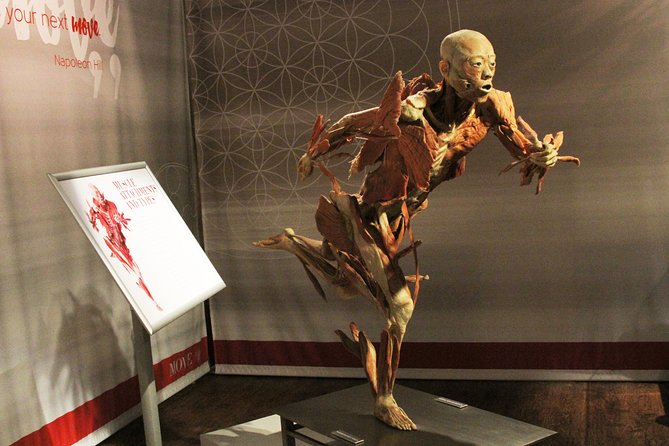
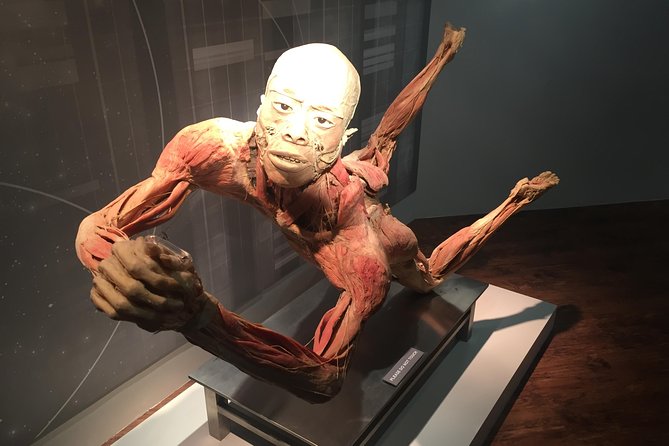
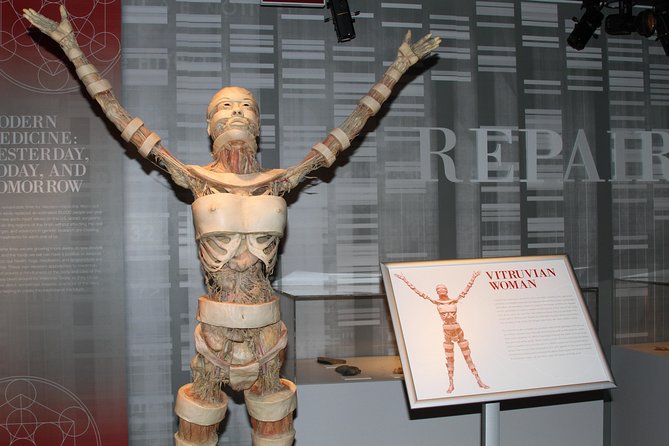
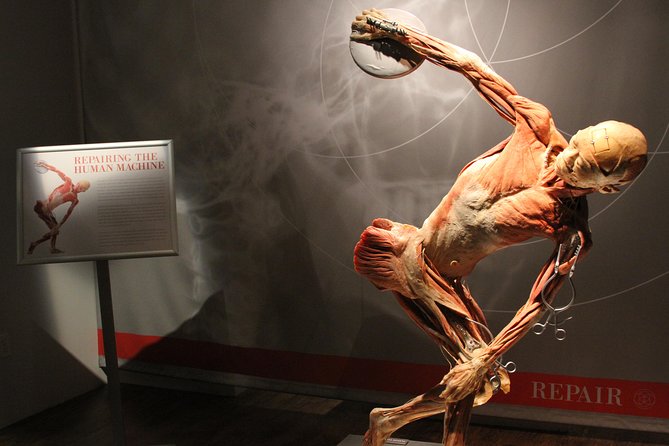
The main event is a self-guided exhibition built around human anatomy and how the body holds life together. You’ll see displays that include around 20 real, preserved human bodies along with 200+ anatomical specimens. The writing is designed to be understandable, so you’re not stuck translating medical textbooks while you’re staring at something very real.
What I like most is the way the exhibit helps you connect systems instead of treating organs like separate facts. You move from one part to the next, and the overall effect is a growing sense that the body is one working system—mind and body together. It’s also built for curiosity: if you stop at a display and read slowly, you get a lot more out of it.
This is not “look, move on” entertainment. Many people take around an hour, and some linger longer—especially if they’re reading carefully or returning to a specimen they want to understand better. If you’re short on time, you can still do it quickly, but you’ll get more value by pacing yourself.
What the exhibits emphasize as you walk
The attraction focuses on multiple levels of understanding: the physical parts (organs, structures, systems) plus the human story behind them. As you go through sections, you’re encouraged to think about things like the relationship between mind, body, and spirit—basically, how you’re put together and why it matters.
One practical tip: if you’re the type who gets overwhelmed by visual detail, you’ll still be okay. The self-guided setup lets you pause, look away, or take breaks when you need to. You’re not stuck in a rigid group schedule.
How the bodies are preserved (and why the realism hits)
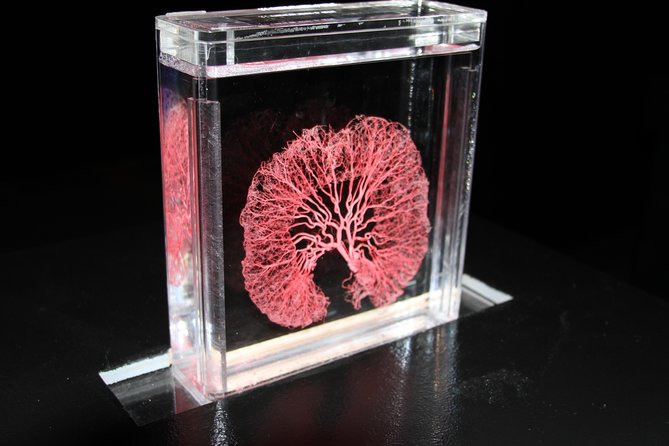
The realism is a huge part of why this experience stays with you. The specimens are preserved using a method called Polymer Preservation, which uses liquid silicone rubber. The process can take up to a year depending on the size of the organ or the overall body, so what you see isn’t a quick “museum prop”—it’s the result of careful preservation work.
Why it matters for your visit: polymer preservation keeps the structures stable in a way that supports learning. That means you can compare shapes, proportions, and details while reading explanations. It also explains why the displays feel so precise—people who have a medical background often react strongly because the anatomy looks like something you can study, not something you have to imagine.
There’s also a bigger ethical and informational context provided with the exhibit: the specimens are unclaimed bodies that were donated legally and died of natural causes. The attraction also notes that the specimens were provided by Dalian Hoffen Bio-Technique Co. Ltd. in China. You don’t have to get lost in the details, but it’s good to know the exhibit gives a legal and preservation explanation rather than pretending this is fantasy.
The second stop at Horseshoe: human-story galleries
After the anatomy portion, you’ll move into the Horseshoe Las Vegas casino experience designed around human narratives. This part of the outing frames anatomy through cultural and emotional storytelling.
The language used to describe it is dramatic for a reason: you’re meant to see the human experience “from the first breath to the last” through immersive galleries and approachable art-gallery style displays. In plain terms, think of it as a companion experience that helps you process what you just learned by wrapping it into a broader human story.
What makes this worth your time is that it shifts you from “organ identification” to meaning. After seeing preserved anatomy, you’re not just thinking about bodies as objects. You’re thinking about what a body allows you to do, what it gives you, and what you choose to do with your life.
One consideration: if you came only for the anatomy specimens, this second portion might feel more conceptual than scientific. It’s still included with admission, but your enjoyment will depend on whether you like the “story plus imagery” approach.





Photo rules, timing, and pacing that won’t stress you out
This exhibit runs better when you plan your behavior like you would for a museum. You can take photos inside for non-commercial purposes, and professional photography equipment requires approval. If you just want phone photos for later, you’re set.
But there are a few limits that matter for comfort:
- No food or drinks inside.
- No restrooms once you’re inside the exhibition.
- If you want a smooth visit, arrive having already handled the basics.
Timing-wise, the experience is usually about an hour for the anatomy galleries, and the full experience fits within a 1 to 2 hour window. If you’re traveling with people who like to read every label, it can stretch. If you’re more “I want the highlights,” you can still finish without dragging it out too long.
Booking ahead is part of the value here. With a prebooked admission ticket and a mobile ticket option, you cut down on uncertainty when you arrive at the Strip. And because this is the kind of exhibit people plan specifically to fit around dinner, showtime, or a flight schedule, having your entry handled matters.
Price check: is $33.38 good value on the Strip?
At $33.38 per person, this isn’t bargain-bin entertainment. So here’s the honest math: the price makes the most sense if you’ll actually engage with the learning.
You’re paying for three things that cost real money to do well:
- Preserved real specimens and the labor behind keeping them display-ready.
- Self-guided interpretation, so you’re not just looking—you’re learning at your own speed.
- A second human-story gallery stop within the Horseshoe complex.
If you’re the kind of person who likes science but wants quick visuals only, it may feel pricey. One reason: at least part of the experience depends on reading and processing, not just looking. If you prefer hands-on science labs or extremely interactive activities, you might want to temper expectations. The exhibit is interactive in the sense of how it’s presented and explained, but it’s still a walk-through anatomy museum-style experience.
On the other hand, if you enjoy anatomy, medical topics, or even just the big question of how your body works, this can be a strong value—because you’ll leave with more understanding than you came in with. Some people also spend over two hours, which suggests that the learning supports a longer visit if you want it.
Also note: the ticket is non-refundable and can’t be changed. That doesn’t mean you shouldn’t book—it just means you should be sure your schedule is solid before you buy.
Who should book Real Bodies at Horseshoe Las Vegas?
This is a great fit if you want a more grounded, real-world Las Vegas experience. It’s especially good for:
- Science lovers who like learning through visual examples
- People curious about how body systems connect
- Visitors who want something quieter and more meaningful than another casino hour
If you’re a medical professional or work in healthcare, you might get extra value because the level of detail can feel study-like rather than “look and guess.” You’ll likely spend more time reading and comparing what you know with what the displays highlight.
For families, I’d be careful. The exhibit is for all ages with parental guidance suggested because it includes real preserved bodies and contains content that can be graphic (including full genitalia). For teenagers, it can be educational in a direct way. For younger kids, it may be harder to process.
The good news: the exhibit is described as wheelchair accessible, so mobility shouldn’t block you from enjoying it. You’ll still want to move thoughtfully through the spaces, especially if you’re with someone who needs extra time at displays.
Should you book it? My practical recommendation
Book Real Bodies at Horseshoe Las Vegas if you want a memorable Las Vegas attraction that teaches you something real and lets you go at your own pace. The combination of preserved anatomy, lots of specimens, and a human-story add-on gives it more weight than a typical stop.
Skip it or rethink the timing if you’re looking for light, easy entertainment. The content is intense, and the experience requires you to slow down and read. It can also feel short to people who expect a huge maze of rooms—so if you’re the type who hates finishing a museum faster than you planned, you may want to block extra time.
If you’re on the Strip anyway and you have about one to two hours where you can focus, this is a strong use of that time. Just go in prepared: eat first, handle restrooms before you enter, and give yourself permission to pause and look longer where your questions start.
FAQ
Where is Real Bodies located at Horseshoe Las Vegas?
Real Bodies is on the lower level inside Horseshoe Las Vegas, right by the Flamingo Road entrance.
How long does the Real Bodies experience take?
On average, plan about 45 to 60 minutes for the Real Bodies exhibit, and you can usually stay longer if you want.
Can I take photos inside the exhibit?
Yes, you can take non-commercial photos. Professional photography equipment isn’t permitted without prior approval.
Is Real Bodies suitable for children?
It’s described as suitable for all ages, but parental guidance is suggested because the exhibit includes real human bodies preserved after dissection, and some displays include full genitalia.
Are there restrooms inside the exhibition?
Restrooms are available near the lower-level entrance area, but there are no restrooms once you are inside.
How are the bodies preserved?
The bodies are preserved using Polymer Preservation, which uses liquid silicone rubber to permanently preserve the specimens.