REVIEW · 1-DAY TOURS
Las Vegas: Death Valley Day Trip with Stargazing
Book on GetYourGuide →Operated by iTravel USA LLC · Bookable on GetYourGuide
Death Valley in one long day feels like a movie. You get the park’s big-name sights, guided photo moments, and an honest shot at the night sky. I like the day-to-night pacing and the way the guide helps you keep moving without rushing, including photo support throughout. One caution: if you dislike having your camera and posing treated as part of the plan, you may find the constant photo focus a bit much.
This is a small-group setup with hotel pickup and a van ride that turns a hard-to-plan day into something you can actually enjoy. I also appreciate that dinner and basic supplies are handled, so you’re not scrambling in the middle of the desert. The trade-off is that you’re still in a tour rhythm, so you’ll have less freedom to linger where your curiosity pulls you.
In This Review
- Key things I’d plan around
- Getting to Death Valley Without the Chaos From Las Vegas
- Welcome Sign to Dante’s View: the First Photo Hit
- Zabriskie Point: Golden Badlands With a Controlled Walk
- Mesquite Flat Sand Dunes at Sunset-Ready Timing
- Furnace Creek: Restrooms, an Outdoor Museum Feel, and Dinner
- Badwater Basin: Salt Flats and the Lowest Point Vibe
- Artist’s Palette and the Color-Mineral Stops
- Sunset at Death Valley’s Best View Moments
- Death Valley Junction Stargazing: Constellations, Planets, and the Milky Way
- Van Comfort and the Small-Group Feel
- Price: Is $299 Worth It for This Much Day-to-Night Time?
- Who This Tour Suits Best (and Who Should Skip It)
- Should You Book This Death Valley Stargazing Tour?
- FAQ
- How long is the Death Valley day trip with stargazing?
- What’s included in the tour price?
- Where does pickup happen in Las Vegas?
- What are the main stops during the day?
- Do you see the Milky Way?
- How much time do you spend at Furnace Creek?
- Is there hiking?
- What should I bring?
- Is this tour suitable for kids or anyone with mobility needs?
- What languages are the guides available in?
Key things I’d plan around
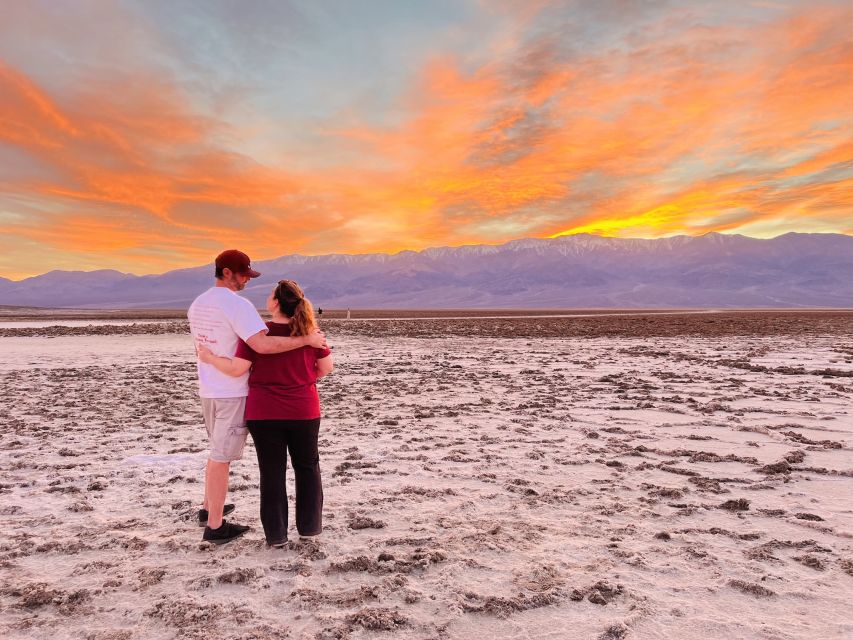
- Stargazing happens after sunset, at a quieter desert viewpoint, and the guide offers long-exposure photo tips
- Photo stops are built in, from the Welcome Sign to salt flats and painterly mineral hills
- You get a real break for food at Furnace Creek, with dinner time included and time to breathe
- Comfortable walking, not extreme hikes, though you’ll cover some ground at multiple stops
- Clear-skies matter for the best view of constellations, planets, and the Milky Way
Getting to Death Valley Without the Chaos From Las Vegas
This tour is designed for a full day-to-night experience, so you start with hotel pickup and a direct drive into Death Valley. The van ride is long enough to feel like a real outing (about a two-hour trip each way), but organized enough that you won’t waste time figuring routes, parking, or timing.
You’ll also benefit from an express-style security check, which matters when the day is already packed. If you’re staying off-Strip, you can still arrange pickup by sharing your address when you book, and the company will confirm the exact time the day before.
The group stays focused on logistics. That’s valuable here, because Death Valley distances and viewpoints can be mentally tiring when you’re doing it alone. You’ll be glad someone else is handling the sequencing and getting you from one “can’t-miss” spot to the next.
You can also read our reviews of more tours and experiences in Las Vegas


Welcome Sign to Dante’s View: the First Photo Hit
Your day begins with a first stop at the Death Valley Welcome Sign, which is a quick win for an early photo and a smooth start. It’s brief by design, so you’re not burning daylight before the real viewpoints kick in.
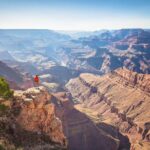
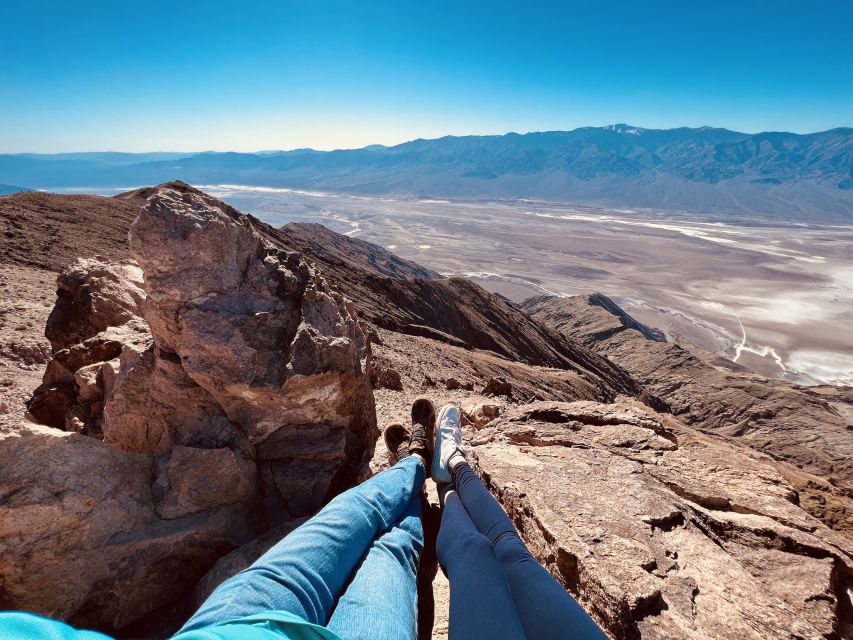
Next comes Dante’s View, one of the park’s classic high overlooks. Expect a guided stop that includes sightseeing and time to look around (about 30 minutes total). This viewpoint is all about scale. From up high, you get a stronger sense of how the desert’s colors, ridges, and dry basins stack up across the distance.
Practical tip: at these higher viewpoints, light changes fast. If you care about photos, having a guide who times the moment helps. The reviews also back this up, with guides like Jay praised for both knowledge and photography.
Zabriskie Point: Golden Badlands With a Controlled Walk
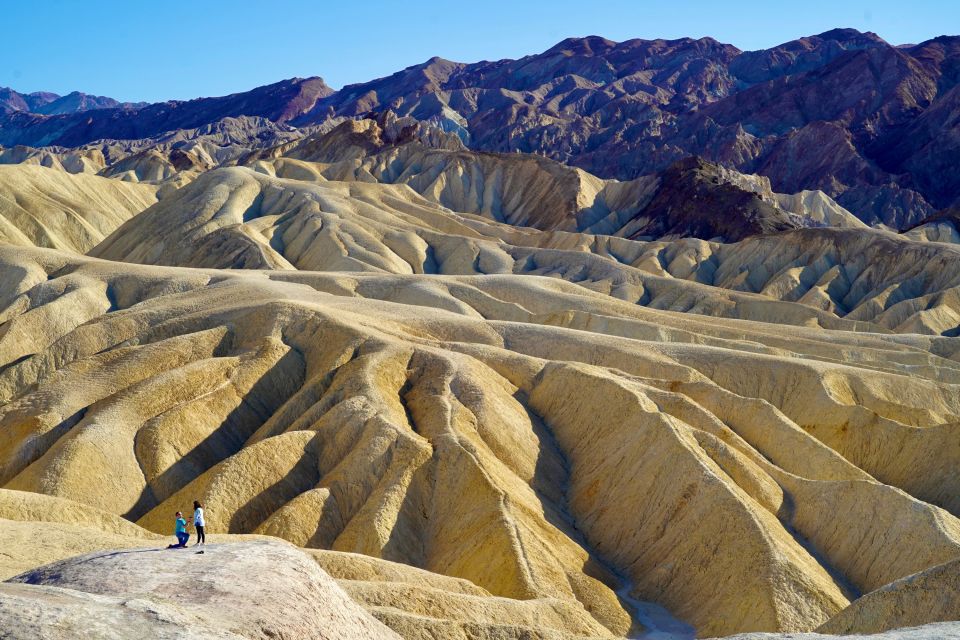
After the big overlook, the tour goes to Zabriskie Point, famous for its golden badlands and wide panoramas. You’ll have a dedicated stop (about 30 minutes) that includes a guided tour and time for a short walk or hike.
This is a great place to slow down a touch. The badlands here feel sculpted, and the ground texture makes even ordinary photos look dramatic. If you’re visiting Death Valley for the first time, Zabriskie Point gives you that “how is this real” feeling quickly.
One thing to keep in mind: you’ll be walking on uneven desert terrain. Bring comfortable shoes and plan for sun and glare. If you’re expecting a paved stroll, this part will remind you you’re in the desert.
Mesquite Flat Sand Dunes at Sunset-Ready Timing
The tour then shifts to sand, visiting Mesquite Flat Sand Dunes for photo time and a guided walk (about 30 minutes). This stop is important because it adds a different texture to the day: smooth dunes instead of rock and salt.
It’s also a classic for silhouettes and long shadows. Even if you’re not there at pure sunset, you’re building toward that look. Think of this stop as your warm-up for the evening’s lighter, moodier photos.
If you’re not into sand, don’t panic. The walk is time-limited, but you still get that close-to-the-dunes experience where you can feel the terrain shift under you. If you’re a photo person, this is one of those places where your best shot often depends on small adjustments in angle and light—exactly the sort of help a guide can provide.
Furnace Creek: Restrooms, an Outdoor Museum Feel, and Dinner
Around mid-day, you reach Furnace Creek (California) for a longer break (about 45 minutes), with restrooms and time to reset. This is also where you’ll get the included meal: a sandwich, plus water.
Furnace Creek is valuable in a long desert day because it gives you infrastructure when the park around you feels empty. You’ll also have museum-style exhibits to help interpret what you’re seeing—useful when you’re looking at salts, minerals, and eroded formations that can feel abstract without context.
This is also where you can cool down mentally. Eat, drink, and step back from the urge to keep filming. The day runs from bright highlights to dusk and then the sky, so having real break time improves your whole evening.

Badwater Basin: Salt Flats and the Lowest Point Vibe
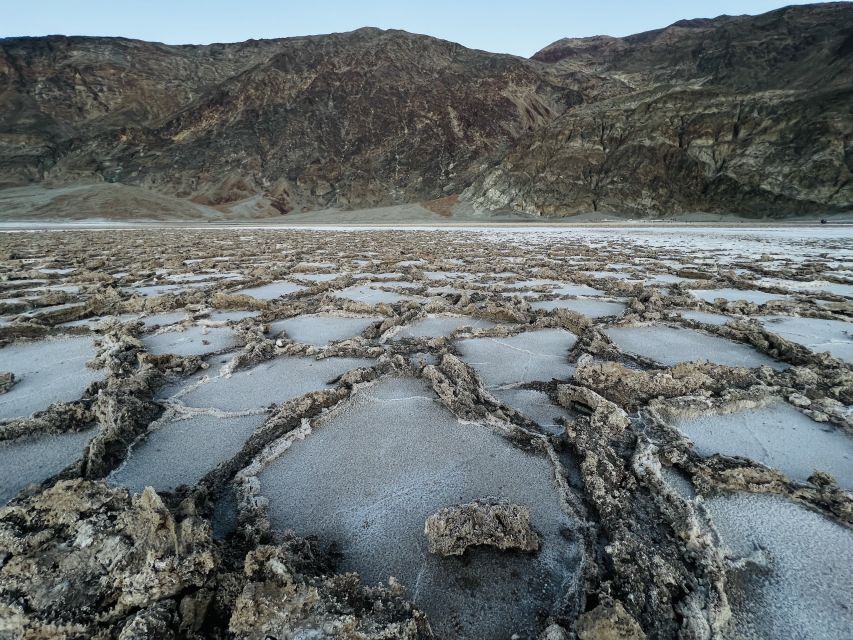
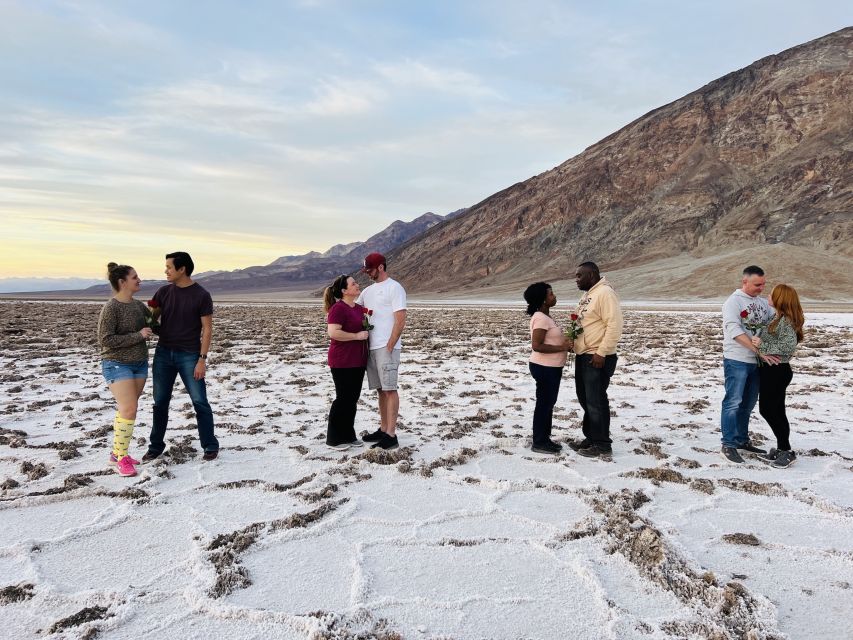
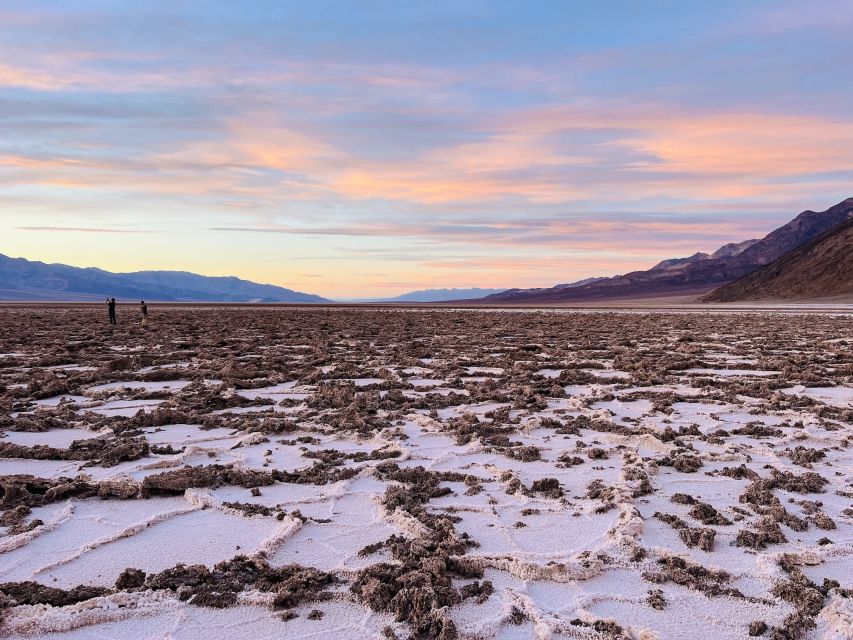
Next is Badwater Basin, where you’ll stop for photos and a guided visit that includes walking on the flats (about 30 minutes total). This is the park’s well-known “lowest point” moment in North America, and it’s unlike most hiking destinations because the ground itself is the subject.
The salt-crystal look can be stunning, but it also rewards patience. You want to watch how the surface reflects light and where shapes form under the glare. A guide who knows where the visual payoff is can help you spend your time better.
Also, this is one of the places where you’ll feel the desert’s temperature swings. You might start to cook in the sun and then feel colder at the edges of shade. Pack for the full day and trust that you’ll feel it in your body.
Artist’s Palette and the Color-Mineral Stops
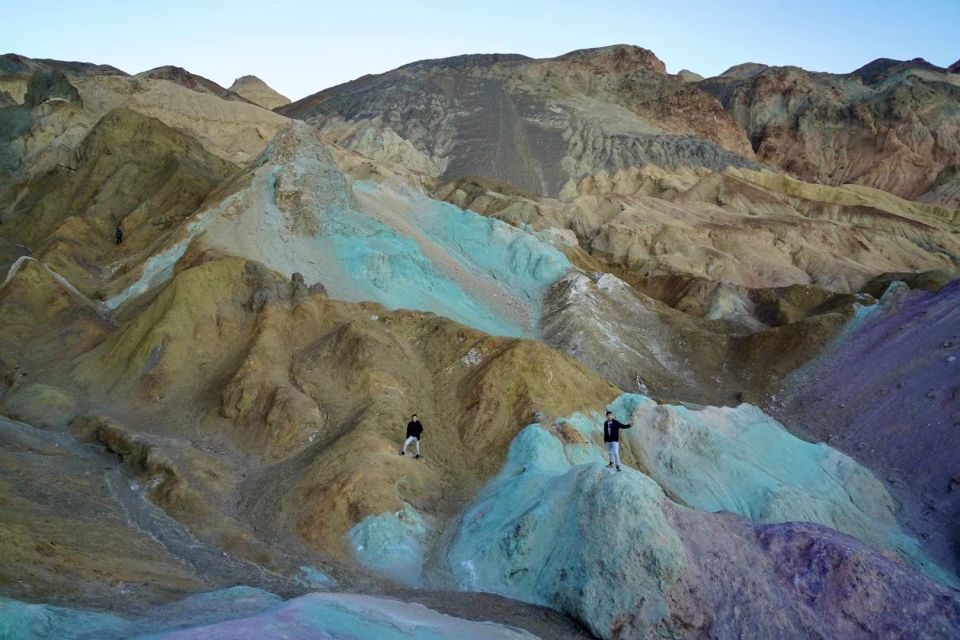
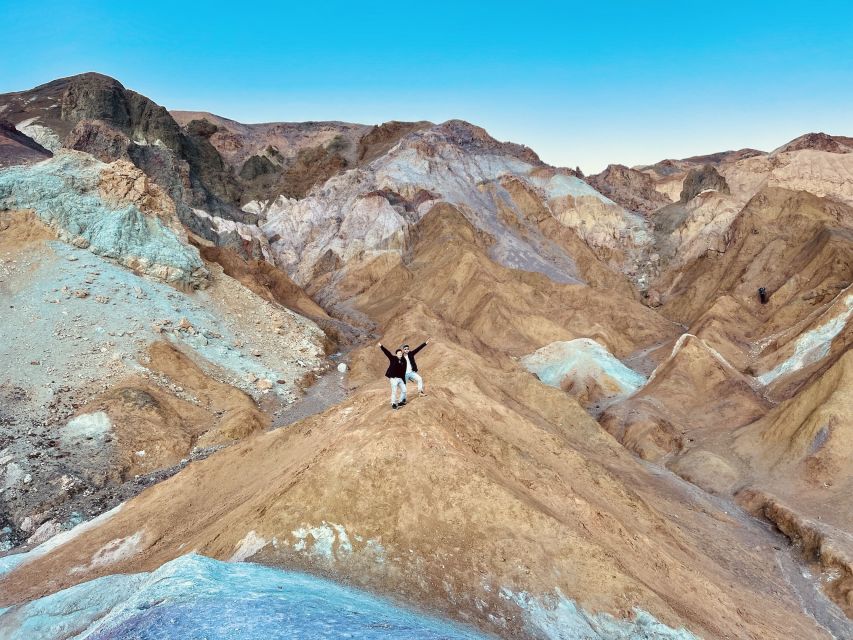
Then you’ll visit Artist’s Palette, timed for that mineral-hill color play (about 30 minutes). This is where Death Valley can look like someone mixed paint from a geology textbook.
The guided portion gives you a reason to look closely. Instead of just seeing color, you learn how mineral variation creates those pink, green, and purple tones you notice in the hills. Even if you’re not a geology nerd, the interpretation makes the colors feel less random and more purposeful.
Hiking here is not about distance. It’s about movement—taking a few steps that let you see how shadows reshape the hills and how the palette shifts with the sun’s angle.
Sunset at Death Valley’s Best View Moments
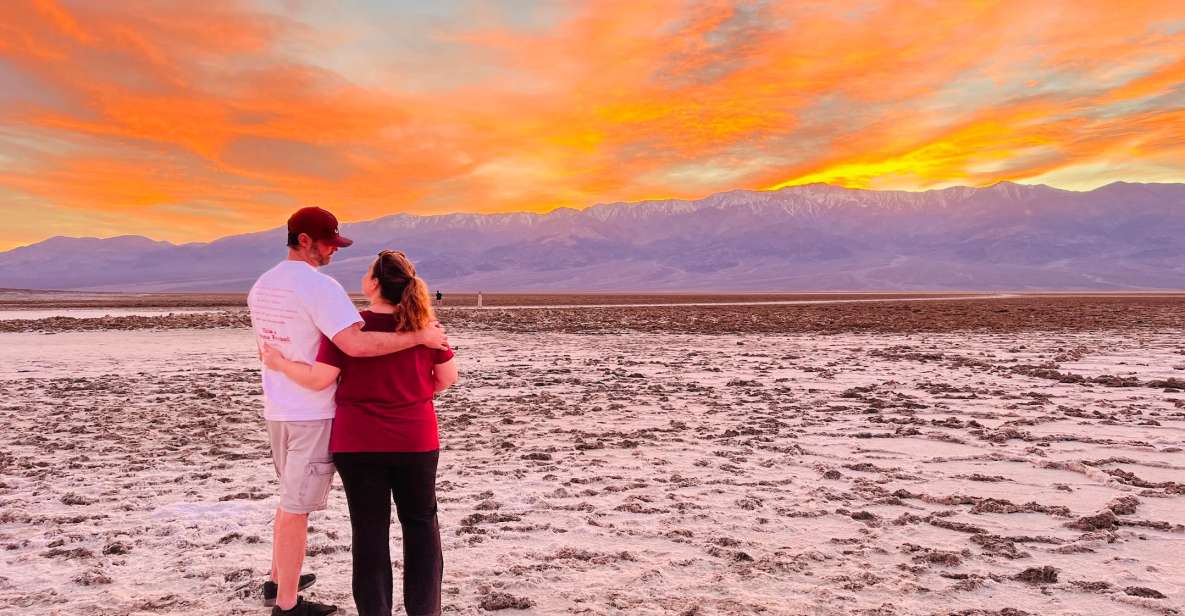
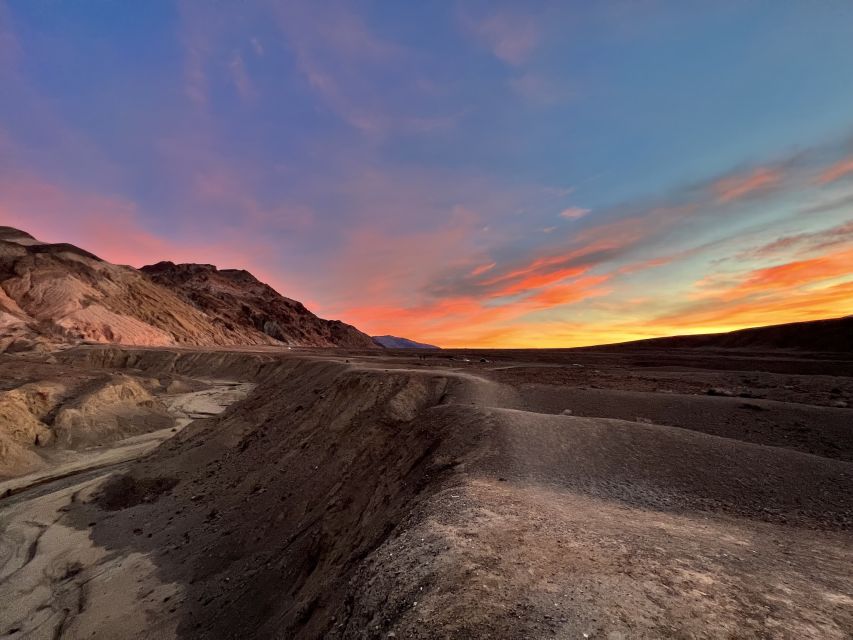
As the day moves toward evening, the tour returns to a Death Valley National Park sunset stop (about 45 minutes). You’ll get guided sightseeing, and the timing matters because sunset changes what the rock and salt look like.
This is also where you’ll find the tour’s “balance” most clearly. You’re not just rushing to the next Instagram spot. The guide slows things down enough to let you actually watch the sky shift over the mountains.
If you want long photos, make sure your phone has enough battery before you head out. The tour asks you to bring a charged smartphone, which is a good hint that you’ll be using it more than you think.
Death Valley Junction Stargazing: Constellations, Planets, and the Milky Way
After dinner time and sunset viewing, the evening shifts to a remote viewpoint at Death Valley Junction for stargazing. When skies are clear, you’ll be able to see constellations, planets, and the Milky Way, and the guide will help you enjoy the sky safely.
This part is the reason many people book the day-to-night format. During the daylight, Death Valley’s scale is the story. At night, the story becomes the sky’s depth and the way your brain stops measuring distance the way it does in daylight.
The guide also provides photography tips for long-exposure shots. That’s key if you want your photos to look like more than a dark blur. Even if you just use your eyes, this is a “stand there and look” experience that’s hard to recreate elsewhere near Las Vegas.
One consideration: if weather is cloudy, stargazing may be less dramatic. A past guest noted that clouds affected how much they could see, so clear skies genuinely matter for the best night payoff.
Van Comfort and the Small-Group Feel
The tour runs by van, and the format is built for a small group experience, including private or small-group options. That usually means fewer people blocking your view at viewpoints and a bit more flexibility when the guide needs to manage timing.
You should expect a schedule that keeps you moving through multiple stops. That’s not a bad thing here—it’s what makes a full day-to-night adventure possible without you doing the math.
That said, there’s one personality factor. Some guests love the guide’s photo help; others find it too constant. One reviewer described a guide who talked nonstop and pushed photo poses, which reduced their enjoyment of the quiet. If you’re sensitive to that, set expectations before you book: this is as much a guided photo experience as it is a sightseeing trip.
Price: Is $299 Worth It for This Much Day-to-Night Time?
At $299 per person for an 11-hour tour, the value comes from how many “hard parts” the price covers. You’re paying for hotel pickup and drop-off, park entrance, a full-day routing plan across major landmarks, plus the night viewpoint for stargazing.
You also get an included meal (sandwich) and water, which matters because Death Valley options can be limited and you don’t want to lose time hunting food. Add in guided photography support and the express-style security check, and you’re no longer spending your own day solving logistics.
If your goal is to do the top Death Valley highlights in one go—without driving yourself—you’re basically paying for that convenience and sequencing. If you’re the type who wants hours of unscheduled wandering at a single spot, this format may feel structured. In that case, you might prefer a self-drive plan where you control the pace.
Who This Tour Suits Best (and Who Should Skip It)
This works best for you if:
- You want iconic Death Valley landmarks in one day, plus night-sky viewing
- You like photo guidance and don’t mind a guide helping with composition or timing
- You’d rather spend your energy looking than navigating, parking, and planning
This might not be the best fit if:
- You’re not comfortable with guided posing and lots of photo encouragement
- You need a fully flexible pace, with no structured stops
- You want wheelchair access or have mobility limitations (the tour is not suitable for wheelchair users or people with mobility impairments)
- You’re traveling with children under 5 (not suitable)
Finally, remember the “desert reality” part. Bring sun protection, wear comfortable shoes, and expect conditions to change from hot sun to cooler evening air.
Should You Book This Death Valley Stargazing Tour?
I’d book this if you want the smartest one-day way to hit Zabriskie Point, Badwater Basin, Artist’s Palette, sand dunes, and then end under a real desert sky. The included dinner break and the guide’s support for long-exposure stargazing add real value beyond a typical daytime outing.
Skip it if you want solitude and zero structure, or if you dislike having your time steered toward photos. If you do book, manage your expectations: it’s built as a guided photo-and-sky experience, not a self-guided quiet hike.
If your dream is a full Death Valley day that ends with Milky Way chances, this is one of the cleaner ways to make it happen from Las Vegas.
FAQ
How long is the Death Valley day trip with stargazing?
It runs for about 11 hours.
What’s included in the tour price?
Hotel pickup and drop-off, entrance to Death Valley, a sandwich, water, and a guided tour experience including stargazing time.
Where does pickup happen in Las Vegas?
You can choose pickup on the Las Vegas Strip, with options along the route from Mandalay Bay to The STRAT. If you’re off-Strip, you can provide your pickup address when booking.
What are the main stops during the day?
You’ll visit multiple iconic Death Valley viewpoints and landmarks, including the Death Valley Welcome Sign, Dante’s View, Zabriskie Point, Mesquite Flat Sand Dunes, Furnace Creek, Badwater Basin, and Artist’s Palette.
Do you see the Milky Way?
On clear nights, you can see constellations, planets, and the Milky Way during the stargazing session. Cloudy weather can affect the view.
How much time do you spend at Furnace Creek?
There’s a break with free time for dinner and exhibits, totaling about 45 minutes.
Is there hiking?
There are walks at several stops, including Zabriskie Point, Mesquite Flat Sand Dunes, Badwater Basin, and Artist’s Palette. It’s not described as extreme, but you should wear comfortable shoes.
What should I bring?
Bring comfortable shoes, sunscreen, cash, weather-appropriate clothing, a sun hat, and a charged smartphone.
Is this tour suitable for kids or anyone with mobility needs?
It’s not suitable for children under 5. It’s also not suitable for people with mobility impairments or wheelchair users.
What languages are the guides available in?
Guides are available in English, Spanish, and Italian.