REVIEW · DEATH VALLEY TOURS
Death Valley Day-Tour from Las Vegas
Book on GetYourGuide →Operated by Adventure Photo Tours · Bookable on GetYourGuide
Death Valley hits different once you see it. This full-day tour strings together the valley’s most famous “how is this real?” spots, starting with the ghost-town weirdness of Rhyolite and ending with the white, blistering flats and sand-and-salt color shows that make Death Valley a photographer’s playground.
I especially like how the day balances big-distance viewpoints with moments where you can stop, breathe, and shoot. Two highlights I’m drawn to are the view from Hell’s Gate (well above the valley floor) and the punch-in-the-gut fact that Badwater sits 282 feet below sea level.
One drawback to consider is pacing. You’ll be moving through many sites in a long day, so if you want leisurely walks at every stop, you may wish for more time on foot than a day-tour schedule allows.
In This Review
- Key Things You’ll Notice on This Tour
- Starting in Las Vegas, Then Entering a Different Planet
- Rhyolite Ghost Town: Old Mining Dreams on Dry Ground
- Hell’s Gate: The View That Changes How You Read the Valley
- Badwater: 282 Feet Below Sea Level (The Fact That Lands)
- Zabriskie’s Point, Devil’s Golf Course, and Furnace Creek Museum
- Salt Lake, Sand Dunes, and Artists Palette: When the Colors Change
- The Long Day Reality: Heat, Timing, and How to Get the Most
- Guides, Group Size, and Why This Tour Can Feel Personal
- Price and Value: Is $298 Worth a Day in Death Valley?
- Should You Book This Death Valley Day Tour?
- FAQ
- How long is the Death Valley day tour from Las Vegas?
- What’s included in the price?
- Do you offer hotel pickup and drop-off?
- What kind of transportation is used?
- What’s the tour language?
- What should I bring?
- Is luggage allowed?
- When does this tour operate?
Key Things You’ll Notice on This Tour
- Rhyolite ghost town views with movie-set energy and old mining history vibes
- Hell’s Gate elevation perspective that makes the valley feel enormous
- Badwater’s below-sea-level marker as an easy-to-remember anchor stop
- Devil’s Golf Course and Zabriskie’s Point for sharp textures and classic angles
- Salt flats, sand dunes, and Artists Palette for color variety that’s easy to photograph
- Hotel pickup and drop on the Strip and downtown so you don’t fight logistics
Starting in Las Vegas, Then Entering a Different Planet
This tour is built for a smooth leave-and-return day. You get free hotel pickup and drop at Strip and downtown hotels, and you’ll roll out in either a luxury SUV or a VIP mini-coach (12 to 14 seats). That matters because Death Valley days aren’t the time to wrestle with rideshares, parking, or “where do I even start?” decisions.
The day typically begins with a first look at the park entrance area—your first photo stop to orient yourself. Then the route takes you down a winding highway approach from the east, which is smart. The drive gradually shifts you from desert edges into the middle of the valley, so the views keep escalating instead of feeling like one long stare at sand.
You also get a practical food setup. A continental breakfast is included, and lunch comes with the trip. There are unlimited bottled water and snacks, which is a big deal in a place defined by dryness and extreme heat. Even if you’re the type who forgets to snack, the tour structure nudges you toward staying fueled.
The vibe is part scenery, part geology lesson, and part photo timing. If you’re happy spending your day stopping often and shooting fast, this fits well. If you hate being on a schedule, plan to communicate what you need to see sooner.
You can also read our reviews of more tours and experiences in Las Vegas.
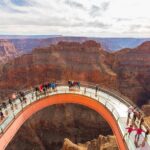

Rhyolite Ghost Town: Old Mining Dreams on Dry Ground
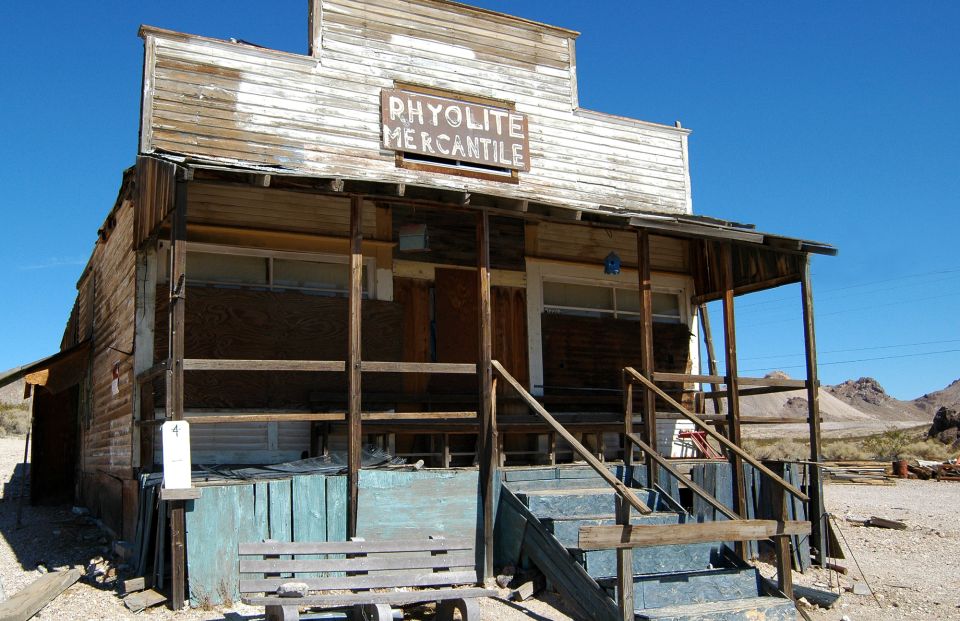
One of the best “pause and look” moments is the stop at Rhyolite, an old ghost town tied to gold mining. The setting feels cinematic, not because it’s fancy, but because it’s abandoned. That kind of stillness gives you space to notice details—building shapes, weather-worn edges, and the stark contrast between old human ambition and the harsh desert around it.
Rhyolite also acts like a visual warm-up for Death Valley. Before you move deeper into the valley’s iconic salt-and-rock scenes, you’re reminded that this region’s story is about extremes: mining booms that couldn’t beat the environment, and landscapes shaped by forces that don’t care about people.
What I like here is that you’re not only seeing scenery. You’re also seeing a place that has been used as a set for movies and documentaries. That means you’ll likely recognize the look even if you don’t know the name yet. It’s an easy way to turn a road trip into something more memorable than just photos.
A practical note: if you’re prone to over-sweating in sun, bring a hat and plan to stay close to shade when possible. Even with breaks, this is still outdoors.
Hell’s Gate: The View That Changes How You Read the Valley
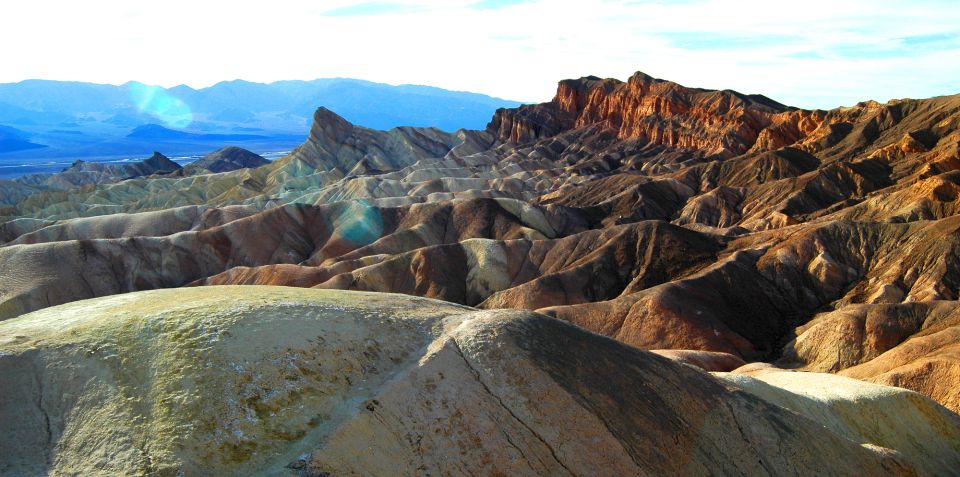
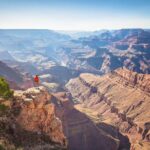
After you’ve settled into the “everything is far apart” feeling of Death Valley, the tour takes you to Hell’s Gate, which offers a view from well above the valley floor. This is the kind of stop that helps you understand scale. From ground level, Death Valley can feel like a flat, endless expanse. From higher up, you suddenly get structure—ridges, valleys, and the way the terrain folds and layers.
This is also a photo stop with a strong payoff because your vantage point compresses distance into a single frame. Even if you only have a phone, you’ll likely get that iconic look where rocks look carved rather than simply “there.”
Why this stop is valuable: it changes your mental map. Once you’ve seen the valley from above, later stops like Badwater and the sand-and-salt areas make more sense. You’ll be able to picture how everything connects instead of treating each viewpoint as a random parking-lot stop.
Timing can matter here. If the light is harsh when you arrive, don’t rush your shots. Take a minute to check angles and use whatever shade you can find while you frame. The goal is to capture the sculpted peaks and the depth, not just the desert.
Badwater: 282 Feet Below Sea Level (The Fact That Lands)
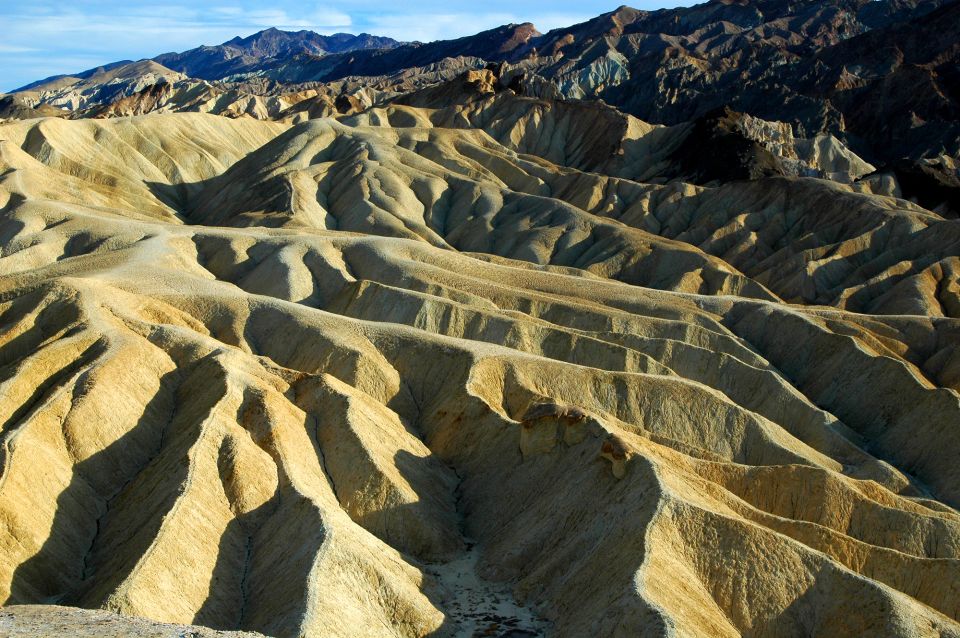
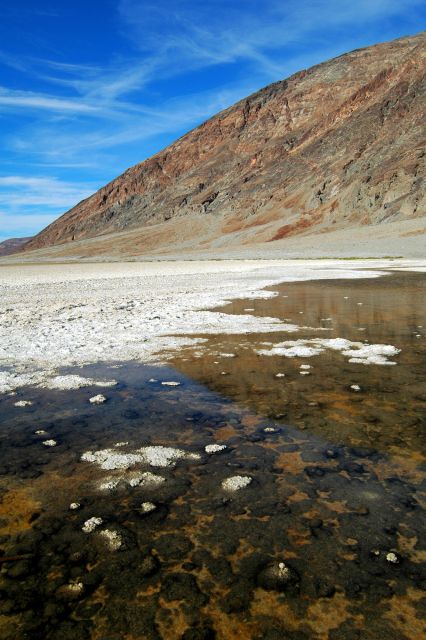
Then comes Badwater, marked at 282 feet below sea level. It’s one of those facts you’ve heard before, but it lands differently once you’re standing in front of it. The salt flats and the stark openness give you a sense that the numbers mean something—this isn’t just “low elevation,” it’s a landscape with its own rules.
Badwater is also an easy stop to enjoy even if you’re not a hardcore hiker. You can get the main view without needing long walks. That matters on a full-day tour where you’re already covering a lot of ground.
What I like about Badwater as an experience anchor is how it contrasts with the ghost-town stop earlier. Rhyolite says human history fades. Badwater says nature sets the terms. Together, they make the day feel coherent.
Practical tip: salt and heat can turn uncomfortable quickly. The tour’s unlimited bottled water and snacks help you stay steady, but still, keep sipping and plan your photo bursts. Quick shots beat staring through thirst.
Zabriskie’s Point, Devil’s Golf Course, and Furnace Creek Museum
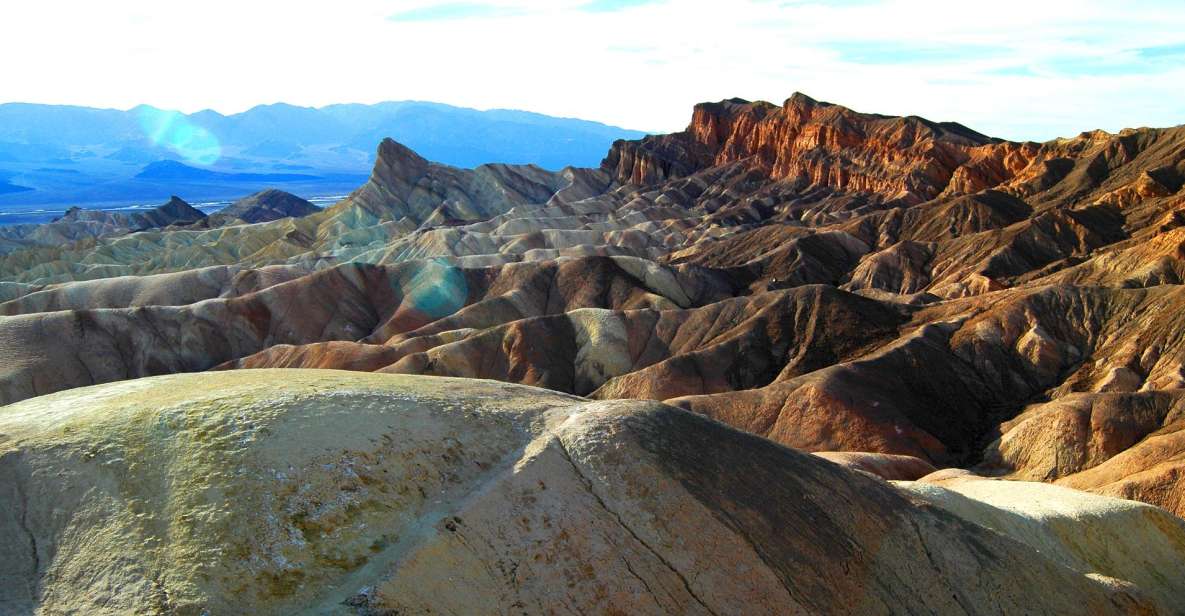
This is the stretch where Death Valley starts showing off its textures.
Zabriskie’s Point is a classic viewpoint for panoramic rock and color. It tends to work well for both wide shots and tighter framing if you’re looking for striations and contrasts between slopes. Expect it to feel like an artist’s draft: lines, layers, and sudden shifts in tone.
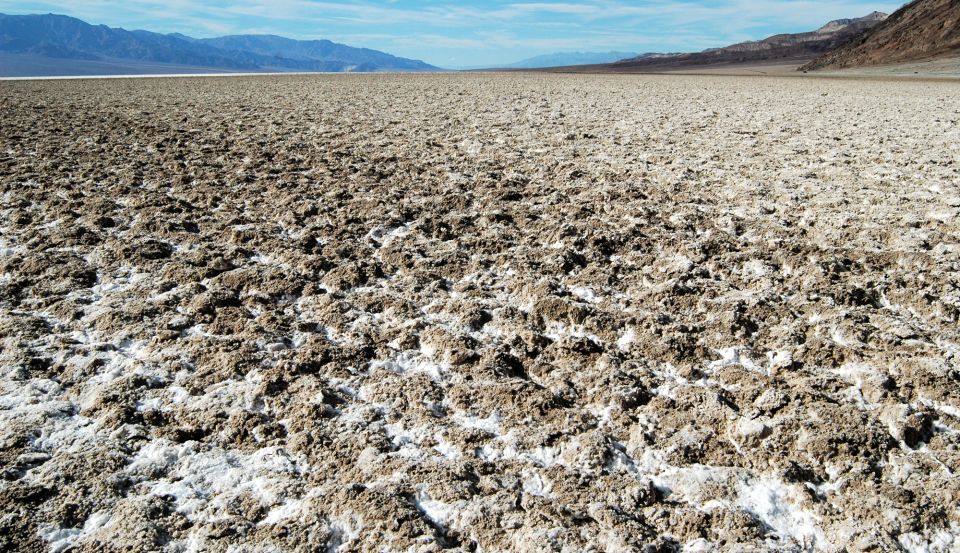
Next is Devil’s Golf Course, known for its oddly patterned, “ball-ready” rock formations. The formations are not soft or sandy—they look rigid and sculpted, and the surface patterns can photograph surprisingly well. The trick is to slow down enough to notice how the shapes repeat and angle, which is what makes this stop more than just a quick roadside picture.
Then you’ll find Furnace Creek Museum on the itinerary. A museum stop might sound less exciting than salt flats, but it gives context. You’re already seeing geologic time in the rocks and surfaces, so having a place to connect the visuals to the broader story makes the day feel less like random scenic stops and more like a guided understanding of how this environment works.
A good strategy at these stops: make one “signature” photo first, then take two minutes for smaller frames. Wide shot, detail shot, then one quirky angle. You’ll leave with variety instead of 25 copies of the same view.



Salt Lake, Sand Dunes, and Artists Palette: When the Colors Change
Death Valley can feel like a single color theme until you hit the right spots. This part of the tour is where you notice variety fast.
The Salt Lake area leans into the white-and-bright look that makes the valley feel almost unreal. Even without fancy gear, the brightness can create strong contrast. The downside is that your eyes may squint, so sunglasses help a lot, and you may want to wait a minute for better exposure if the light is blazing.
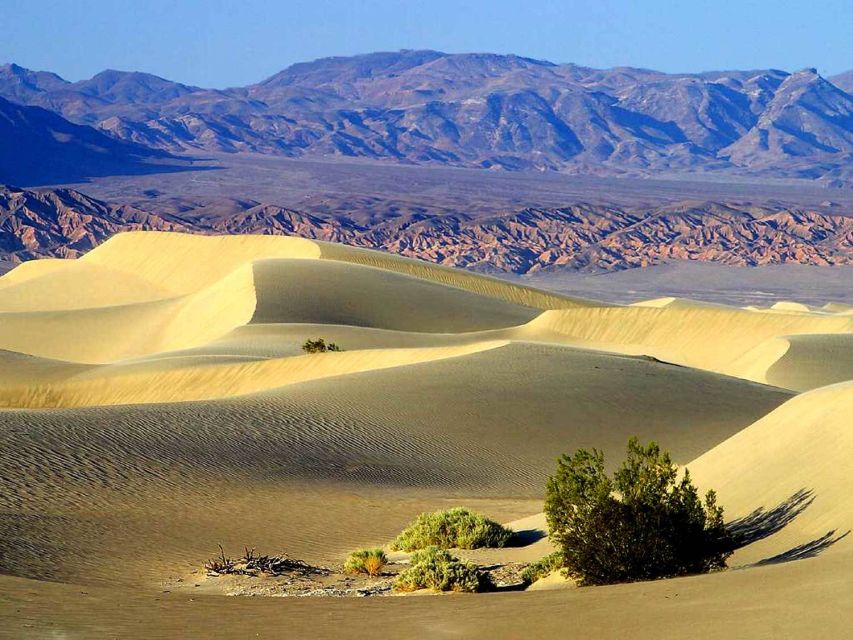
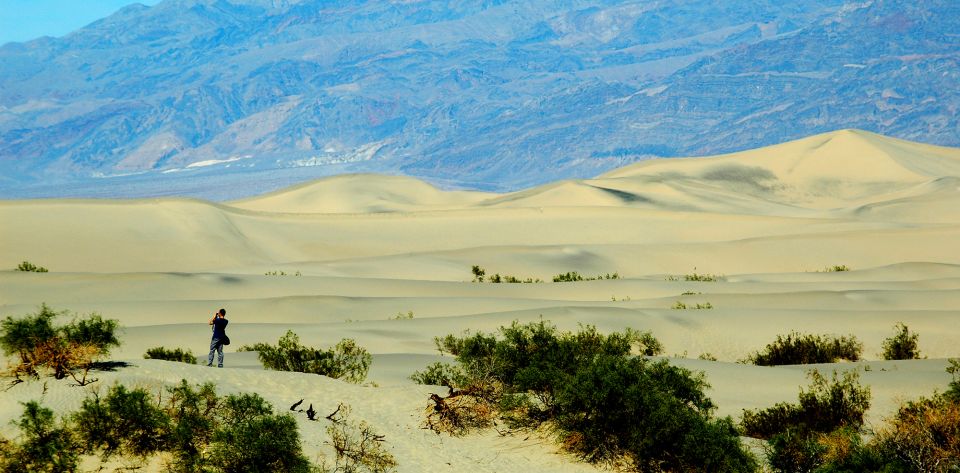
Then come the Sand Dunes, which add a softer, rounded texture to the day’s earlier rock-heavy scenes. Dunes also change the way shadows fall, which can make “the same desert” look completely different from one stop to the next. If you’re planning to photograph dunes, keep an eye on how wind and light affect the surface patterns, because dunes are never purely static.
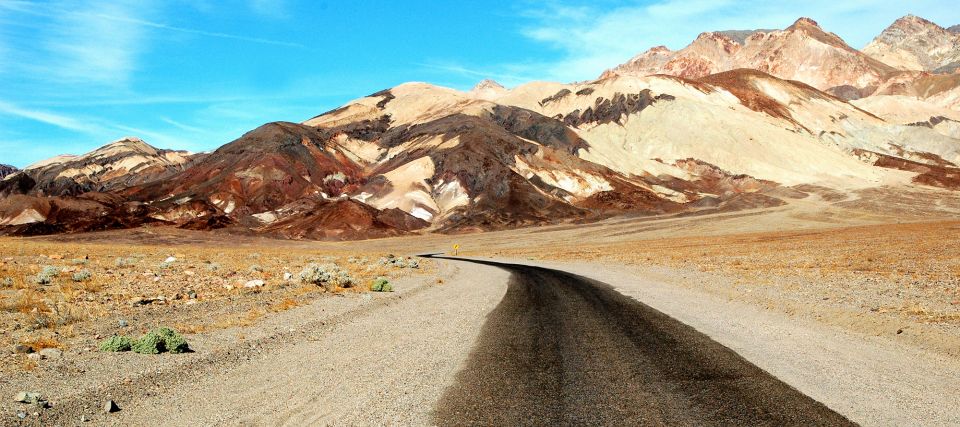
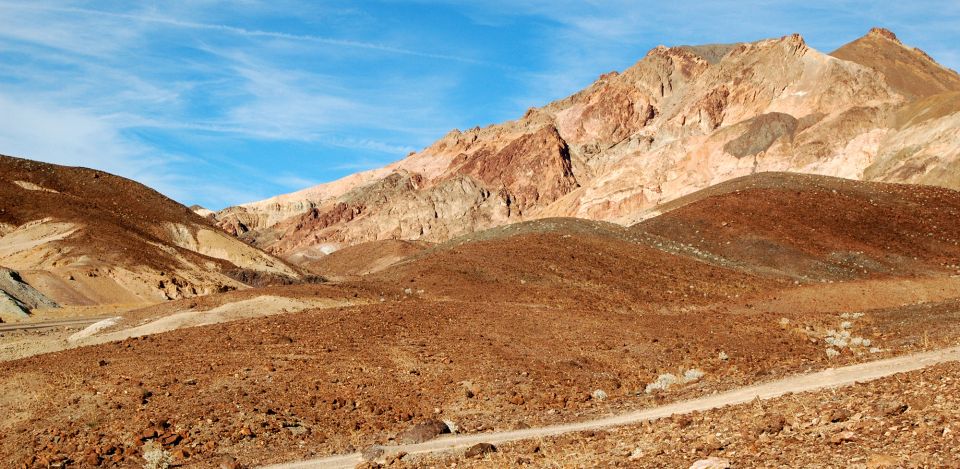
Finally, Artists Palette brings color into focus. Instead of only white salt and gray rock, you get bands and patches that feel painterly. This is one of those spots where color isn’t decoration—it’s a clue about the minerals and conditions that shaped the area. If you’re a person who likes to explain your photos later, Artists Palette gives you a lot to work with.
The challenge here is time. You’ll probably want more than the allotted stop to explore slowly. Still, even short visits can work because the visual payoff is immediate. Shoot early, check your camera settings once, then let the colors fill your frame.
The Long Day Reality: Heat, Timing, and How to Get the Most
This tour runs 630 minutes, which is just over 10 hours. That’s a full day, even if your vehicle does most of the traveling. Plan your energy like it’s a hike, not a coffee break.
Here’s what helps most:
- Drink often even when you don’t feel thirsty. The tour gives you unlimited bottled water, so you won’t be stuck searching for it.
- Snack strategically. You’re getting snacks and lunch, but if you know you get cranky or foggy without food, keep something small in reach.
- Bring your own ID. A passport or ID card is required.
Also consider the “photo mindset.” Death Valley scenes can be big and breathtaking, but the most satisfying photos usually come from quick, deliberate choices: one angle that shows scale, one that shows texture, and one that includes a foreground element for depth. If you try to shoot everything in minute-by-minute chaos, you’ll miss the moments that make the stop memorable.
One more practical thing: luggage is restricted. No luggage or large bags are allowed. If you’re traveling light already, you’ll feel fine. If you brought a bunch of extras, trim it down before you go.
And since the tour offers English live tour guiding and private or small groups, the best days tend to be the ones where you can hear the guide, ask questions, and move when the group moves. If you’re sensitive to communication, sit where you can hear comfortably.
Guides, Group Size, and Why This Tour Can Feel Personal
Adventure Photo Tours runs this experience, and the guide quality can shape your whole day. In the feedback for this tour, people highlighted guides by name—like Dennis, Clayton, and Linda—for being especially strong at connecting stories to what you’re seeing outside the window. When the guide can connect desert facts to the places you’re visiting, the drive stops feeling like dead time.
Group size can also affect your experience. This tour can run as private or small groups, which usually means you’re not stuck watching others decide where to stop. More importantly, a smaller group helps you get that practical back-and-forth: where to stand, what to photograph first, and how to avoid rushed moments.
So if you care about photos and you want your day to feel guided instead of merely transported, this tour style is a good match. If you’re mostly looking for a checklist, any big-vehicle tour might do. But Death Valley has enough visual texture that guided storytelling tends to make the day stick.
Price and Value: Is $298 Worth a Day in Death Valley?
At $298 per person for a 630-minute day, the price is not low. But Death Valley day tours cost what they do because you’re paying for long-distance time, professional guiding, and a full set of inclusions that reduce your on-your-own risk.
Here’s what you get for the money:
- Hotel pickup and drop across Strip and downtown hotels
- Continental breakfast, lunch, and snacks
- Unlimited bottled water
- A live English tour guide
- Transportation in a luxury SUV or VIP mini-coach
That combination matters because the hardest part of Death Valley travel isn’t just getting there. It’s making sure you’re fed, hydrated, and not stuck handling logistics while you’re dealing with a brutal environment. The included food and water can easily save you time and stress, and the pickup saves you the “how do we get back?” problem.
Still, value depends on your style. If you love short photo stops and viewpoint hopping, you’ll likely feel you got your money’s worth. If you want long hikes or lots of downtime, this price might feel steep because the day is structured around multiple sites.
A good compromise is to treat the tour as your best “first visit” to Death Valley. After that, you can return on your own for slower exploration if you want.
Should You Book This Death Valley Day Tour?
Book it if you want a high-impact first day in Death Valley with classic stops like Rhyolite, Hell’s Gate, Badwater, Zabriskie’s Point, Devil’s Golf Course, Furnace Creek Museum, Salt Lake, Sand Dunes, and Artists Palette. The route is packed, but the variety is real, and the inclusions help you stay comfortable.
Skip it or choose a different style if you hate tight schedules or you need lots of time on foot at every location. At 10+ hours, you’ll be trading speed for coverage.
If you do book, go in ready to shoot and ask questions early. The guides named in the experience feedback—like Dennis, Clayton, and Linda—are praised for making the day feel connected to what you’re looking at. That’s the difference between collecting photos and understanding why the desert looks the way it does.
FAQ
How long is the Death Valley day tour from Las Vegas?
The duration is 630 minutes, which is just over 10 hours.
What’s included in the price?
Lunch, unlimited bottled water, snacks, and a continental breakfast are included.
Do you offer hotel pickup and drop-off?
Yes. Free hotel pickup and drop-off are available at all Las Vegas Strip and downtown hotels. Pickup can be optional for downtown or Strip hotels.
What kind of transportation is used?
You travel in luxury SUVs or in 12- to 14-passenger VIP mini-coaches.
What’s the tour language?
The live tour guide offers English.
What should I bring?
You should bring a passport or an ID card.
Is luggage allowed?
No. Luggage or large bags are not allowed.
When does this tour operate?
It operates Mondays and Wednesdays, or on any day with combined parties of five or more.