REVIEW · ANTELOPE CANYON & HORSESHOE BEND TOURS
Vegas: Antelope Canyon & Horseshoe Bend Tour at Golden Hour
Book on GetYourGuide →Operated by Empire Vacations · Bookable on GetYourGuide
Golden hour in Arizona hits hard. This day trip strings together Horseshoe Bend and Antelope Canyon with guides in your language, plus a local Navajo guide inside the canyon walk. You get big views, tight timing, and real cultural context instead of just a photo stop.
I especially like the light-and-shadow plan: the canyon visit is timed for golden hour (10am–3pm), when sun shafts make the rock look almost sculpted. I also love that the Colorado River’s famous horseshoe loop has Navajo storytelling behind it, including the idea of water running through the rocks.
The tradeoff is physical: plan for a long 16-hour day and about 1.5 miles of walking over uneven ground. If you’re hoping for an easy stroll, this won’t match that.
In This Review
- Key things to know before you go
- The Golden Hour Combo: Horseshoe Bend + Antelope Canyon
- How the 16-hour day really feels (and why the schedule works)
- Breakfast in St. George, Utah: the smart start before the long drive
- Horseshoe Bend: getting the horseshoe right
- Lower Antelope Canyon with a local Navajo guide
- Canyon rules to plan around
- If the group stops for photos
- Lunch break: enough reset time to stay sane
- Glen Canyon Dam Overlook: the panoramic payoff
- Price and value: is $209 fair for this itinerary?
- Who this tour fits best (and who should think twice)
- Real-world guide energy: what you can hope for
- Should you book this Golden Hour Tour?
- FAQ
- How long is the Vegas: Antelope Canyon & Horseshoe Bend Tour at Golden Hour?
- What’s included in the price?
- Where do I meet the tour in Las Vegas?
- Which Antelope Canyon will I visit: Lower, Upper, or X?
- How much walking is involved?
- Can I cancel for a full refund?
Key things to know before you go
- Golden hour timing for Antelope Canyon means better light and more dramatic rock textures.
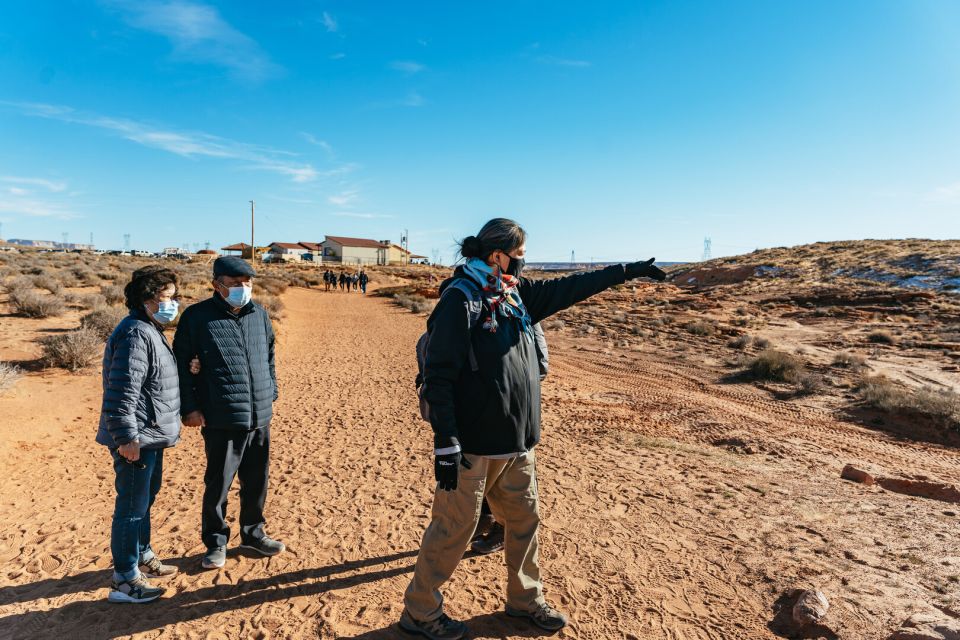
- Two-layer guiding: your main guide plus a local Navajo guide for the canyon experience.
- Horseshoe Bend viewpoint time matters: you get a prime angle of the Colorado River’s horseshoe bend.
- Glenn Canyon Dam overlook adds a wide panoramic look at the broader area before you head back.
- Language support is real: live guidance in English, French, German, Italian, Spanish, or Japanese all day.
The Golden Hour Combo: Horseshoe Bend + Antelope Canyon
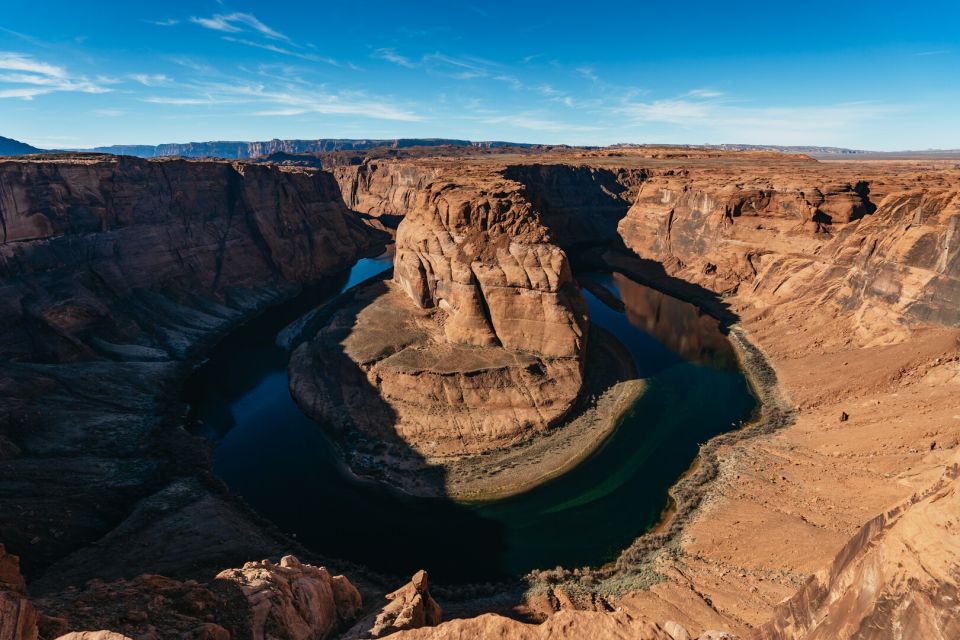
This tour is built around a simple idea: the same places can look totally different depending on when you’re there. At Horseshoe Bend, the Colorado River’s curve reads best when the light isn’t harsh. At Antelope Canyon, golden hour is what turns sandstone into glowing channels.
Golden hour also helps with photography. You’re chasing contrast—bright rock, darker creases, and sun beams cutting through the canyon walls. If you care about getting more than a quick snapshot, you’ll appreciate the guided pacing and the suggested spots to stand.
You can also read our reviews of more tours and experiences in Las Vegas.
How the 16-hour day really feels (and why the schedule works)
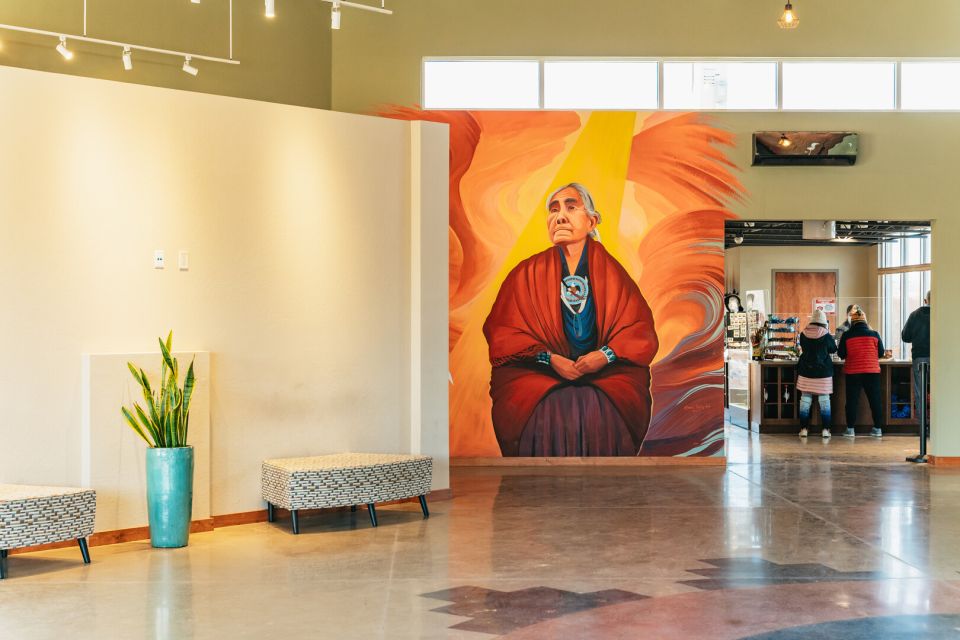
From Luxor, you’ll be on the road for a lot of the day. The trip includes transfers totaling roughly 10 hours behind the wheel, which is why it’s listed as a full-day experience.
What keeps it from feeling like one long slog is the sequence. You start with a breakfast stop in St. George, then you hit Horseshoe Bend, then you move into Antelope Canyon during the best light window. Finally, you wrap up at the Glen Canyon Dam overlook on the way back.
One practical note: this is not a “sit and look out the window” day. You’ll be walking uneven surfaces, and Antelope Canyon itself involves a guided route inside the rock corridors.
Breakfast in St. George, Utah: the smart start before the long drive
The morning includes a breakfast stop in St. George, Utah, before you head toward the Colorado River. This matters more than you might think. Early starts in the Vegas area can make you hungry fast, and the rest of the day is long enough that you’ll want energy before you begin sightseeing.
Even though food isn’t included beyond what you choose at that breakfast stop (and lunch later), the schedule tries to prevent you from arriving at Horseshoe Bend or the canyon already worn out.
Horseshoe Bend: getting the horseshoe right
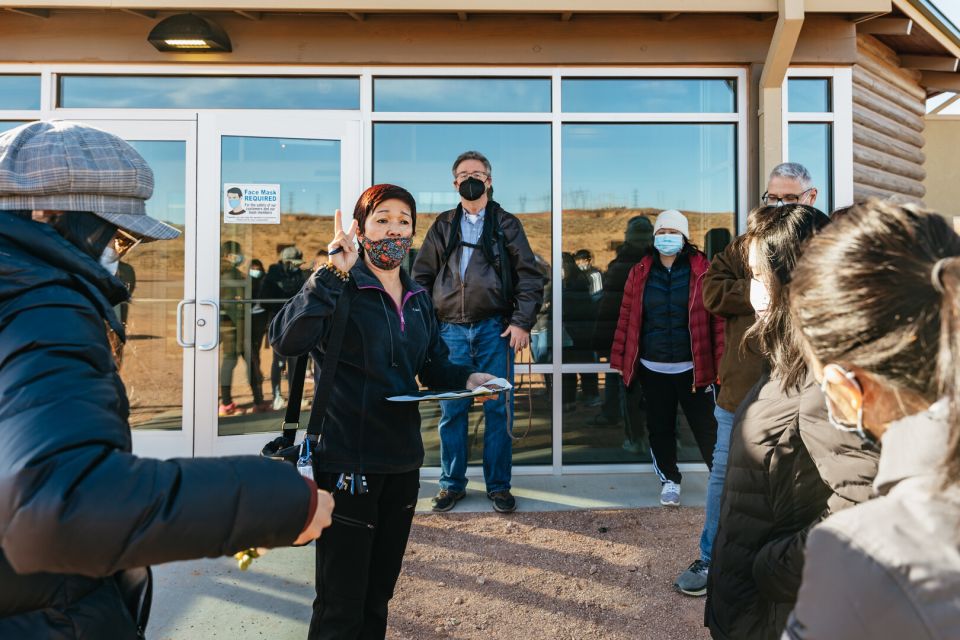
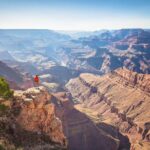
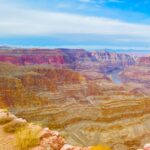
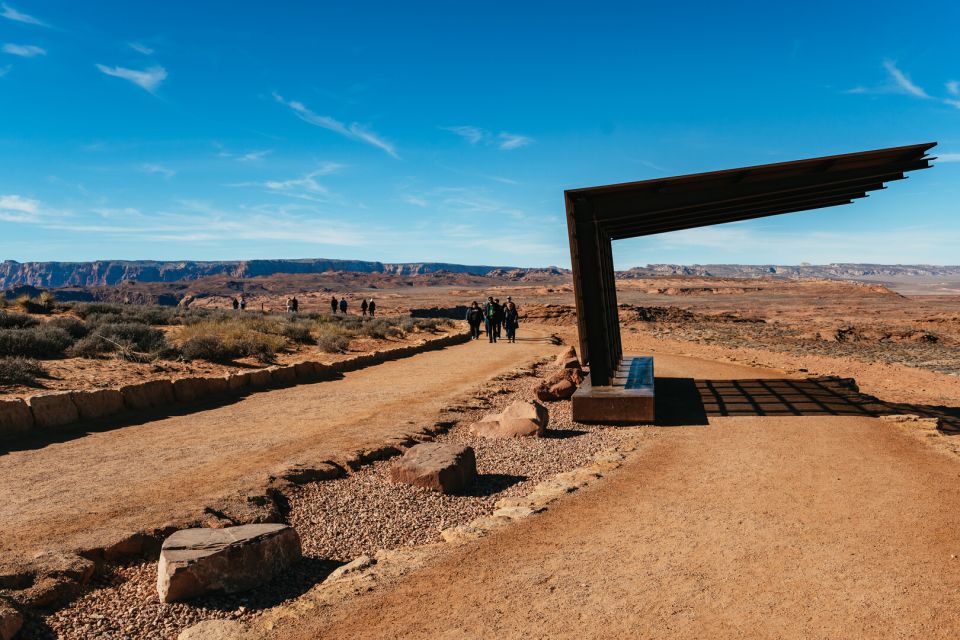
Horseshoe Bend is famous for a reason. The Colorado River wraps around the rock in a tight loop, creating that classic curve photographers wait for. On this tour, you’re taken to the viewpoint for the best angle.
Here’s what I’d focus on as you walk in: notice how the river changes color from edge to edge. That shift is partly light, partly depth, and partly the angle of the bend. If you only look straight ahead for one second, you’ll miss the subtle details that make the view feel unreal.
Also, don’t plan on spending the whole day here. The value of Horseshoe Bend on this itinerary is that it comes before Antelope Canyon, when your brain still feels fresh enough to really take it in.
Lower Antelope Canyon with a local Navajo guide
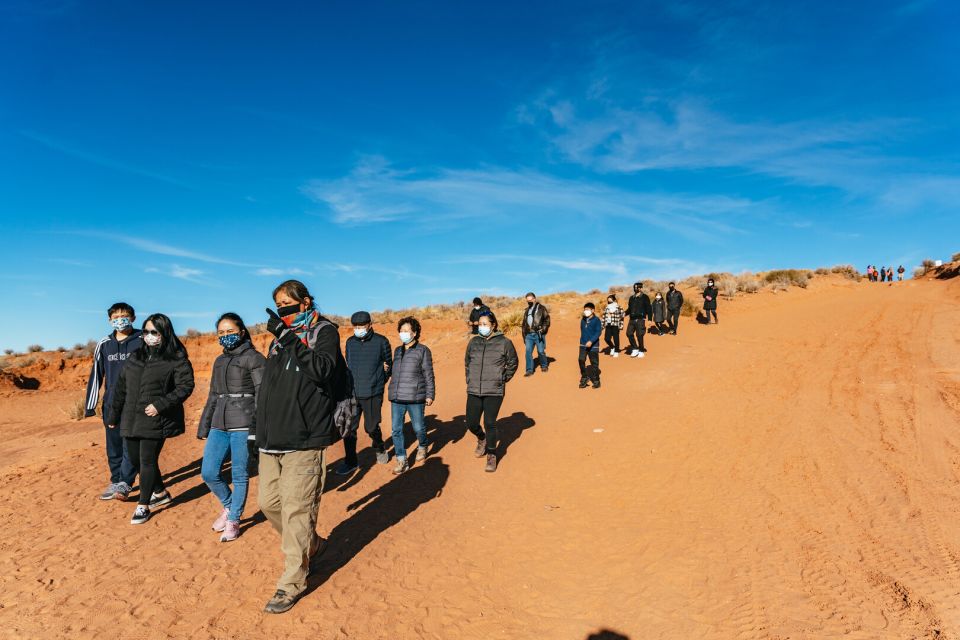
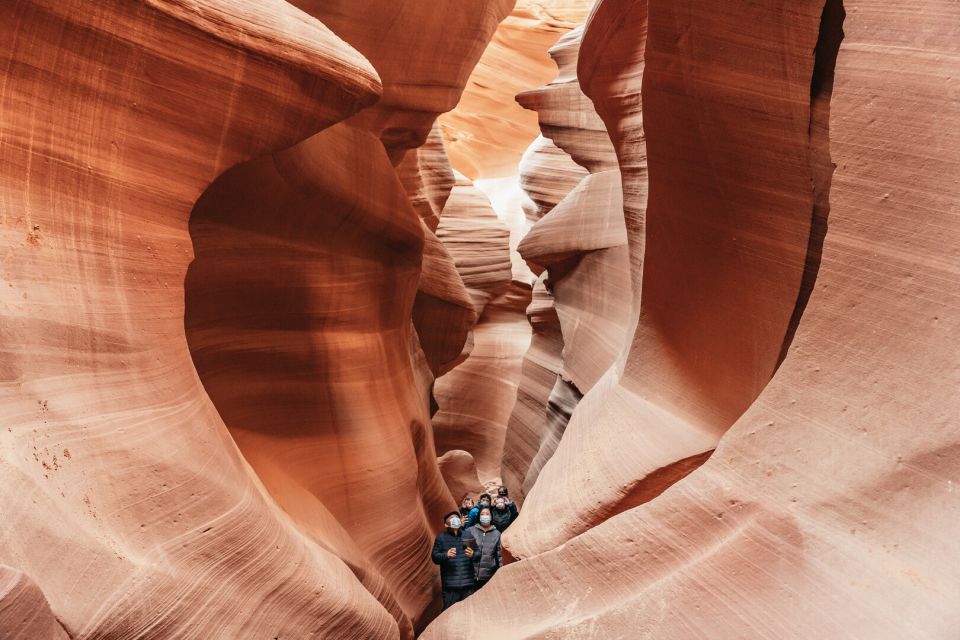
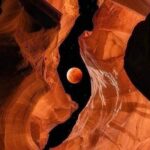
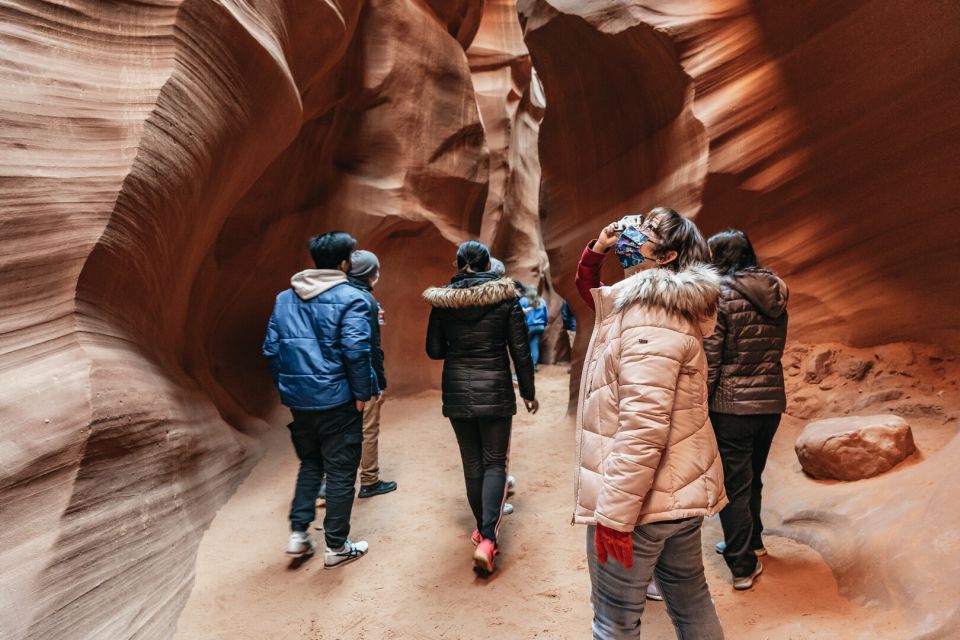
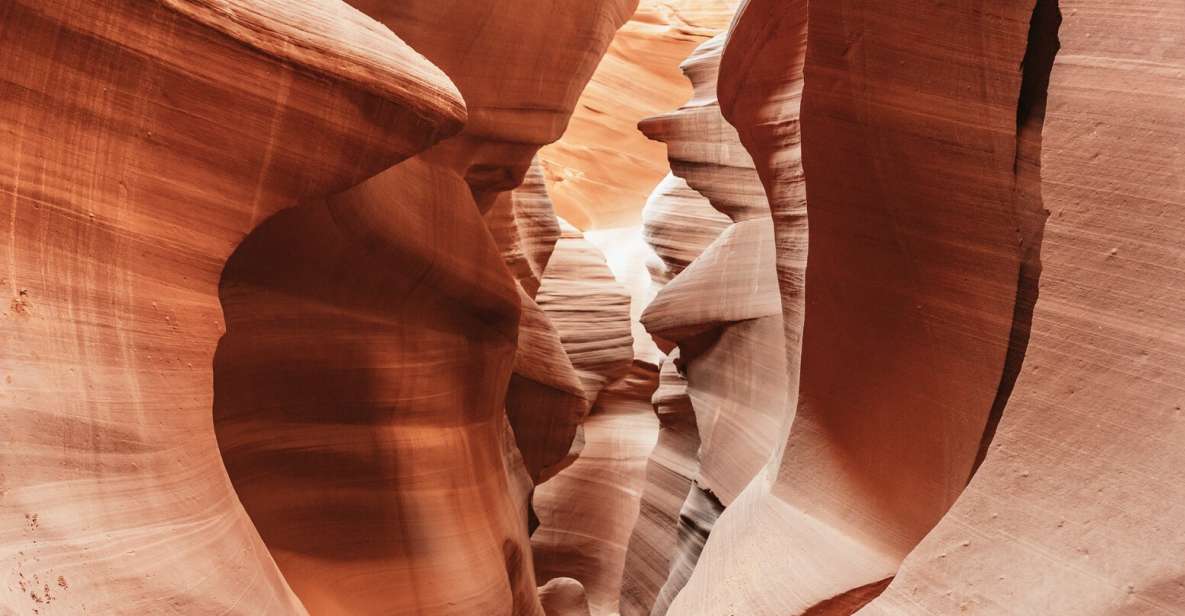
Lower Antelope Canyon is the heart of this trip. The guided visit is timed for golden hour (10am–3pm), and that timing shows. You’ll see how the sun turns slits in the rock walls into beams and how the sandstone channels get darker and brighter as the light angle changes.
The tour uses a local Navajo guide for the canyon portion, and that’s one of the reasons this feels more grounded than a basic sightseeing loop. You don’t just get instructions on where to stand—you get local interpretation of what you’re seeing, including Navajo folklore tied to the canyon and the idea of water running through the rocks.
Canyon rules to plan around
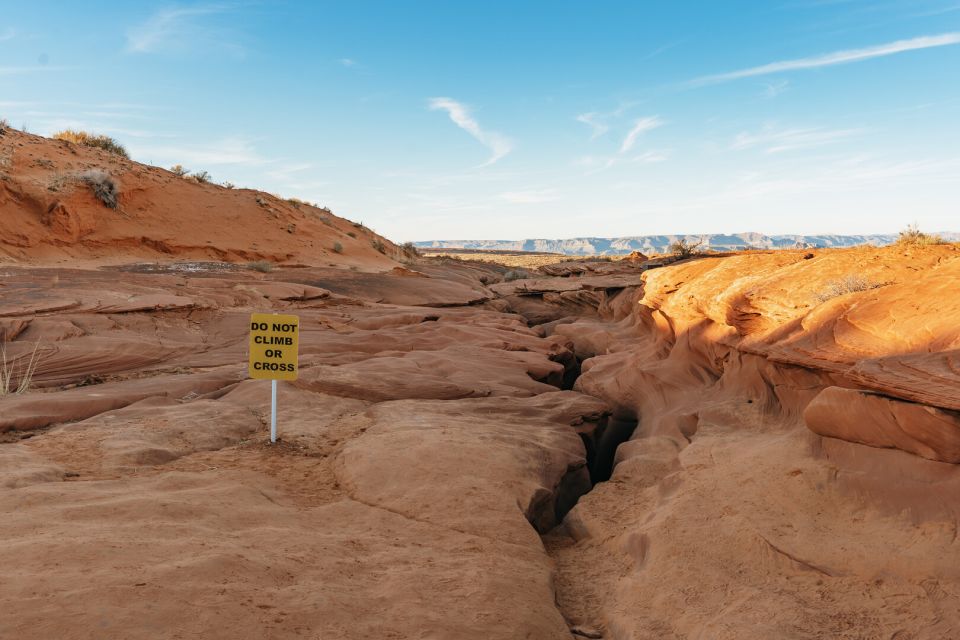
Inside Antelope Canyon, you need to follow site rules closely. One traveler specifically noted that bags, selfie sticks, and tripods aren’t allowed in the canyon, and a mask may be required during the visit (at least at the time of that review). So pack light and be ready to store items as directed by staff.
If the group stops for photos
This part can be tricky. In at least one account, the guide’s commentary got partially missed because people ahead were pausing frequently for photos. The solution is simple: take your photos, but don’t let every shot interrupt the flow. If you want the story, stay engaged while others “freeze-frame.”
Lunch break: enough reset time to stay sane
After the canyon, there’s a lunch break. Food isn’t included, so you’ll need to budget for drinks and meals yourself, but the stop gives you time to reset before the final viewing stop.
This is also where you’ll want to top up water and check that your phone battery is actually ready for photos on the drive and at the last overlook. A day like this eats power faster than you expect.
Glen Canyon Dam Overlook: the panoramic payoff
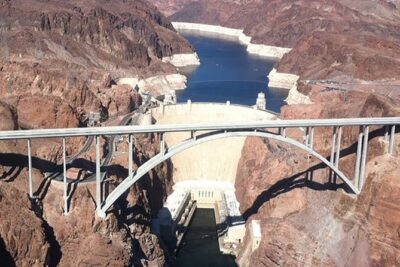
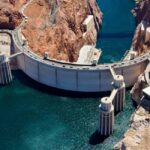
The final stop is the Glen Canyon Dam overlook near Page. This is a wide-angle type of moment, different from the tight rock corridors of Antelope Canyon.
What makes this worthwhile is contrast. After the narrow, beam-lit canyon spaces, the dam overlook gives your eyes a break—broad sky, big geometry, and a clearer sense of how the Colorado River system reshapes the region.
It’s also a good checkpoint: if you’re thinking about the day as a whole, this is where everything starts to click together as one connected area, not separate attractions.
Price and value: is $209 fair for this itinerary?
At $209 per person, the big value drivers are the access and guiding.
You’re paying for:
- round-trip transportation by air-conditioned minibus
- entrance fees for Antelope Canyon, Horseshoe Bend, and the Glen Canyon Dam viewpoint
- tour guidance in your chosen language
- a local Navajo guide for the canyon portion
That’s not cheap, but it is structured. The alternative—renting a car, timing the canyon slot yourself, and trying to coordinate viewpoints—can add up fast once you include gas, parking, and the headache factor.
The main “value check” is your tolerance for a long day. People who are okay with early mornings and uneven walking tend to feel the price matches the payoff. If you want short and effortless, you may feel it’s overpriced for what you’re physically willing to do.
Who this tour fits best (and who should think twice)
This tour is best for you if:
- you want the classic Arizona duo: Horseshoe Bend + Antelope Canyon
- you care about better photo results during the light window
- you prefer not to drive and park yourself in a remote area
- you want language support during the day (English, French, German, Italian, Spanish, Japanese)
I’d think twice if:
- you need step-free access or you have mobility limitations
- you have heart problems or you’re pregnant
- you’re traveling with kids under 7
- you dislike long travel days (it’s still a full-day commitment even when the stops are great)
Real-world guide energy: what you can hope for
The tour shines when your guide turns logistics into story. In reviews, guides like Walter, Gary, Lorenzo, Rafa, Trudy (Gertrude), Raphael, Irene, Danny, Fabiana, and Mac were singled out for being organized, funny, and helpful with photos.
A theme shows up: people remember the experience because guides explained what you’re looking at and helped the group stay on schedule without total rush. One rider even mentioned a guide creating a playlist for the drive, which is the kind of detail that makes a long road day feel more bearable.
Also note a practical caution: one traveler wasn’t happy with a guide collecting tips in a more direct way. That doesn’t mean it happens every time, but it’s smart to be ready for the possibility that tip discussions might come up during the day.
Should you book this Golden Hour Tour?
Book it if you want a guided, language-supported way to see two of the most photo-famous places in Arizona—at the time of day when they look most dramatic. The local Navajo guide part is a strong reason to choose a tour over DIY, because the canyon experience is about more than just walking into a pretty space.
Don’t book it if your top priority is comfort over time on your feet. You’ll walk uneven ground, and the day is long by design.
If you’re on the fence, ask yourself this: Are you willing to trade an entire day (and some patience on the road) for golden-hour light at Antelope Canyon and a real Horseshoe Bend viewpoint? If yes, this is a strong value package.
FAQ
How long is the Vegas: Antelope Canyon & Horseshoe Bend Tour at Golden Hour?
The tour lasts about 16 hours.
What’s included in the price?
Included are round-trip transportation in an air-conditioned minibus, entrance fees for Antelope Canyon, Horseshoe Bend, and the Glen Canyon Dam viewpoint, plus tour guides and a local Navajo guide.
Where do I meet the tour in Las Vegas?
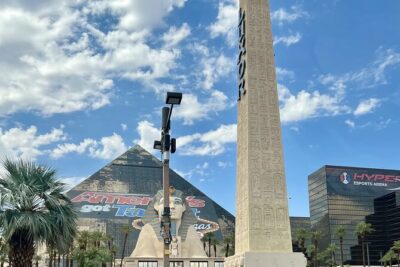
Meet your driver/guide outside the North Entrance of the Luxor Hotel & Casino, on the lower level.
Which Antelope Canyon will I visit: Lower, Upper, or X?
You may enter either Lower, Upper, or X Canyon depending on weather and crowd conditions.
How much walking is involved?
Participants must be able to walk about 1.5 miles (2.5 km) over uneven surfaces.
Can I cancel for a full refund?
Yes. You can cancel up to 24 hours in advance for a full refund.