REVIEW · VALLEY OF FIRE TOURS
Valley of Fire State Park Tour from Las Vegas
Book on Viator →Operated by Gray Line Las Vegas · Bookable on Viator
Red rock day trips beat the Vegas heat. This Valley of Fire State Park tour turns a half-day drive into a guided walk through Mojave Desert canyons, ancient petroglyph sites, and weird rock shapes you’ll want to photograph.
I love that the tour includes admission tickets for multiple stops (so you spend your time looking, not buying). I also like the small-group feel, capped at 33, which helps the guide keep things organized and give you photo-friendly attention. One thing to consider: the day depends on good weather, and the start times are early enough that you’ll want to plan for an early wake-up.
In This Review
- Key highlights
- A six-hour red rock escape with hotel pickup
- When do you start?
- Valley of Fire State Park: the main stop that sets the tone
- Stop pacing: why the timing works
- Rainbow Vista: 15 minutes of contrast you’ll remember
- Why this stop is worth the short time
- Atlatl Rock: petroglyphs and a clue to older tools
- How to make this stop more meaningful
- The Beehives: cross bedding you can actually picture
- A quick caution for photo lovers
- Balancing Rock: the quick stop that still feels magical
- Visitor Center time: connect the dots before you head back
- What I like about the Visitor Center segment
- Price and value: what $110 gets you in the real world
- Is it worth it if you prefer to self-drive?
- Small-group comfort and the guide factor
- What to bring (and what the tour covers)
- Who this tour suits best
- Should you book this Valley of Fire tour from Las Vegas?
- FAQ
- How long is the Valley of Fire tour from Las Vegas?
- What is the price per person?
- Is hotel pickup included?
- Are admission tickets included?
- Do you need to print a ticket?
- How big is the group?
- What happens if weather is bad?
- Can I cancel for a full refund?
Key highlights
- Hotel pickup plus air-conditioned transport to get you out of the city fast, without baking in the heat.
- Short, focused viewpoints that fit a 6-hour day and keep you moving between rock formations.
- Petroglyph stops with real context, including Atlatl Rock’s throwing-stick origin.
- Included snacks and bottled water, so you don’t have to solve logistics in the desert.
- A final Visitor Center stop that ties geology and ecology to what you just saw.
A six-hour red rock escape with hotel pickup
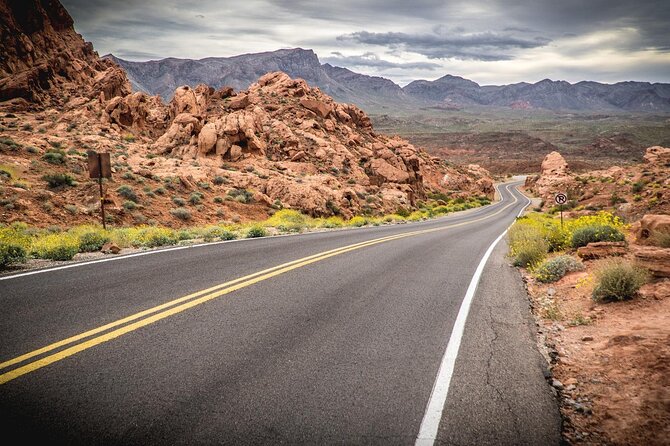
This is built as a true “Vegas to desert” day. You’re picked up from select hotels (morning schedules vary by season), then you ride in an air-conditioned vehicle to Valley of Fire State Park. The tour runs about 6 hours, and it’s the kind of schedule that works if you want a dramatic change of scenery without giving up an entire vacation day.
Gray Line keeps the group size reasonable, with a maximum of 33 travelers, which matters more than you might think in a park like this. Valley of Fire is full of viewpoints and pull-offs. Smaller groups mean you spend less time waiting and more time at the stops, taking photos and listening to explanations.
If you’re traveling alone, this tour can feel easier than self-driving with a camera. In the feedback I saw, guides were willing to help with photos, including taking pictures when someone was by themselves. Also, the tour uses a mobile ticket, which helps cut down on paperwork.
You can also read our reviews of more tours and experiences in Las Vegas.

When do you start?
Start times are early, and they change depending on the date range:
- Oct 20, 2025 – Dec 14, 2025: Tuesday pickup 8:00 AM–9:00 AM
- Dec 15, 2025 – Dec 24, 2026: Monday–Sunday pickup 7:00 AM–8:00 AM
Because it’s a good-weather tour, you’ll want to be flexible. If weather doesn’t cooperate, you can get offered a different date or a refund.
Valley of Fire State Park: the main stop that sets the tone
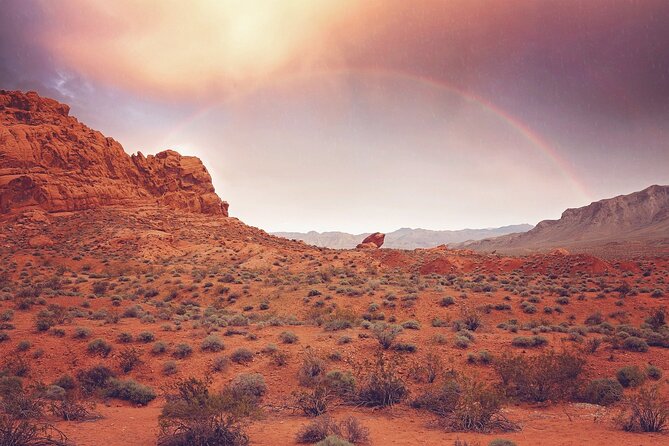
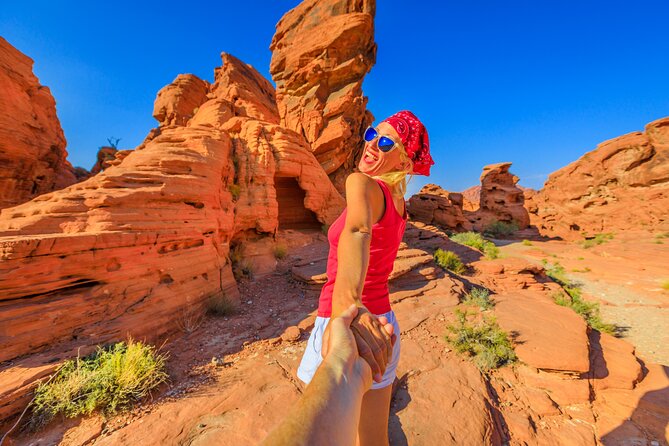
Your day’s anchor is Valley of Fire State Park, with about 1 hour 30 minutes and the park admission included. This is Nevada’s first and largest state park, and it shows off the kind of red sandstone drama that looks fake until you’re standing in it.
This is where you’ll get the payoff for doing a guided tour instead of just driving in on your own. The explanations help you connect what you see—forms, colors, and carvings—to how the desert shaped the area over time. Even if you only have an hour and a half, it’s enough time to slow down at the best spots and actually notice details.
Practical tip: wear shoes you’re comfortable walking in on uneven ground and plan for sun. Valley of Fire is desert country, and the tour includes bottled water plus snacks, but you’ll still want to stay ahead of thirst and heat.
Stop pacing: why the timing works
The itinerary uses short stops after Valley of Fire, but the main park visit is long enough to reset your eyes. I like this rhythm: arrive, build context at the big stop, then you move through the smaller “hit-list” viewpoints.
Rainbow Vista: 15 minutes of contrast you’ll remember
Right after the main park time, you head to Rainbow Vista for about 15 minutes. This is a viewpoint area with amazing views of features like White Dome and Duck Rock. The big idea here is contrast.
The reds of Valley of Fire are famous, but Rainbow Vista shifts the palette—yellows, golds, and reds mixed together, shaped by ancient sand deposits over 150 million years. You’ll also see a mix of canyon cuts, domes, towers, ridges, and valleys carved over long stretches of time.





Why this stop is worth the short time
Fifteen minutes sounds quick, but it’s the right amount for a pull-off viewpoint. You don’t need a long hike to get the message. Standing there, you can compare what your eyes register in real time: the rock colors change, and your brain starts reading the terrain differently.
If you’re the type who loves photos, this is one of the stops where you’ll get the most “one shot, done” results—especially if the guide helps with timing and positioning.
Atlatl Rock: petroglyphs and a clue to older tools
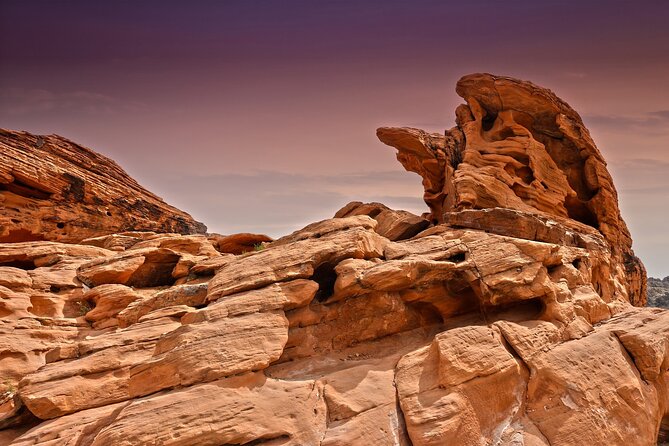
Next up is Atlatl Rock, located to the west of Valley of Fire State Park. You get about 20 minutes, and admission is included for this stop too.
This one has a name with a story. Atlatl Rock is named after an atlatl, a throwing stick used by ancient tribes to increase the force behind darts and spears. The rock is also known for petroglyphs—rock carvings left by people long ago.
Here’s the fascinating part: these images have not been deciphered by archaeologists and anthologists in a definitive way. That means you’re not being “sold” a single explanation. Instead, you’re being shown evidence of human presence and expression, without pretending anyone knows the whole story.
How to make this stop more meaningful
Go a little slower here than you think you need to. Petroglyphs can be subtle at first glance. If the guide points out key sections, take a moment to re-look after you’ve been told what to focus on. The second look often makes the carvings click.
If you care about history, this stop is a great reminder that Valley of Fire isn’t only geology—it’s also a record of people using and traveling through this part of the Mojave.
The Beehives: cross bedding you can actually picture
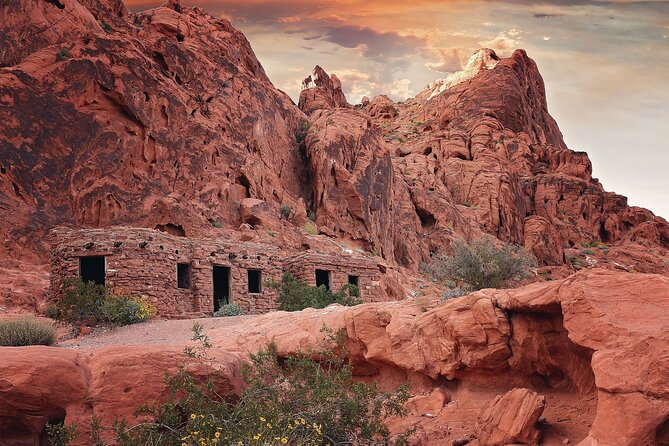
You’ll then move to The Beehives for about 15 minutes. Admission is included again.
The name isn’t just a cute label. These are sandstone formations that show how nature can shape things into recognizable patterns. But the real “wow” is geologic: the formations demonstrate cross bedding, which are grooved lines where layers of silt were deposited at different times.
In plain terms, you’re looking at evidence of changing conditions over long periods. The different directions in the grooves reflect shifts in deposition, and the layers tell a story even when the scenery seems static.
A quick caution for photo lovers
Cross bedding can be easiest to see when you’re at the right angle with the light. If you’re taking photos, don’t just shoot once and move on. Look for the angle where the grooves pop, then take your shot.
Balancing Rock: the quick stop that still feels magical
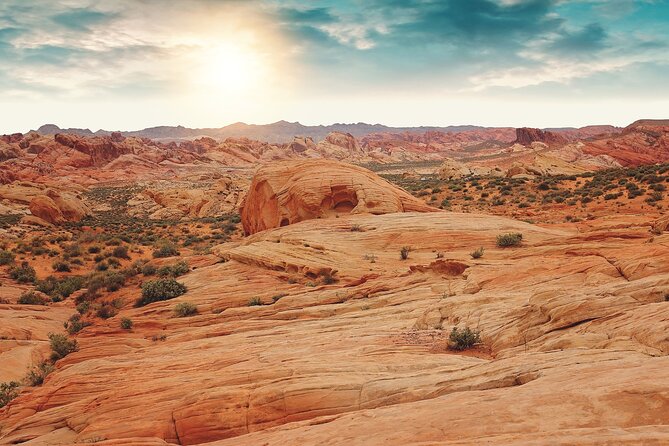
For about 10 minutes, your tour heads to Balancing Rock. This is one of those formations that looks like it’s defying gravity. You’ll be able to see why people get drawn to this kind of sight: the shape makes you question physics for a second, which is the whole point.
It’s a short stop, but it works as a mental reset between heavier stops. After petroglyphs and geology-focused cross bedding, this is a light-hearted payoff that helps break up the day.
If you’re traveling with kids or anyone who wants variety, this 10-minute stop is often the one that gets the biggest instant reaction.
Visitor Center time: connect the dots before you head back
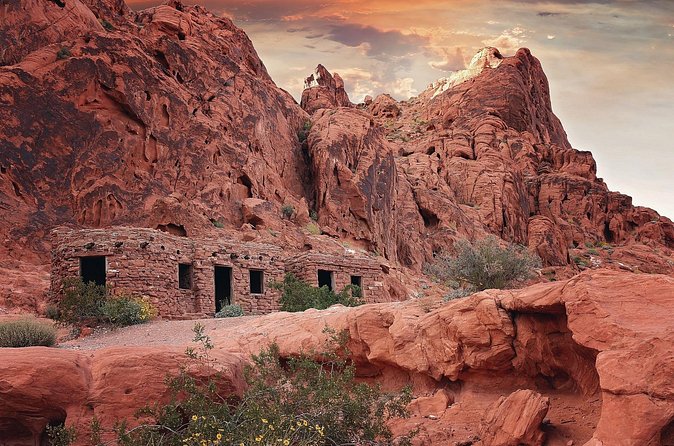
Before returning to the glitter of Las Vegas, the tour makes a final stop at the Valley of Fire Visitor Center for about 30 minutes. Admission is included here too.
This is where you can translate what you saw outdoors into a clearer story. The exhibits focus on geology, ecology, and history, so you’ll understand not only what the rock formations look like, but how the broader environment fits together.
If you want a souvenir that doesn’t feel like a generic postcard, the gift shop sells postcards, books, and film souvenirs—useful for reminding yourself later, when the desert fades from memory.
What I like about the Visitor Center segment
It’s not just time to browse. It gives you context for the stop list you already covered. Even a half hour can make your photos and mental notes feel more coherent.
Price and value: what $110 gets you in the real world
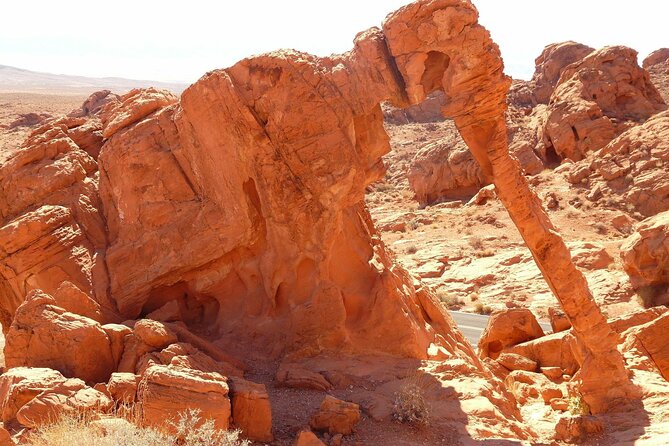
At $110 per person for about 6 hours, this tour is priced for a day trip that includes actual costs you’d otherwise pay separately. Here’s what you’re getting that adds value beyond the viewpoints:
- Pickup from select hotels and round-trip transport in an air-conditioned vehicle
- Snacks and bottled water included
- Admission tickets included for multiple stops (and at least one stop is free)
- Mobile ticket simplifies day-of logistics
- A guide helps you understand what you’re seeing and where to look
Also, this tour is commonly booked around 22 days in advance. That usually signals decent demand and a schedule that fills up during peak periods.
Is it worth it if you prefer to self-drive?
If you’re the do-it-yourself type and you’re comfortable planning stops, you could drive yourself. But you would still be paying admission and managing navigation, parking, and timing. The guided route compresses all that into a set flow, plus it adds interpretation at the petroglyph and geology points.
Small-group comfort and the guide factor
One reason this tour earns strong marks is the guide style. In the feedback I saw, guides were described as very informative and accommodating, and they made time for photos at the key stops. One guide name that came up in responses was Anthony—highlighted for being amazing and for offering helpful suggestions.
That kind of guidance matters most at the stops where details are easy to miss. Petroglyphs and cross bedding aren’t always obvious from the first glance. A good guide helps you focus your eyes and get better results from the limited time.
With up to 33 people, you’re not stuck in a huge coach where everyone scatters and the group loses its rhythm.
What to bring (and what the tour covers)
The tour covers the essentials for the day: snacks, bottled water, and air-conditioned transportation, plus admission for the key areas.
To stay comfortable, you’ll still want to bring:
- Sun protection (hat/sunglasses are smart)
- Comfortable walking shoes
- A camera or phone with enough storage
If you’re sensitive to heat, you’ll appreciate the early start options and the fact that you’re not walking a huge hiking route in one stretch.
Service animals are allowed, and most people can participate, so it’s set up as a broadly friendly day trip.
Who this tour suits best
I’d point you toward this tour if you want:
- A guided introduction to Valley of Fire with a clear stop list
- A day that feels structured, not stressful
- A mix of geology and human history, including petroglyph sites
- Photo-friendly stops without committing to long hikes
It may be less ideal if you hate early mornings, or if you’re set on spending half a day alone wandering without explanations. The itinerary is built to cover multiple sites, so you won’t have unlimited time at a single spot.
Should you book this Valley of Fire tour from Las Vegas?
If you want a high-impact desert experience with minimal planning, I think this is a solid booking. The price makes more sense once you factor in the included admissions and the covered logistics like pickup, air-conditioned transport, and refreshments. The stop mix is also smart: major park time first, then a series of shorter viewpoints that each teach you something different.
The one real caution is weather. Since the tour requires good weather, you’ll want to choose dates that have backup options.
If you’re trying to maximize your Vegas trip with a real taste of Nevada beyond the Strip, this Valley of Fire day trip is an easy win.
FAQ
How long is the Valley of Fire tour from Las Vegas?
The tour runs about 6 hours (approx.), with several timed stops inside Valley of Fire State Park and one final stop at the Visitor Center.
What is the price per person?
The price is $110.00 per person.
Is hotel pickup included?
Yes. Pickup is offered from select hotels.
Are admission tickets included?
Admission is included for Valley of Fire State Park, Atlatl Rock, The Beehives, Balancing Rock, and the Visitor Center. Rainbow Vista is listed as free admission.
Do you need to print a ticket?
No. You use a mobile ticket.
How big is the group?
The maximum group size is 33 travelers.
What happens if weather is bad?
This experience requires good weather. If it’s canceled due to poor weather, you’ll be offered a different date or a full refund.
Can I cancel for a full refund?
Free cancellation is offered up to 24 hours in advance for a full refund.