REVIEW · SELF-GUIDED TOURS
Las Vegas Strip Past & Present Glory: Self-Guided Adventure
Book on Viator →Operated by Questo · Bookable on Viator
Vegas gets a puzzle game makeover. This app-based route lets you tour the Strip at your own pace, with 11 puzzle challenges and a storyline that explains why these landmarks matter. I love the no-pressure format (there’s no live guide) and the way the clues turn the usual Strip stroll into something you actually pay attention to. One consideration: you’ll be walking and scanning for answers, so plan for comfortable shoes.
This experience is built to fit your rhythm. You get a mobile access code, the storyline content, and the flexibility to pause and resume whenever you want, then you just follow the next stop along Las Vegas Blvd. It’s offered in English, and it’s set up for a private group, which usually means less waiting around.
It’s a smart pick for a quick Strip visit, too. The route runs about 1 to 1.5 hours, starts at the MGM Grand Monorail Station area, and finishes at The Fountain at The LINQ Promenade. Since it’s available daily from 5:00 AM to 11:00 PM, you can slot it in around your bigger hotel-casino plans.
In This Review
- Key things to know before you start
- Price and value: what $7.20 really gets you
- How it works on the phone: pause, scan, and move at your pace
- Start at MGM Grand Monorail Station, finish at The LINQ fountains
- MGM Grand: Leo the Lion and the scale of 1993
- New York-New York: the city-that-never-sleeps look
- The Statue of Liberty replica: the half-scale math
- The Park and Bliss Dance: Nevada-inspired design with an art focus
- Las Vegas cafe and the big Rock Shop break
- Miracle Mile Shops: an enclosed Strip-style shopping loop
- Soaring fountains and the music-and-light moment
- Caesars Palace: Roman setting with casino reality
- The LINQ Promenade finish: High Roller near the end
- Who this self-guided Strip game fits best
- Should you book Las Vegas Strip Past & Present Glory?
- FAQ
- How long does the Las Vegas Strip Past & Present Glory experience take?
- Where do I start and where do I finish?
- Do I need a live tour guide?
- What do I get once I book?
- What language is it offered in?
- Can I pause and resume during the experience?
- Is it available at night?
- Are service animals allowed?
- Is it near public transportation?
Key things to know before you start
- Mobile-first game: Use your phone, no live guide needed.
- 11 challenges, story included: You’re not just sightseeing; you’re solving along the way.
- Pause/resume anytime: Take breaks for photos, food, or casino cooling.
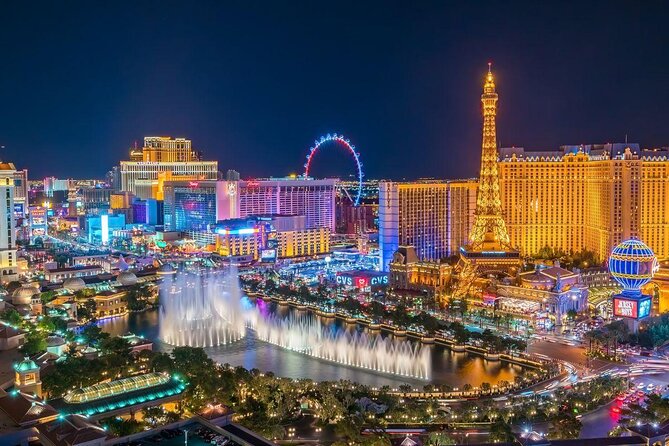
- Strip landmarks in one loop: MGM Grand, New York-New York, The Park, Caesars, and the LINQ finish.
- Fun for first-timers and families: The light scavenger-game style makes it easier to enjoy.
- Bring walking shoes: You’ll cover real distance as you hunt for clues.
Price and value: what $7.20 really gets you
At $7.20 per person, this feels like the kind of Vegas activity that doesn’t ask you to rearrange your whole day. The big value isn’t a fancy show or a reserved seat—it’s that the game structure turns the Strip into a guided experience without paying for guide time. You also get group discounts, and it’s booked well in advance on average (about 104 days), which is a hint that people like using it as a reliable “do this in one hour” plan.
For value, the key is the format: you’re paying for direction plus story plus challenges. Included materials cover the mobile access code, the storyline content, and the 11 puzzle challenges. If you’re the type who usually speeds through landmarks, this forces you to slow down just enough to notice details you’d otherwise miss.
The main trade-off is that it’s not a guided walking tour with a person answering questions. If you want deep, live explanations or personalized routing, you won’t get that here. But if you want a low-cost way to see the Strip while doing something fun, it’s a good deal.
You can also read our reviews of more guided tours in Las Vegas


How it works on the phone: pause, scan, and move at your pace
The whole experience is app-based, so you’re steering your own pace. The flexibility to pause and resume matters more than it sounds. Vegas can be chaotic—lines, crowds, and sudden decisions about food. Being able to pause means you can step into a casino, refuel, or simply catch your breath without feeling like you’re falling behind.
You’ll also have a clear “game objective” mindset: find answers to advance to the next location. That’s a nice mental switch from the usual Vegas approach of just walking from one big thing to another. The puzzles encourage you to look around instead of staring at the sky and hoping the next photo spot appears.
Practical note: because you’re reliant on your phone, give yourself a little buffer for battery life and signal. Vegas isn’t always predictable.
Start at MGM Grand Monorail Station, finish at The LINQ fountains
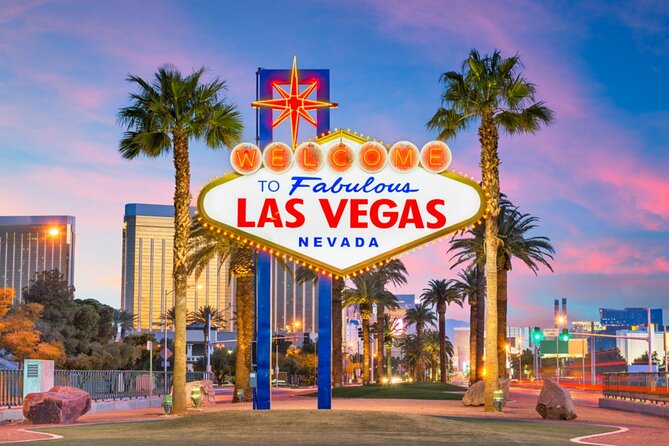
The route is straightforward. You begin at the MGM Grand Monorail Station (3799 S Las Vegas Blvd), and you end at The Fountain at The LINQ Promenade (3545 S Las Vegas Blvd). That matters because it links two classic ends of the Strip: one anchored by a massive mega-resort, the other by a modern open-air promenade.
The time window also helps you plan. With daily availability from early morning through late night, you can schedule this before dinner, after lunch, or as an evening warm-up before a bigger show. Because it’s near public transportation, you can also combine it with other plans without feeling stuck.
And since this is listed as a private tour/activity for your group only, it’s not about blending into a crowd of strangers. The pacing tends to feel calmer because you’re not coordinating with a large group at every stop.
MGM Grand: Leo the Lion and the scale of 1993
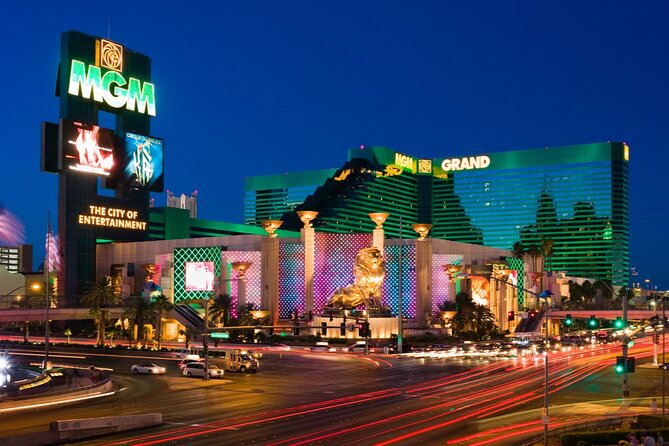
Your first major stop is the MGM Grand area, where the setting is all about size. MGM Grand is described as the world’s biggest when it opened in 1993, and it’s still noted as the largest in the United States. That’s the kind of fact that’s hard to feel just by walking past—until you also spot the famous Leo the Lion statue.
The challenge here is built around exploring the location to find the answer that advances you. It’s not just “look at the sign and go.” The detail you’ll likely notice is Leo the Lion: over 45 feet tall and about 50 tons. It’s also highlighted as the biggest bronze sculpture in the U.S.
Why this stop works for the game: MGM Grand is visually loud, with huge forms and big-bright signage. Those conditions actually help puzzles, because there’s plenty to look at and compare. If you like turning “wow, that’s big” into something you can explain, this is a strong opener.
New York-New York: the city-that-never-sleeps look
Next, you move to New York-New York Hotel & Casino, designed to evoke New York City through its architecture and overall vibe. It’s also owned and operated by MGM Resorts International, which ties interestingly back to the MGM branding you already started with.
Again, the format stays consistent: you look around to find the puzzle answer that moves you forward. This part of the Strip has a different energy than MGM Grand. The style cues are clearer, and the whole place feels like a themed stage set rather than just a mega-casino.
If you’re coming to Vegas for the first time, this stop is a quick reality-check. The game is pushing you to notice how the Strip borrows identities—New York, Rome, and more—so you start seeing Vegas as a place made from storytelling, not just gambling.
You can also read our reviews of more tours and experiences in Las Vegas






The Statue of Liberty replica: the half-scale math
Right outside New York-New York, you’ll find the Statue of Liberty replica. The details given here are specific, and they’re exactly the kind of facts puzzles love.
The replica is 150 feet tall from the ground to the top of the torch, including the pedestal. The real Statue of Liberty in New York Harbor is 151 feet tall without its pedestal or foundation. The designers hoped for a one-third scale replica, but it ended up being impractical, so the result is described as a statue 100 feet high on a pedestal of 50 feet—totaling one-half scale.
Why this is a great puzzle stop: the “numbers” are memorable. Even if you don’t care about statues, you’ll remember the height comparison because it’s oddly close and also oddly different. And the location is convenient—so you’re not spending extra time hunting for what you’re supposed to read or observe.
The only potential drawback is that this is a popular outdoor photo area. If it’s crowded, you might spend extra time waiting to get a clear look. That’s where the pause/resume option becomes useful.
The Park and Bliss Dance: Nevada-inspired design with an art focus
Then the route shifts into an area called The Park, described as a reimagining of a traditional pedestrian experience. It’s filled with natural landscapes and Nevada-inspired design, so you get a breather from the pure casino facade look.
Your next challenge centers on Bliss Dance, a 40-foot-tall sculpture of a dancing woman. The story attached to it is part of what makes the stop feel more meaningful than just “another sculpture.”
Bliss Dance is described as celebrating the strength of a woman who is safe and present. The scale and structure were inspired by artist Marco Cochrane’s first experience at Burning Man in Nevada’s Black Rock Desert, where Bliss Dance later debuted. The sculpture most recently resided on San Francisco’s Treasure Island, then was refurbished and returned to the desert as a centerpiece of The Park’s natural landscaping and design.
This is one of the more interesting “story” moments in the whole loop because it connects Vegas to a wider Nevada creative scene. If you like art that has a backstory, this section makes the game feel more like a guided narrative than a simple scavenger hunt.
Las Vegas cafe and the big Rock Shop break

One of the stops is a Las Vegas cafe with 42,000 square feet of space across three floors. It’s described as having non-stop action, plus the world’s largest Rock Shop®. There’s also high-speed Internet access, a contemporary lounge and bar, and patio dining with an unobstructed view of the world-famous Las Vegas Strip.
This is a smart mid-route pause area. You’re in between major landmark clusters, so it’s a good moment to reset: water, a quick snack, or just a calm sit before you continue walking. The “view of the Strip” angle matters for the game, too—since you can look out across the casino skyline and mentally map where you’ve been and where you’re headed next.
The trade-off: if you’re trying to finish quickly, cafes and shopping zones can tempt you to linger. If you want to keep the experience near the 1-hour range, set a rough time limit for this stop.
Miracle Mile Shops: an enclosed Strip-style shopping loop
Next is Miracle Mile Shops, formerly Desert Passage, described as a 475,000 square foot enclosed shopping mall. It’s home to more than 170 stores, 15 restaurants, and live entertainment venues.
This stop gives the game variety. Instead of big outdoor icons, you move into a “walkable mall” environment. The clue format works well here because malls are designed for wandering—you naturally look around for details. It also shifts the experience toward a different kind of Vegas energy: less skyline, more storefronts and indoor breaks.
One interesting note included here is the naming. Miracle Mile is linked to a Los Angeles themed resort image, tied to the renovation concept. So even when you’re inside, you’re still tracking Vegas’s habit of borrowing and remixing identities.
Soaring fountains and the music-and-light moment
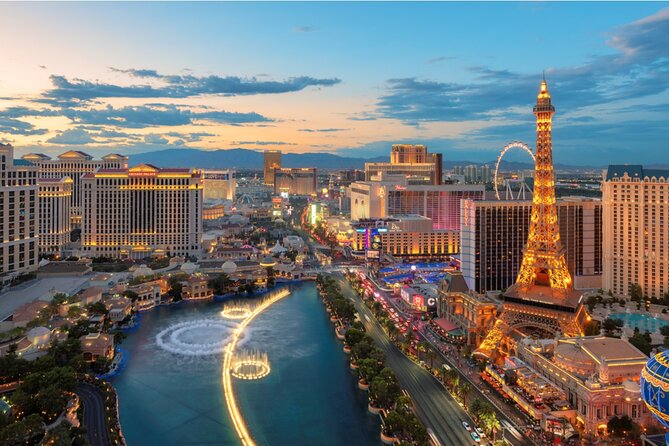
Then you hit the fountains—described as iconic, with dramatic aquatic shows choreographed with music and lights. Even if you don’t watch a full show cycle, the presence of this kind of feature changes your route rhythm.
Why it works in a game: fountains create a built-in “pause point.” You’re likely to slow down, look up, and wait for the water choreography cues—then you keep moving to the next challenge when you’re ready.
The practical consideration: show timing can affect how long you linger. Since the experience is about 1 to 1.5 hours overall, you might want to check your comfort level—watch part of a performance, then go solve the next answer.
Caesars Palace: Roman setting with casino reality
Caesars Palace brings a different theme: a Las Vegas casino in an ancient Roman setting. It’s the kind of place where the architecture tries to transport you, but the activities still feel unmistakably Vegas—slots, table games like blackjack and poker, and a race and sports book.
This stop’s role in the puzzle loop is about theme recognition. Your challenge is still about looking around to answer the next question, but you’re doing it inside a Roman-styled casino environment where details can feel both decorative and functional.
If you’re wondering whether this game is only for people who love casinos, you’re safe. Even if you don’t gamble, the Roman facade and casino setting give you plenty to observe while you look for answers.
The only caution: casinos can get crowded and loud. If you’re solving puzzles on a phone, noise levels can make it harder to focus on visual details. Don’t worry—just go slower when you need to.
The LINQ Promenade finish: High Roller near the end
You wrap up at The LINQ Promenade, an open-air shopping, dining, and entertainment district with great food and fun bars. It’s also home to the High Roller observation wheel, which is a recognizable final anchor for many Strip days.
Finishing here is practical. The LINQ Promenade area naturally supports a “walk and decide your next move” approach. When you finish your last puzzle challenge at The Fountain, you’re in a zone where it’s easy to keep exploring, grab a drink, or head toward other attractions.
This ending also feels like a modern shift away from the older mega-resort vibe earlier in the route. So the whole experience has a subtle arc: iconic mega-casino scale, themed replicas, then art and design, then a more open promenade finish.
Who this self-guided Strip game fits best
This is a good match if you want:
- A fun way to pay attention while walking the Strip
- Something you can do on your own schedule with pause/resume
- An activity that works for a wide range of ages because it turns sightseeing into a series of small “wins”
It may not be your best choice if you want:
- A live guide answering questions in real time
- A mostly seated experience
- A low-walking option
Since the route moves through multiple big properties, I’d plan for a full hour of purposeful walking. If your feet are sensitive, treat this like a mini-hike through casino-land.
Should you book Las Vegas Strip Past & Present Glory?
Yes, if you want a low-cost, self-guided way to understand the Strip’s themes and details without booking a traditional tour. The combination of a mobile code, 11 puzzle challenges, and flexibility to pause/resume is what makes it feel practical in a city that’s always asking you to rush.
Book it especially if you’re mixing Vegas highlights into a tight schedule. At $7.20 per person, it’s an easy add-on that can make a first-time or return Strip day feel more focused.
If you hate walking or you prefer a purely passive “show up and someone talks to me” experience, you’ll probably prefer a guided tour instead.
FAQ
How long does the Las Vegas Strip Past & Present Glory experience take?
It takes about 1 hour to 1 hour 30 minutes on average.
Where do I start and where do I finish?
You start at MGM Grand Monorail Station (3799 S Las Vegas Blvd, Las Vegas, NV 89109) and finish at The Fountain at The LINQ Promenade (3545 S Las Vegas Blvd, Las Vegas, NV 89109).
Do I need a live tour guide?
No. This is self-guided and does not include a live tour guide.
What do I get once I book?
You’ll receive a mobile access code, 11 puzzle challenges, storyline content, and the ability to pause and resume anytime.
What language is it offered in?
It’s offered in English.
Can I pause and resume during the experience?
Yes. Flexibility to pause/resume anytime is included.
Is it available at night?
Yes. It runs daily from 5:00 AM to 11:00 PM.
Are service animals allowed?
Yes, service animals are allowed.
Is it near public transportation?
Yes, it’s listed as being near public transportation.