REVIEW · DEATH VALLEY TOURS
LAS VEGAS: Death Valley, Seven Magic Mountains & Vegas Sign TOUR
Book on Viator →Operated by SV Tour · Bookable on Viator
Morning starts early, but the views pay off. This is a packed day that ties together classic Las Vegas photos, the sculptural Seven Magic Mountains, and big geologic moments in Death Valley.
I love the contrast here: you go from a colorful roadside icon to an art installation made of seven towering rock stacks. I also really like the payoff stops, especially Badwater Basin, where you see North America’s lowest point and learn how the salt and “bad water” got there.
One thing to consider: the day starts at 7:00am, and the tour needs good weather. If conditions are rough, the schedule can change and you may need to shift your plans.
In This Review
- Key highlights you should know
- A one-day route that hits real variety
- Pickup, timing, and how the day actually starts
- Stop 1: Welcome to Fabulous Las Vegas sign
- Stop 2: Seven Magic Mountains (Ivanpah Valley)
- Stop 3: Zabriskie Point and what the erosion tells you
- Stop 4: Furnace Creek Visitor Center for lunch and the museum
- Stop 5: Devil’s Golf Course and the salt-pan texture
- Stop 6: Badwater Basin, the low point in North America
- The guide factor: what makes the day feel smooth
- Lunch, water, and small-group value
- Price and whether it feels fair for a 9-hour day
- Who should book this and who might not
- Should you book the Las Vegas, Death Valley, Seven Magic Mountains & Vegas Sign tour?
- FAQ
- What is the tour duration?
- How much does the tour cost?
- Do they offer hotel pickup?
- What time does the tour start?
- How many people are on the tour?
- What’s included with the tour?
- Are tickets or admissions included for the stops?
- What language is the guide?
- What happens if the weather is poor?
Key highlights you should know
- Small-group cap (max 12) makes it easier to ask questions and keep the day moving smoothly
- Photo-friendly stops: the Welcome sign and Seven Magic Mountains are built for quick, iconic pictures
- Zabriskie Point timing is short but focused on why this area looks the way it does
- Furnace Creek lunch + museum time gives you a real break from the long drive
- Salt-pan sights at Devil’s Golf Course and Badwater Basin turn the desert into a science lesson
A one-day route that hits real variety
This tour is built for people who want a lot of “wow” without having to plan every turn. You’ll leave Las Vegas early and spend your day bouncing between a neon-era landmark, a modern art detour, and some of Death Valley’s most talked-about stops.
What makes it work is pacing. You’re not just driving through; you get time at each major stop to look, take photos, and listen to context. That context matters in Death Valley, where the terrain can look similar from far away—but the stories behind it are different.
Also, the tour is not a huge crowd situation. With a maximum of 12 travelers, the guide can keep an eye on timing and answer questions without the day feeling chaotic.
You can also read our reviews of more tours and experiences in Las Vegas.

Pickup, timing, and how the day actually starts
This is an early-departure tour. The start time is 7:00am, and pickup is offered at several major Las Vegas hotels. Common pickup points include Excalibur Hotel (near Starbucks), MGM Grand (main entrance), Treasure Island, Horseshoe, Wynn Las Vegas (south entrance near Dior and Cartier), Circus Circus, and The Strat.
Why that matters: with Death Valley farther south and east, you want to get moving before the hottest part of the day. Even with included bottle water, the desert waits for nobody, so an early start is part of the value.
The tour also uses a mobile ticket, so you’re not digging through paper while you’re trying to meet the group. It’s a simple but helpful touch on a day with tight stop times.
Stop 1: Welcome to Fabulous Las Vegas sign
The Welcome to Fabulous Las Vegas sign is pure instant Las Vegas. It was funded in May 1959, erected soon after by Western Neon, and designed by Betty Willis at the request of Ted Rogich. The sign was sold to Clark County, Nevada, so it’s not just a photo prop—it’s tied to the city’s growth story.
You’ll get about 20 minutes here. That’s usually enough time to grab the classic shot and also notice details you might miss if you rush.
Practical tip: this is the kind of stop where you’ll want to move quickly when the group is ready. The day is long, and you’ll be glad you didn’t burn extra time waiting for the perfect angle.
Stop 2: Seven Magic Mountains (Ivanpah Valley)
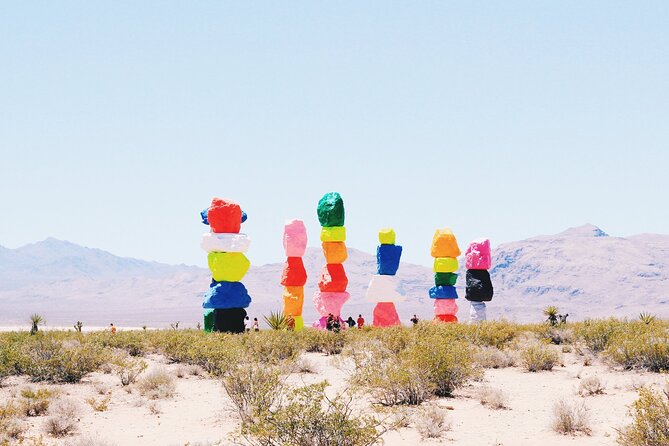
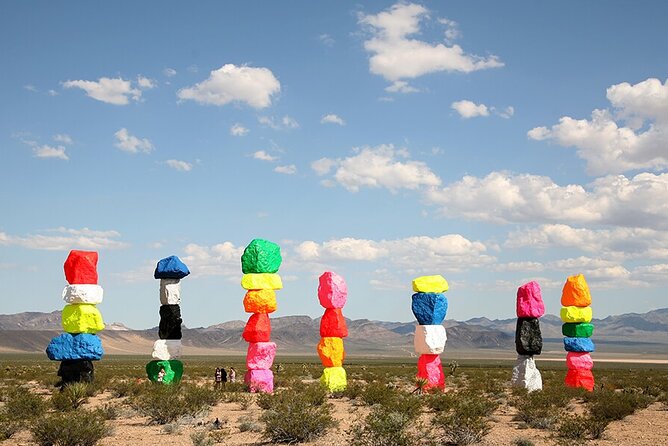
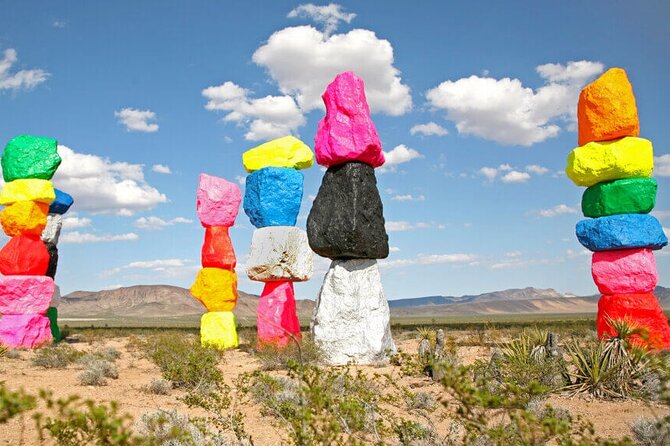
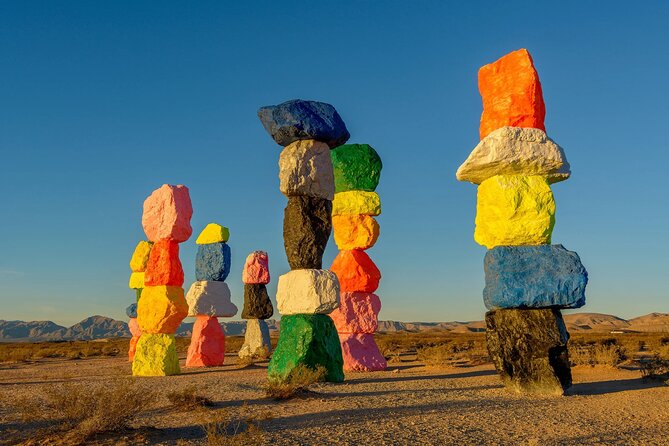
Then you switch gears to something totally different. Seven Magic Mountains is a land art installation in Ivanpah Valley, along the far southern end of Las Vegas Boulevard. It was created by Swiss artist Ugo Rondinone and commissioned and financed by the Art Production Fund and the Nevada Museum of Art.
One reason it’s such a hit: it’s enormous. The installation is described as one of the largest land-based works in the United States completed in the last forty years, and it pulls in 325,000 visitors annually. In other words, it’s not a random roadside thing—people plan their detours here.
You’ll get around 30 minutes. That should cover photos and a slow look at how the colors and rock forms shift with the light.
A small consideration: from a distance it can look straightforward, but up close you’ll see the scale fast. If it’s hot, give yourself a little time to adjust—don’t rush straight into intense sun just because it looks quick.
Stop 3: Zabriskie Point and what the erosion tells you
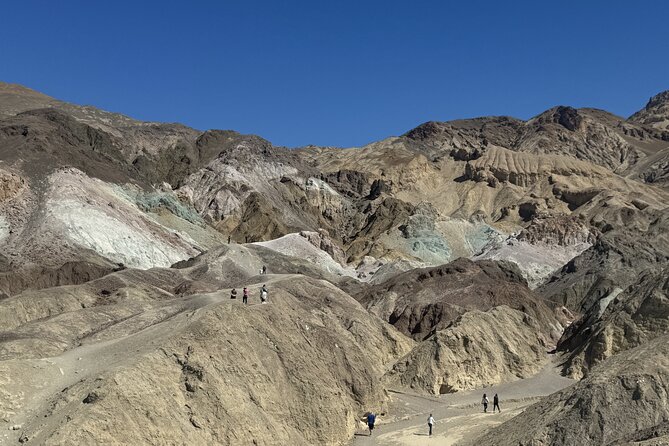
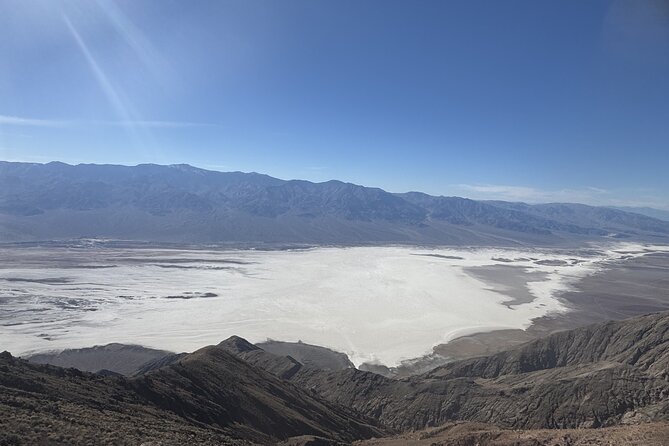
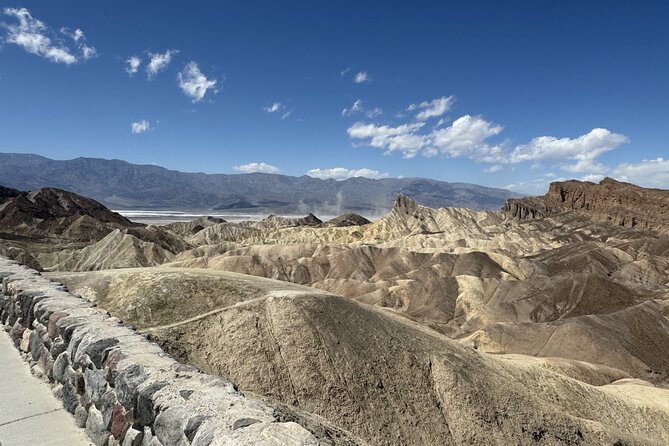
Next is the part of the day that feels like you’re stepping into a textbook. Zabriskie Point sits in the Amargosa Range east of Death Valley, inside Death Valley National Park.
You’ll have about 30 minutes here, and the key idea is why the view looks so sculpted. The area is made of sediments from Furnace Creek Lake, which dried up 5 million years ago—long before Death Valley came into existence. That one detail changes how you interpret what you’re seeing. You’re not just looking at “dry land.” You’re looking at layers of an older system.
The time is short, so you’ll get the best results by focusing your looking. Pick one area or one feature and compare what you see in that spot as you shift your stance. The guide’s explanations help you “name” what you’re looking at.

Stop 4: Furnace Creek Visitor Center for lunch and the museum
After the geology, you get a needed reset at Furnace Creek. This is where the tour builds in a real break: you’ll spend about 45 minutes at the Visitor Center.
It’s also the place tied to the park’s base operations, so you can understand the day with more context. The Visitor Center and museum are a chance to learn how the park is managed and how the region’s extremes shape life here.
And yes, lunch is part of this stop. You’ll get a lunch box with a sandwich, fruit, and juice, plus bottle water included in the tour. For a long drive day, this is one of the most practical inclusions.
Food note to take seriously: there’s a food allergy notice that food prepared here may contain eggs, wheat, soybean, peanut, tree nuts, and gluten. If you have allergies, treat this as a heads-up to ask questions before committing.
Stop 5: Devil’s Golf Course and the salt-pan texture
Then comes Devil’s Golf Course, a salt pan inside Death Valley National Park. You’ll spend about 20 minutes here.
This one is famous for texture. The area is named Devil’s Golf Course because the surface is so jagged and hard to traverse that it’s only the devil who could play golf. It’s not about humor for humor’s sake—it’s a vivid warning about the ground under your feet.
What I’d focus on: the way salt formations create patterns and edges. Even if you’ve seen salt flats in photos, this feels different because the terrain is rough and irregular, not flat and smooth.
If you’re the kind of person who likes walking to take pictures, keep it controlled. You’ll enjoy it more if you stay stable and give yourself time to look without rushing across questionable footing.
Stop 6: Badwater Basin, the low point in North America
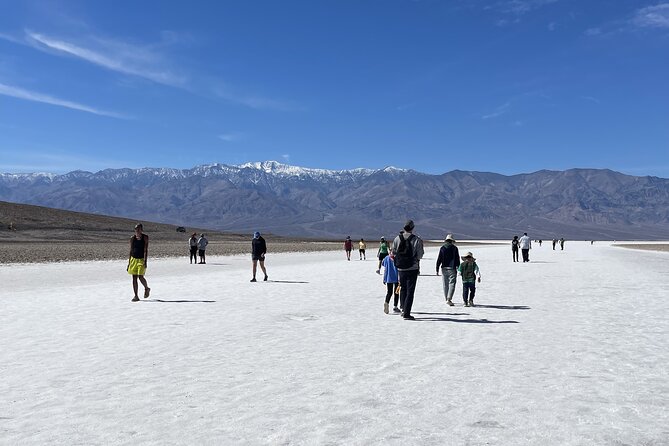
The finale is Badwater Basin, one of the most iconic spots in Death Valley. It’s in Death Valley National Park and is noted as the lowest point in North America and the United States at 282 feet (86 m) below sea level.
You’ll get about 40 minutes, and the big concept is the “bad water.” The site includes a small spring-fed pool of water next to the road inside a sink. The surrounding salts make the water undrinkable, which is how it got its name.
What makes this stop feel real is that it’s not only about emptiness. Even here, you can find signs of life. The area has pickleweed, aquatic insects, and the Badwater snail. That detail turns the scene from dead-looking into complicated.
Practical tip: pace yourself. This is a stop where your eyes will keep grabbing bright whites and low shadows. If you move too fast, you’ll miss how the terrain shifts as the light changes.
The guide factor: what makes the day feel smooth
The tour includes an English official guide, and that can make a huge difference in Death Valley. Death Valley can feel like a pile of dramatic scenery unless someone helps you connect the dots.
In one piece of feedback, the guide name Chris stood out for being fun and for explaining both the Death Valley area and the Vegas region in a way that made the day more enjoyable. That’s the kind of guidance you want on a long outing—someone who can keep facts clear without turning the day into a lecture.
With a max group size of 12, you can also ask questions without feeling like you’re shouting at a crowd.
Lunch, water, and small-group value
This tour includes bottle water and a lunch box (sandwich, fruit, and juice). That matters because Death Valley plans can fall apart if you’re scrambling for food on the road.
I also like that all fees and taxes are included. Some of the best “value” tours are the ones where you don’t need to think about ticket costs mid-day. Here, admission is stated as included for certain stops, while other stops are free admissions.
Quick look at the admissions included:
- Zabriskie Point: admission included
- Furnace Creek Visitor Center: admission included
- Devil’s Golf Course: admission included
- Welcome to Fabulous Las Vegas and Seven Magic Mountains: admission ticket free
- Badwater Basin: free admission
In plain terms, the pricing covers the big structured parts of the day so you can focus on the experience instead of logistics.
Price and whether it feels fair for a 9-hour day
The price is $326.67 per person for an approximately 9-hour outing, including private transportation, an English official guide, bottle water, lunch, and all fees and taxes.
Is it cheap? No. But it can still be good value, especially if you’d otherwise have to:
- manage your own car rental and fuel,
- handle a route with multiple stops,
- and pay for guide interpretation that turns the terrain into something you actually understand.
Also, the small group size (up to 12) tends to make the time feel more personal than big-bus tours. You’re not just being transported; you’re being taught how to look.
If you’re traveling in a group of two or more who want a guided day without car headaches, this price can start to make sense fast.
Who should book this and who might not
This is a strong pick if you:
- have limited time in Las Vegas and want a serious Death Valley day,
- like getting the story behind what you see (especially for Zabriskie Point and Badwater Basin),
- and prefer a smaller group with an English guide rather than sorting it all out on your own.
You might think twice if you:
- hate early starts, since pickup begins around 7:00am,
- or know you’ll struggle with outdoor heat and long time on the move (even though water and lunch are included, you’ll still be outside at multiple stops),
- or have strict dietary needs, since the tour provides a set lunch and the allergy notice flags common ingredients.
Should you book the Las Vegas, Death Valley, Seven Magic Mountains & Vegas Sign tour?
I’d book it if you want one guided day that covers the must-see mix: neon-era Vegas history, a modern art interruption, and Death Valley’s lowest-point and salt-pan sights. The included lunch and water remove two everyday headaches, and the capped group size keeps the day from feeling like a factory line.
Skip it (or at least reconsider) if you’re chasing a slow, flexible day. This tour is timed—each stop is built for a specific window—so if you need lots of free wandering, you may feel a little rushed.
If weather is looking good and you’re ready for an early start, this one-day route is a practical way to see a big chunk of the region without turning your trip into a planning project.
FAQ
What is the tour duration?
The tour lasts about 9 hours.
How much does the tour cost?
The price is $326.67 per person.
Do they offer hotel pickup?
Yes. Pickup is offered at multiple Las Vegas locations, including Excalibur Hotel, MGM Grand, Treasure Island, Horseshoe, Wynn Las Vegas, Circus Circus, and The Strat.
What time does the tour start?
The start time is 7:00am.
How many people are on the tour?
The tour has a maximum of 12 travelers.
What’s included with the tour?
Included items are private transportation, bottle water, all fees and taxes, an English official guide, and a lunch box (sandwich, fruit, and juice). A mobile ticket is also provided.
Are tickets or admissions included for the stops?
Admission is included for Zabriskie Point, Furnace Creek Visitor Center, and Devil’s Golf Course. Admission is free for the Welcome to Fabulous Las Vegas sign, Seven Magic Mountains, and Badwater Basin.
What language is the guide?
The tour includes an English official guide.
What happens if the weather is poor?
The tour requires good weather. If it’s canceled due to poor weather, you’ll be offered a different date or a full refund.