REVIEW · DEATH VALLEY TOURS
From Las Vegas: Death Valley Sunset and Starry Night Tour
Book on GetYourGuide →Operated by Mytourstory LLC · Bookable on GetYourGuide
Death Valley feels like another planet. This 12-hour small-group tour strings together iconic daytime stops and proper stargazing in one trip.
I really like two things here: you’ll hit the big-name places like Badwater Basin (the lowest point in North America) and Dante’s View, and you’ll do it with a guide who manages the timing so you’re not stuck guessing where the best sunset angle will land. Guides like Andrew, Jason, Justin, Steve, Chris, Leo, and Jack are all referenced by name, and the common theme is strong photo help and keeping the schedule moving.
One consideration: the star show isn’t a guarantee. Stargazing may be limited on nights with a full or bright moon or if the sky is cloudy, and the plan can shift with weather or road closures inside the park.
In This Review
- Key things to know before you go
- Day-to-night Death Valley: why this tour feels different
- Price and value: what $249 buys you (and what it doesn’t)
- Meeting, timing, and heat reality (the part that affects your comfort)
- Stop-by-stop breakdown: how the day is staged for best views
- Pickup, then a quick Death Valley sign photo
- Pahrump: a brief reset break
- Dante’s View: panoramic “salt flats meet sky” moments
- Furnace Creek Visitor Center: break time that matters
- Badwater Basin: the lowest point in North America
- Artists Drive and Artists Palette: color that looks like paint
- Zabriskie Point: iconic sunset payoff
- The final “view point” and the dark-sky shift after sunset
- Stargazing: what you’ll actually see (and why the moon matters)
- The guiding style: quick, helpful, and photo-focused
- Who should book this tour (and who should skip it)
- Quick packing checklist (so the day goes smoothly)
- Should you book Death Valley Sunset and Starry Night from Las Vegas?
- FAQ
- How long is the Death Valley Sunset and Starry Night tour?
- How much does the tour cost?
- What’s included in the price?
- Is food included?
- How many people are in the group?
- When does the tour start?
- When does stargazing happen?
- Are there any limits on who can join?
Key things to know before you go
- Only one tour covers day plus stargazing in the same long day, starting from the Strip and ending under dark skies
- Badwater Basin and Dante’s View give you the “lowest + panoramic” combo without the hassle of driving yourself
- Sunset at Zabriskie Point, then you head to a light-pollution-free spot 90 minutes after sunset
- Small group limits to 14 participants, so you get more hands-on attention during stops
- Water is included, but food and drinks are not, so plan your break snacks/lunch wisely
Day-to-night Death Valley: why this tour feels different
Death Valley is one of those places where self-driving can go wrong fast. You can absolutely do it on your own, but the park is huge, viewpoints are spaced out, and sunset timing is not something you want to “wing.” This tour is built around a simple idea: do the famous sights by day, then stay for the sky when the desert cools and the light drops.
What makes it work for me is the structure. You’re picked up from Las Vegas Strip hotels, then the day is paced with short photo stops, a few walk-and-look moments, and breaks that keep the whole long day from turning into a nonstop scramble. And because this is a true day-to-night format, you’re not forced to choose between seeing Death Valley highlights or chasing the stars.
The group size also matters. With limited seats (up to 14), it’s easier to keep everyone together at overlooks and manage the logistics of dark-sky viewing. In practice, that means less time waiting and more time actually looking.
You can also read our reviews of more evening experiences in Las Vegas

Price and value: what $249 buys you (and what it doesn’t)
At $249 per person, you’re not paying for “transport plus a ticket.” You’re paying for four things you’d otherwise have to solve yourself:
- A guide and timing for sunset and stargazing (starting times shift with sunset, and the day is arranged around it)
- Entrance fees included, so you don’t have to price out park access
- Logistics from the Strip with pickup/drop-off at many major hotels
- Access to a stargazing location described as free from light pollution
What you don’t get is food and drinks. The tour includes bottled water, plus you’ll have a lunch window and other breaks in and near Furnace Creek. That’s fine, as long as you plan ahead: if you skip food until the middle of the day, the desert will remind you that “later” is not a concept.
If you’re comparing to DIY, the real value isn’t just the drive. It’s having someone else solve the sequence: which viewpoints first, when to arrive for the sunset angle, and where to go once the sky gets dark.
Meeting, timing, and heat reality (the part that affects your comfort)
Pick-up starts from a long list of Strip hotels, and you’ll want to be there 10 minutes early. The day’s start time varies with sunset, and it can run as early as 8 AM or as late as 1 PM. That flexibility is good, because it lines the route up with the park’s evening light instead of forcing you into a fixed timetable that won’t match the actual sunset.
The tour is long: 12 hours, and it’s mostly outdoors. Even when the day-to-evening schedule is well planned, you still need to dress for extremes: comfortable shoes, sunglasses, and comfortable clothes are the basics you’re told to bring, and you’ll feel thankful for that when you’re standing at overlooks.
One more practical note: Death Valley can feel isolated. Even if your phone is fine in Las Vegas, you may find service inconsistent in the park area. Bring offline maps and be ready for a “no signal” moment.
Stop-by-stop breakdown: how the day is staged for best views
Below is how the route flows, and what each stop is really good for. Think of this as a “what to watch for” map.
Pickup, then a quick Death Valley sign photo
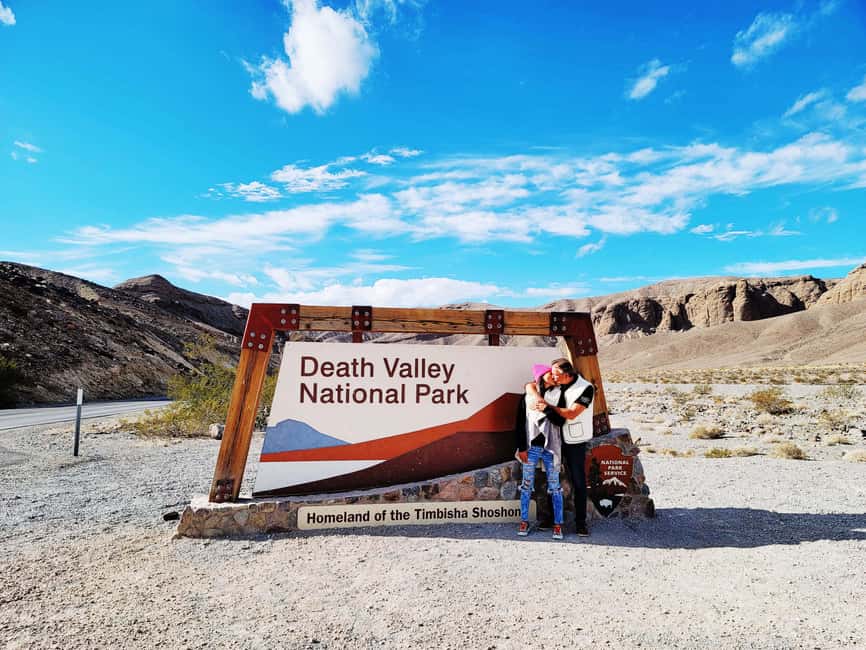
You start with hotel pickup from the Strip. After you enter the park, there’s a short stop at the Death Valley National Park sign for a quick photo. It’s not the main event, but it’s an easy orientation moment. If you’re traveling with jet lag or just need to reset after the drive, this is a gentle ramp-up.
Pahrump: a brief reset break
There’s a 20-minute stop in Pahrump early in the day, and then another shorter break later. These are the breaks that make a 12-hour tour manageable. Use them for bathroom time and quick stretching, because the real sightseeing portion is where you’ll want your energy.
Dante’s View: panoramic “salt flats meet sky” moments
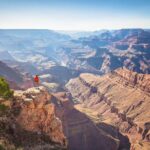
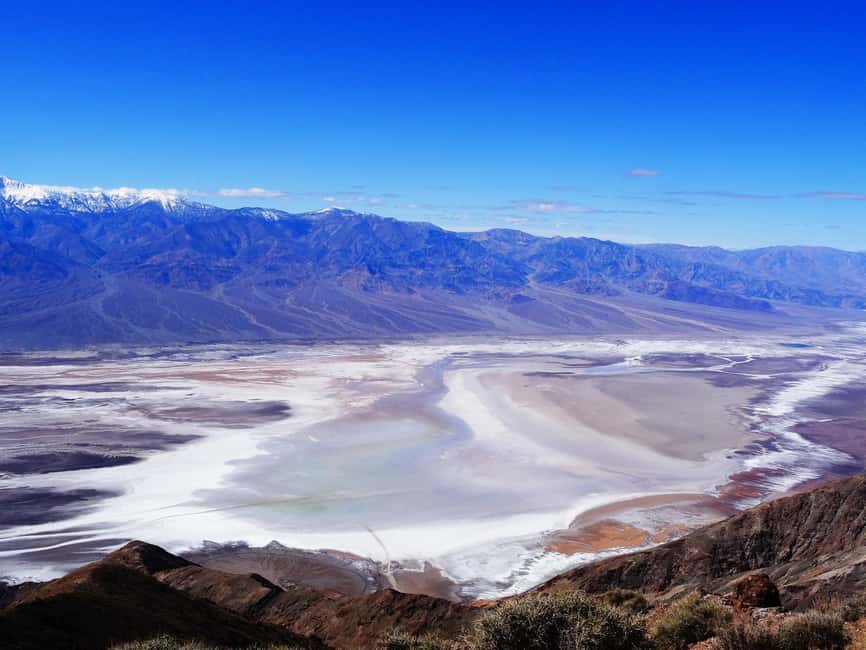
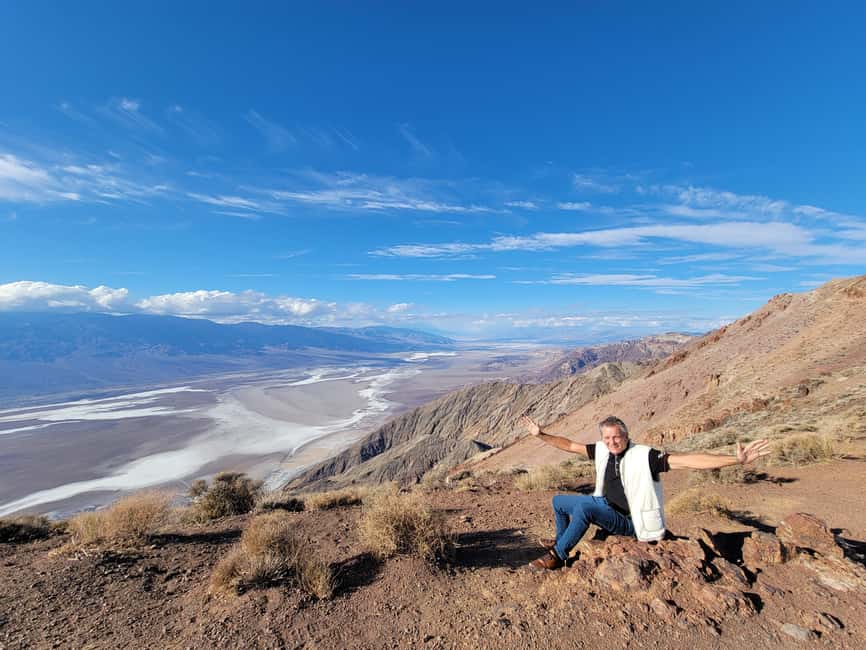
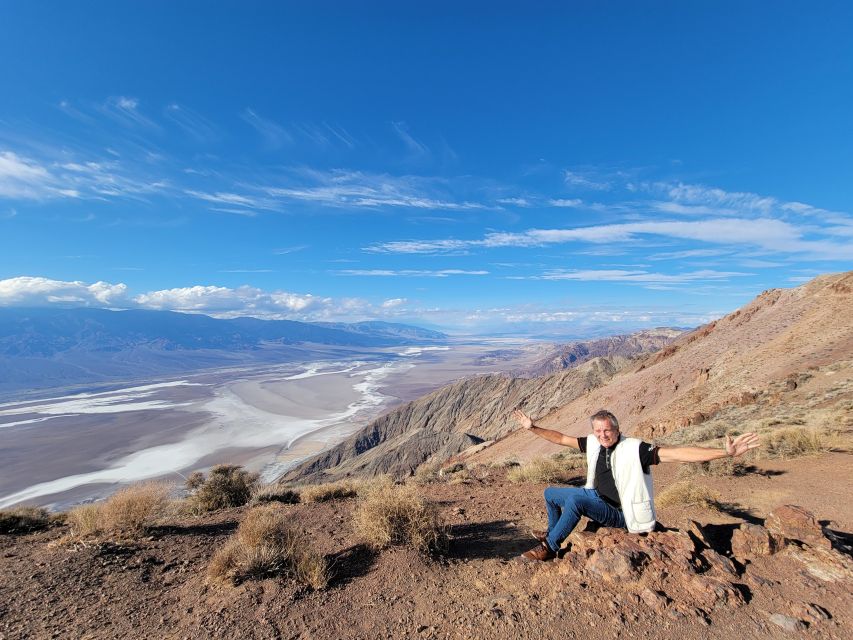
Next comes Dante’s View. This is where you get the broad, high-up look across the desert floor and salt pans. The stop includes photo time, a guided component, and a walk/scenic views on the way. The benefit here is scale: from this height, the weird textures and pale colors of the valley start to make sense.
What to do: slow down when you arrive and pick a landmark to orient yourself. The salt flats and desert terrain can look similar in photos, so taking 30 seconds to “read” the view in person pays off later when you’re comparing angles.
Furnace Creek Visitor Center: break time that matters
You’ll stop at Furnace Creek for a break (and later for a longer break/lunch window). The key value of this stop is not scenery. It’s timing. Furnace Creek is where you refill water (you already have unlimited bottled water on the tour) and get a real pause so you can handle the next big viewpoint stretch.
Because food isn’t included, plan to buy something here if you didn’t eat before the tour. For vegetarian options, people have reported choices like egg salad, a veggie sandwich/wrap, a veggie burger, plus smaller snacks (fruit, chips, and the like). Don’t count on your “exact favorite,” but you should have options.
Badwater Basin: the lowest point in North America
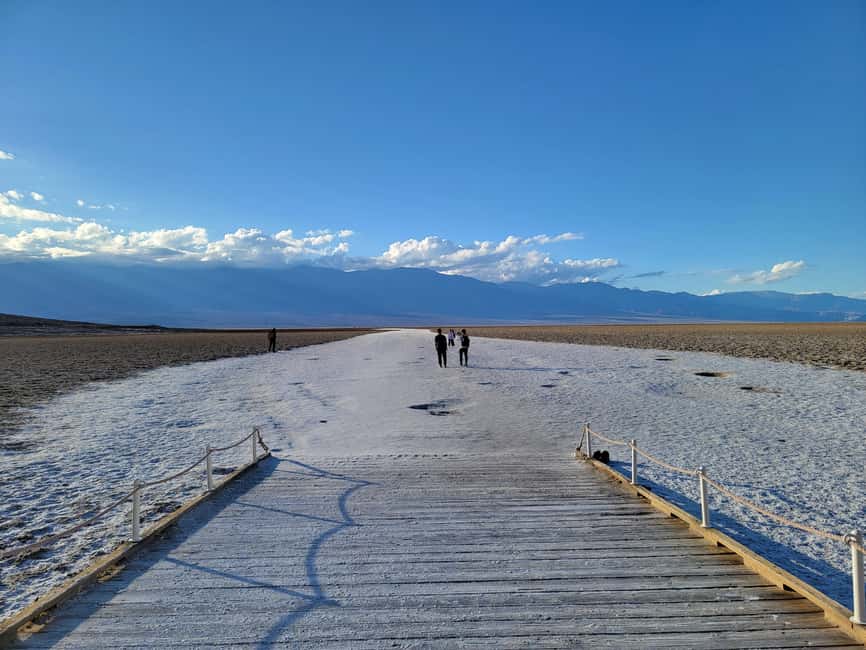
Then you go to Badwater Basin, with a photo stop plus time for guided walking and viewing. This is the signature stop: the route is specifically designed to get you here, and it’s famous for being 86 meters below sea level. On a clear day, you’ll understand why this place became a bucket list stop for so many people.
Drawback to plan for: this area can be visually intense but not exactly shaded. Comfortable shoes and taking short pauses help.
Artists Drive and Artists Palette: color that looks like paint
After Badwater Basin, you’ll head along Artists Drive and stop at Artists Palette for photos and time to look around. These hillsides get their colorful streaks from the way different minerals formed and weathered over time. It’s one of those stops where “the picture looks cool” is true, but the real win is seeing the tones shift when the sun angle changes.
Zabriskie Point: iconic sunset payoff
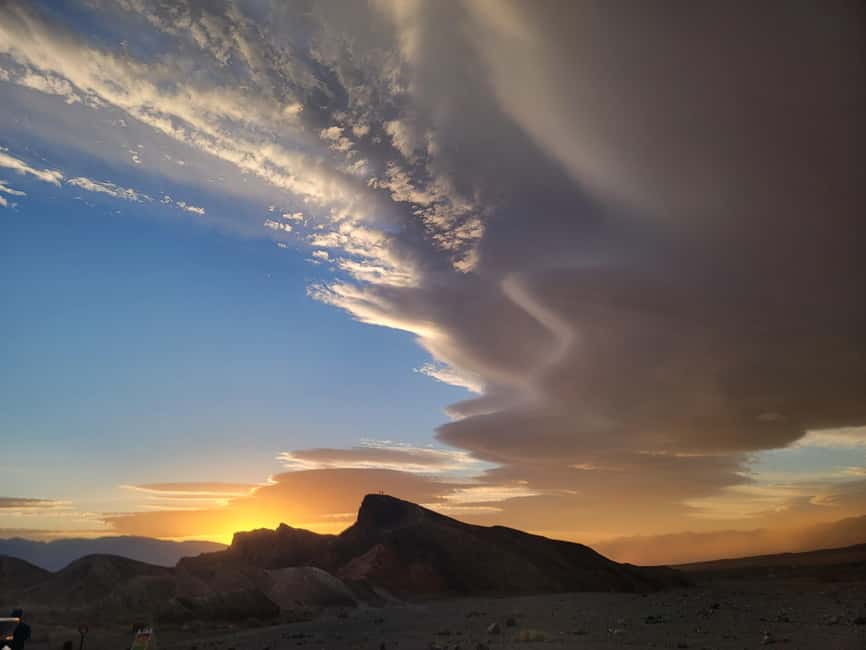
Next is Zabriskie Point, and this is the big sunset moment. You’ll have time for photos and viewing, plus guided context and a guided/sightseeing stop as the light changes.
This is where the day-to-night structure really justifies itself. If you’d been doing Death Valley yourself, getting the right timing for Zabriskie Point would be pure guesswork. Here, the schedule is shaped around sunset, and that’s the point.
The final “view point” and the dark-sky shift after sunset
After the sunset stop and a short return break, the tour continues to a view point for about a half hour guided time. Then comes the highlight for night lovers: stargazing in a location free from light pollution.
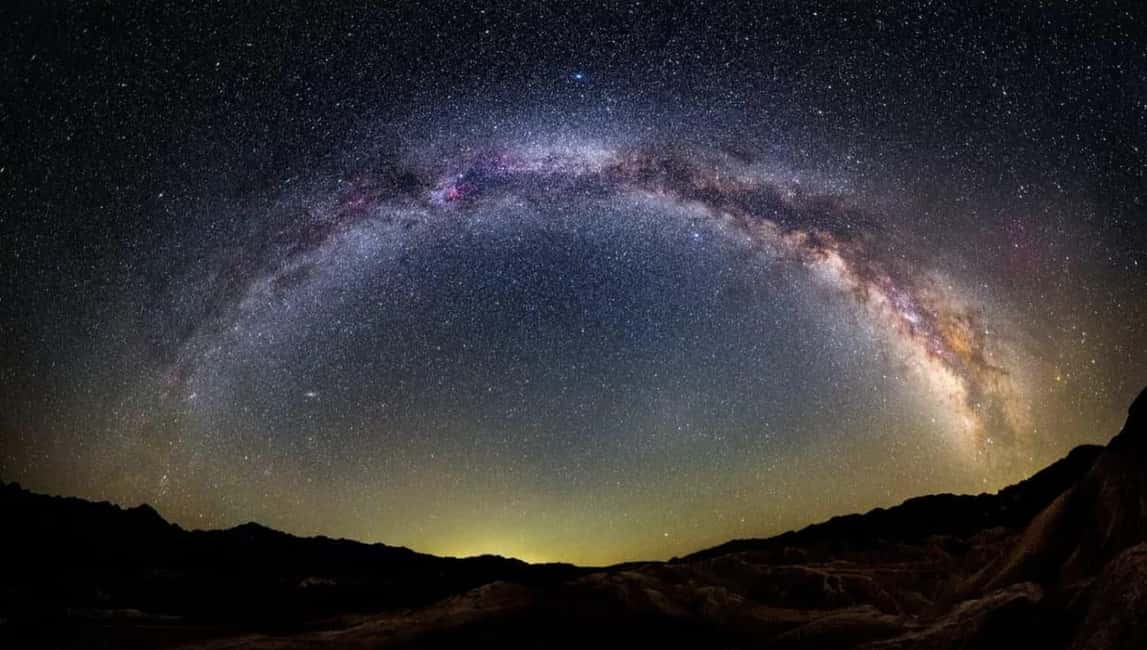
Stargazing happens one hour and thirty minutes after sunset. You’ll want to keep your jacket handy if temperatures drop where you’re standing. Reviews also mention people getting standout star photos and even catching meteor moments on clear nights, but the honest truth is the sky depends on moon phase and cloud cover.
Stargazing: what you’ll actually see (and why the moon matters)
The tour is explicit about the reality check: stargazing may be limited on nights with a full or bright moon or on cloudy days. That’s not a small footnote; it’s the difference between “wow, stars” and “wow, but still dim.”
So here’s the best way to think about it:
- If the night is clear and the moon isn’t bright, you’re in for the kind of sky that makes Las Vegas look like a lights-on trailer.
- If it’s cloudy or the moon is strong, you’ll still get the experience of being under dark skies, but the Milky Way might not pop as hard.
The guides also help with photo positioning. Multiple guides are mentioned in the feedback for star photography skills, so even if you don’t have fancy gear, you’re more likely to come home with usable images than if you just stood there and hoped.
The guiding style: quick, helpful, and photo-focused
A big reason this tour scores extremely well is how the guide handles the flow. You’re not just herded from stop to stop. The guide’s job is to keep the group synchronized while still giving you enough time to take photos and look slowly.
In particular, names like Andrew, Jason, Justin, Steve, Chris, Leo, and Jack show up in the feedback as guides who:
- timed stops to land at sunset well
- offered help with photos (including creative angles for night shots)
- stayed upbeat and efficient even when conditions changed
And yes, conditions can change. One guide was ready with alternatives when plans had to be altered due to weather. That’s worth paying for. Death Valley isn’t a theme park where everything happens on schedule.
Who should book this tour (and who should skip it)
This is a great fit if you want:
- Big Death Valley highlights without driving and parking yourself
- A full day plus stargazing experience in one go
- A small group setting that keeps the trip from feeling rushed
It’s not the best fit if you:
- can’t handle long outdoor time (the day runs 12 hours)
- have restrictions listed by the operator, including pregnancy, back problems, wheelchair use, people with a cold, people over 75, people with pre-existing medical conditions, or high blood pressure
- need guaranteed stargazing no matter the weather or moon (it’s dependent on sky conditions)
If you’re traveling solo, the photo help can be a real plus, since you’re not stuck asking strangers to take your picture for every stop.
Quick packing checklist (so the day goes smoothly)
Bring:
- Comfortable shoes (for short walks and standing at overlooks)
- Sunglasses
- Comfortable clothes
- A layer for the evening, since stargazing runs after sunset
Plan ahead for:
- Food: meals and drinks aren’t included, so eat during the Furnace Creek breaks or bring snacks you can manage during the drive
- No alcohol: alcohol/drugs aren’t allowed, and alcohol drinks in the vehicle are not permitted
Should you book Death Valley Sunset and Starry Night from Las Vegas?
If you want Death Valley highlights plus real dark-sky time, this is a strong choice. The price is easier to justify when you look at the “scheduling problem” you’d otherwise have to solve yourself: sunrise-to-sunset timing, then stargazing logistics, plus park access, handled as a single package.
I’d book it if:
- you’re short on time in Las Vegas and want one high-impact day
- you like guided pacing that still leaves you time for photos and breaks
- you care about night sky viewing enough to plan around moon/clouds
I wouldn’t book it if:
- you can’t do long outdoor hours or don’t fit the operator health/age limits
- you’re expecting guaranteed Milky Way views every single night
Bottom line: this tour is built for people who want the full Death Valley story—from salt flats and mineral colors to the moment the desert turns quiet and the stars show up.
FAQ
How long is the Death Valley Sunset and Starry Night tour?
The tour runs for about 12 hours.
How much does the tour cost?
The price is $249 per person.
What’s included in the price?
Included are hotel pickup and drop-off on the Las Vegas Strip, a tour guide, national park admission fees and taxes, and unlimited bottled water.
Is food included?
No. Food and drinks are not included.
How many people are in the group?
It’s a small group limited to 14 participants.
When does the tour start?
Starting times vary with sunset, ranging from 8 AM to 1 PM.
When does stargazing happen?
Stargazing takes place one hour and thirty minutes after sunset.
Are there any limits on who can join?
Yes. It’s not suitable for children under 3, pregnant women, people with back problems, wheelchair users, people with a cold, people over 75, and people with pre-existing medical conditions or high blood pressure.